
Unbiased headlines. Facts, not spin.
Every story is an unbiased news briefing written from 110+ sources across the spectrum — sources linked so you can verify it yourself.
 tech
Major Story (7/10)
July 7, 2026 at 12:28 PM
tech
Major Story (7/10)
July 7, 2026 at 12:28 PM
DeepSeek Is Building Its Own AI Chips to Reduce Dependence on NVIDIA and Huawei
What DeepSeek Is Actually Doing
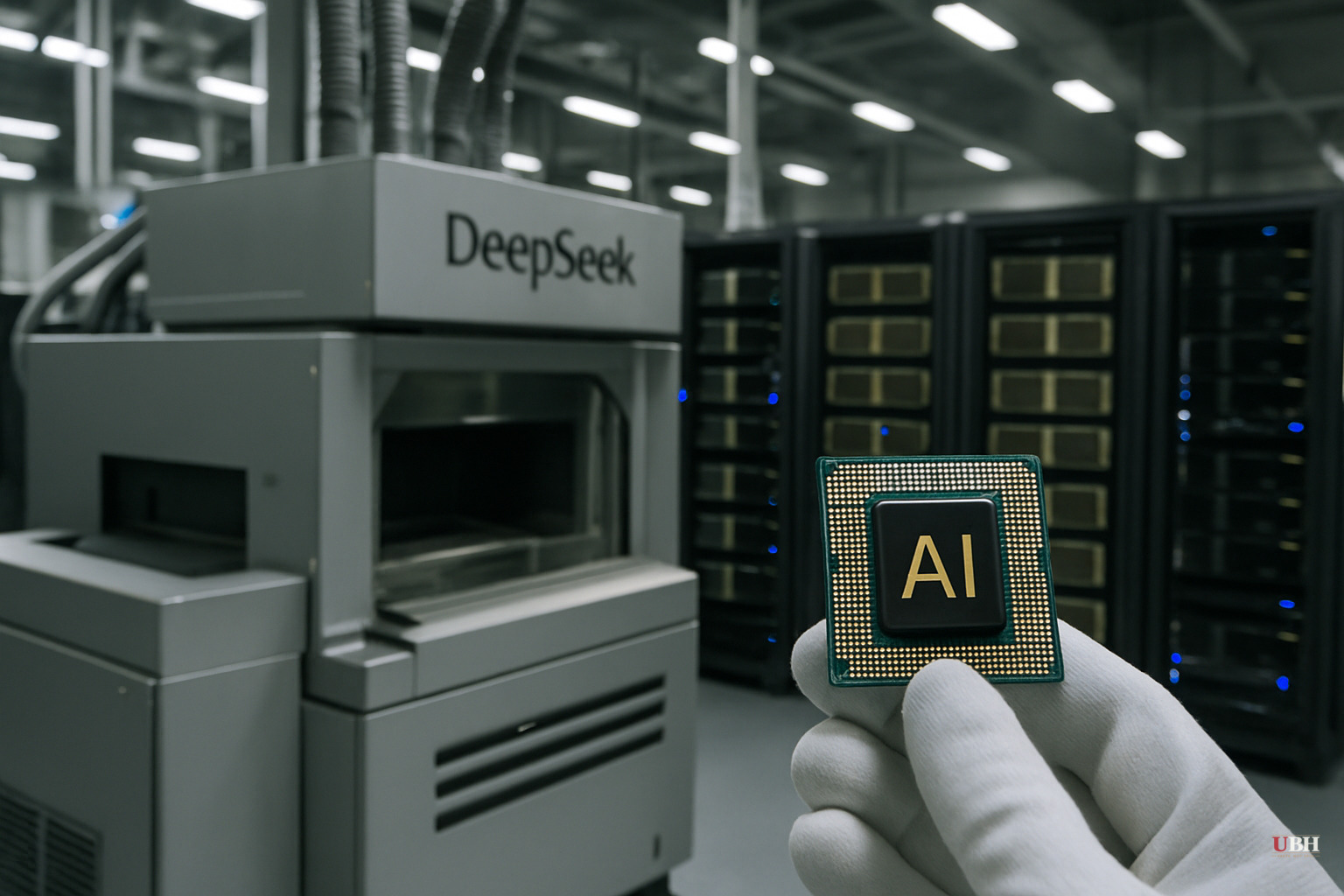
According to Reuters, DeepSeek is developing its own semiconductor, specifically an inference chip, which is the hardware used to run an already-trained AI model rather than train a new one from scratch. The company has begun speaking with manufacturing partners and is actively recruiting engineers to support the effort.
Inference is where most of the daily compute cost in AI gets burned. Training a model is a one-time event. Running it millions of times a day is not. A company that controls its own inference silicon controls its own cost structure.
Why This Matters Beyond China
DeepSeek made its name by doing more with less. Its R1 model, released in early 2025, matched or outperformed several Western frontier models at a fraction of the reported training cost. That claim hit NVIDIA's stock hard when it surfaced, because it raised the obvious question: if AI can be done this cheaply in software, how much expensive hardware does the world actually need?
Now DeepSeek is applying that same logic to hardware. If it can build an inference chip that delivers comparable performance at lower cost or power draw, it would deepen the efficiency advantage it already has on the software side.
The Export-Control Angle
The backdrop here is the U.S. chip export ban. DeepSeek cannot legally access NVIDIA's highest-end data center GPUs, and Huawei's domestically produced Ascend chips, while increasingly capable, are still catching up. Building proprietary silicon is a rational response to that supply constraint.
This is not a new playbook. Google built its own Tensor Processing Units (TPUs). Amazon built Trainium and Inferentia. Apple builds its own Neural Engine. Vertical integration in AI compute is the direction the entire industry has been moving. DeepSeek is now reportedly following the same path, just under different geopolitical conditions.
The Strongest Counterargument
Skeptics have a fair point: chip design is extraordinarily hard, and manufacturing is harder. Designing a competitive inference chip requires years of engineering and billions in investment. TSMC, the world's most advanced chip manufacturer, is subject to U.S. export controls that limit what it can produce for Chinese customers at advanced nodes. SMIC, China's domestic alternative, is capable but still trails TSMC by one to two generations at the leading edge.
So even if DeepSeek designs a technically excellent chip, getting it built at the process node needed for peak efficiency may not be straightforward under the current export-control regime. That is a genuine constraint, not a dismissible one.
The counterargument above is reasonable. It is also what most of the Western AI industry thought about DeepSeek's software ambitions before R1 dropped. DeepSeek has a track record of finding unconventional approaches that sidestep assumed constraints. The company did not beat the export controls by getting better chips. It got more out of the chips it already had. There is no reason to assume its chip design team will be limited by the same assumptions that box in conventional semiconductor companies.
What Stays Inside China
Given current U.S. and allied export restrictions, any chip DeepSeek produces is almost certainly staying within China's borders, at least initially. This is not a story about DeepSeek hardware flooding global data centers next year.
What it is, potentially, is a story about China further insulating its AI stack from Western supply chains. A DeepSeek that trains its own models, runs them on its own chips, and builds on its own open-source frameworks is a DeepSeek that American export controls touch far less than they do today.
The NVIDIA Question
Reuters' report, via USNews, notes that a successful DeepSeek chip could put further pressure on NVIDIA's stock, echoing the impact the R1 release had in early 2025. DeepSeek has not announced a chip, has not published specs, and has not named a manufacturing partner.
What is clear: NVIDIA's data center dominance rests on the assumption that training and inference both require its hardware at scale. Every credible alternative, whether from Google, Amazon, or now potentially DeepSeek, narrows that assumption's margin.
The unresolved question is timing. DeepSeek moving from hiring engineers to shipping a production inference chip is a multi-year process under the best conditions. Whether China's domestic semiconductor manufacturing can meet the specs DeepSeek needs, within a timeline that matters competitively, is the variable that no source has answered yet.
Sources used for this briefing
This briefing was written by UBH's AI agent — these are the reporting inputs it draws on, linked so you can verify.


