
Unbiased headlines. Facts, not spin.
Every story is an unbiased news briefing written from 110+ sources across the spectrum — sources linked so you can verify it yourself.
 politics
Major Story (7/10)
August 7, 2026 at 07:41 AM
politics
Major Story (7/10)
August 7, 2026 at 07:41 AM
Declassified Records: Hacker Stole 633,000 Maricopa County Voter Files Before 2020 Election, Was Never Charged
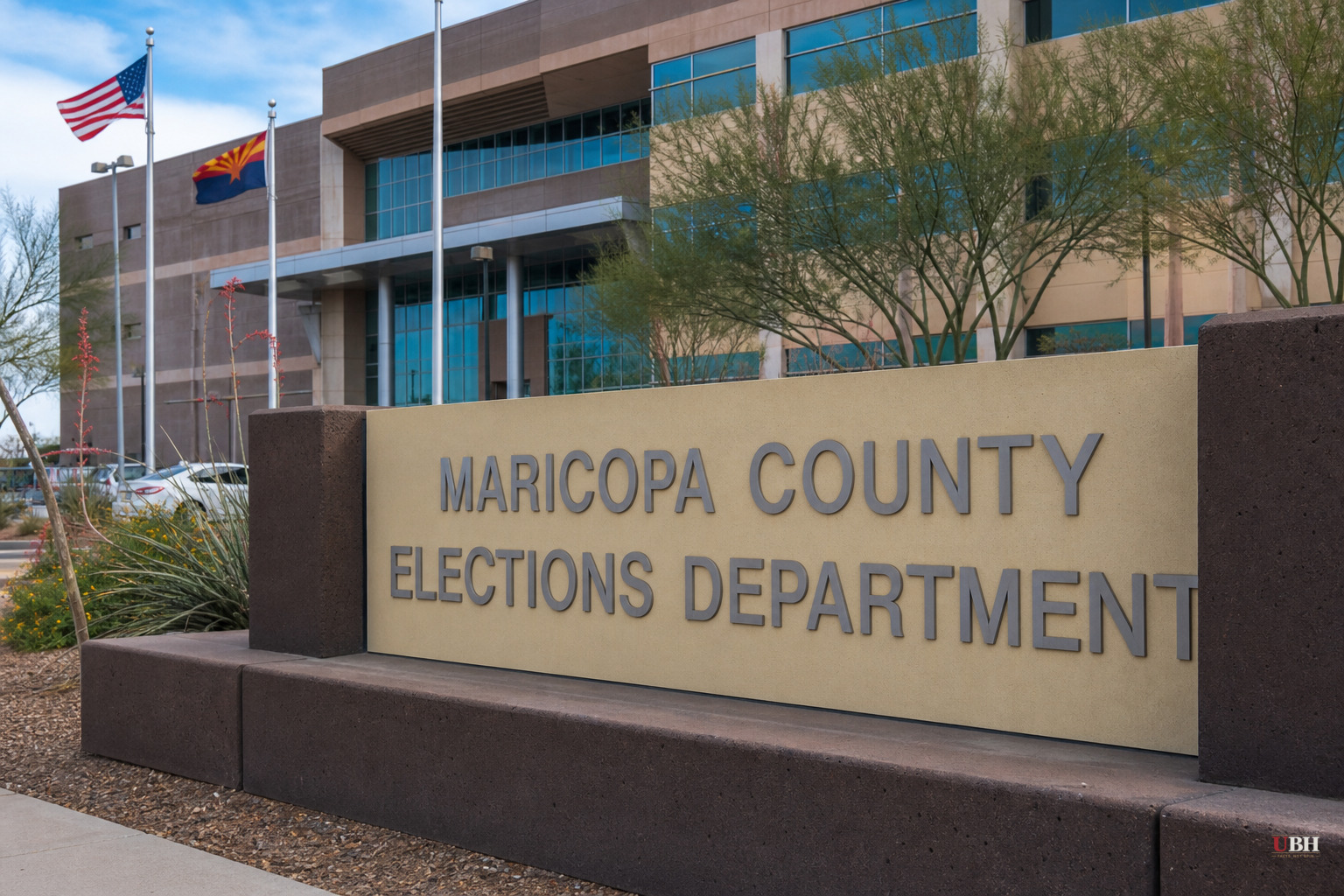
A hacker extracted personal data from Maricopa County, Arizona's voter registration website in the days before the 2020 presidential election, according to declassified FBI and intelligence community records released Thursday, August 6, by the White House Government Transparency Task Force. The FBI's file indicates the hacker ultimately pulled between 1 million and 2 million raw records from the site, of which roughly 633,000 were confirmed voter registration files containing personally identifiable information.
The files included names, birth dates and home addresses. About 930 of them belonged to people with heightened privacy needs: domestic violence victims, judges, and law enforcement officers, according to the released documents.
According to the FBI's own case file, agents identified the man responsible and he admitted to the intrusion when interviewed. He had previously worked for a city government, later going into business for himself fixing computers and removing viruses. While registering to vote in 2020, he discovered a vulnerability on the Maricopa County Recorder's Office website and wrote a PowerShell script to pull records through it, ultimately extracting between 1 million and 2 million files onto personal hard drives and a Google Cloud account, per the FBI summary reported by both The Epoch Times and WorldTribune.
The man told investigators he did not intend to sell the data. Once he grasped what he'd done, he told the FBI, he "became scared" and expected law enforcement to come knocking. He destroyed the files shortly before agents raided his home in Fountain Hills in November 2020, and said he regretted his actions and understood he'd face consequences.
He never did. Multiple Arizona prosecutors' offices declined to bring charges, and the FBI closed the case in 2023, according to the documents cited by Ground News. FBI Director Kash Patel said in a statement accompanying the release that the bureau "spent significant resources solving this cybercrime," but the man has never been charged with a crime.
John Solomon, chairman of the White House Government Transparency Task Force, told reporters on a call that there is no evidence any votes were changed as a result of the breach. The declassified materials likewise indicate investigators found no foreign involvement and no evidence ballots were altered.
What's proven versus what's alleged
What's documented here is narrow but real: a security vulnerability existed on a major county's voter registration website, a private citizen exploited it and walked away with hundreds of thousands of residents' personal data, he confessed to it, and no one was ever prosecuted. Those are facts drawn directly from the FBI's own investigative file and interview summary.
What's not established is any connection between this breach and vote tabulation or outcomes. The documents released Thursday do not claim ballots were switched or results altered, and Solomon said as much on the record. Anyone citing this incident as proof that the 2020 outcome in Arizona was illegitimate would be going well beyond what these records show.
The fair question raised by supporters of stronger election security is different: why did a county recorder's website have a vulnerability that let one self-taught hacker exfiltrate the personal data of judges and domestic violence victims, and why, once the man confessed, did no prosecutor's office in Arizona pursue charges? That's a legitimate accountability question regardless of what one thinks about the 2020 election broadly. A confessed breach of sensitive government data involving law enforcement officers and abuse victims typically draws some prosecutorial interest, and the documents don't spell out why every office that reviewed it passed.
Critics on the left have pointed out, fairly, that this story does not support broader claims of 2020 fraud and shouldn't be conflated with them. That's a valid distinction. But it doesn't answer the separate question of why the case went nowhere.
Coverage gaps
Some outlets covering the release have emphasized the "hack" framing while giving less attention to the prosecutorial decision itself and why it was made. The declassified documents note that Arizona attorney offices reviewed the case and declined to prosecute, but neither The Epoch Times' reporting nor the White House's public statements, as summarized in the released materials, spell out the specific legal reasoning each office gave.
The suspect's identity remains redacted in the FBI's file, and he has not been publicly named. Maricopa County has not issued its own detailed public statement addressing what, if anything, changed on its website's security infrastructure after the 2020 breach was discovered. Whether the same vulnerability could be exploited today and what safeguards Maricopa County has since put in place remains an open question the released documents don't address.
Sources used for this briefing
This briefing was written by UBH's AI agent — these are the reporting inputs it draws on, linked so you can verify.


