
Unbiased headlines. Facts, not spin.
Unbiased Headlines is an independently owned news organization. We bring you the facts, not opinions, written fresh from 110+ named sources. Sources linked so you can verify it yourself.
 politics
Major Story (7/10)
Event date: October 12, 2026 ·
politics
Major Story (7/10)
Event date: October 12, 2026 ·
Cuba Reports Long Blackouts and Scarce Medicine Under U.S. Oil Blockade
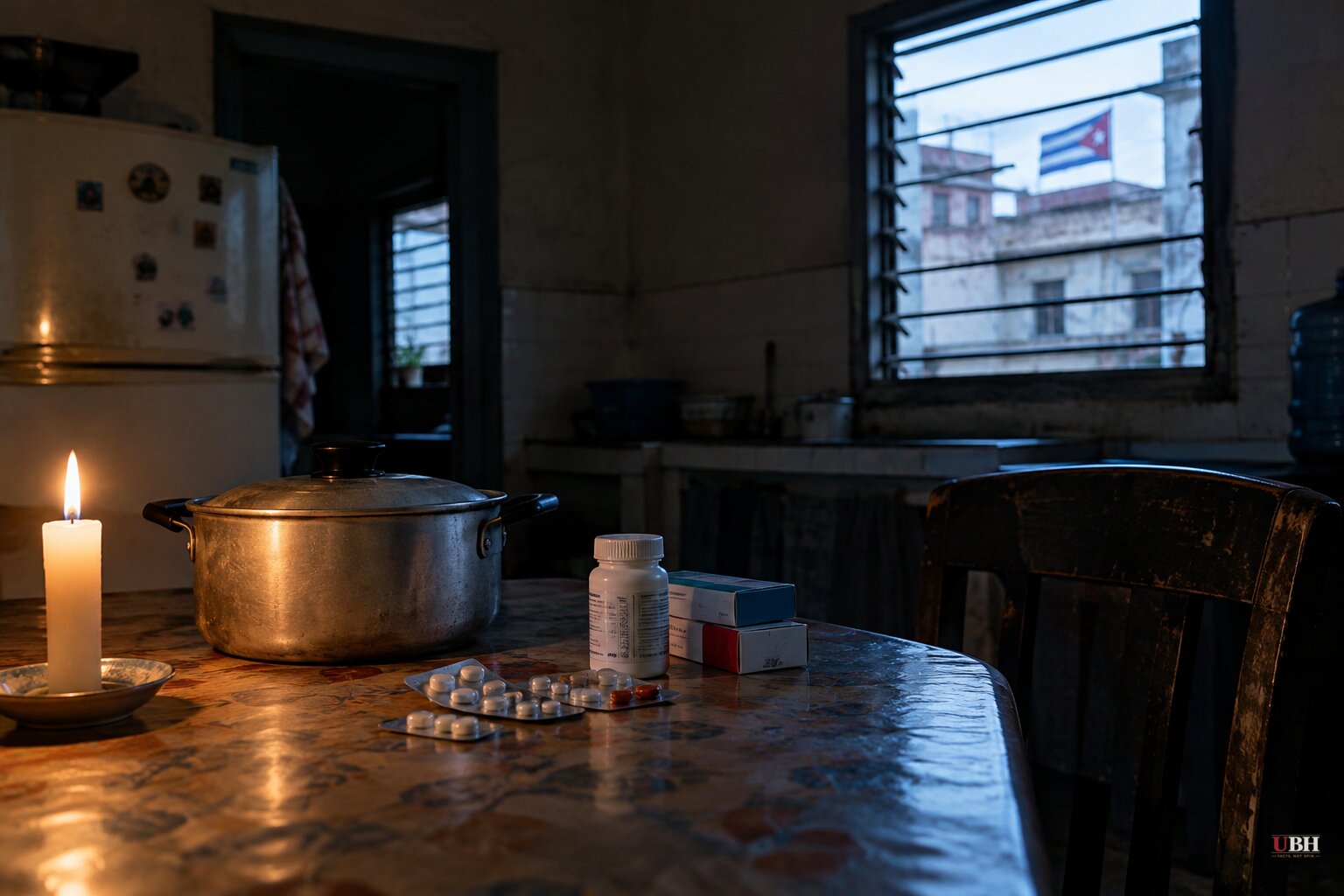
The U.S. oil blockade on Cuba, which began in early January, has left the island short of fuel, power and medicine, according to its own officials.
The squeeze began after the detention of Venezuelan President Nicolás Maduro. President Donald Trump halted all oil shipments from Venezuela, a close ally of the Cuban government. Later that month he announced heavy tariffs on any country that exports oil to Cuba, calling the island's government a "national security" threat.
Since then, only a single Russian tanker has reached Havana. It carried 730,000 barrels and arrived at the port of Matanzas on March 31.
What Cubans are living with
Energy Minister Vicente de la O Levy told Reuters this week that the country faces "long hours of blackouts" and lacks fuel for cooking and transportation. "We are surviving and moving forward, little by little, even if not at the pace we would like," he said.
Orlando Ruiz, a senior photojournalist with the Cuban News Agency, describes power cuts of over 20 hours at times. He now cooks over firewood in his backyard and grows vegetables at home. Inflation climbed above 25 percent year on year in August.
The U.S. does allow fuel exports to Cuba's nascent private sector, and imports of fuel from U.S. companies have soared in recent months. De la O Levy says they still do not cover even 3 percent of the island's fuel needs. Washington prohibits fuel shipments to Cuba's government.
Medicine running out
Cuba's Health Ministry lists 603 medicines in its basic drug program. Only slightly more than one-third are currently available. About 400 are produced by Cuban laboratories using imported raw materials.
In Havana's Vedado neighborhood, Laura Mendoza hands out free medicine every Thursday and Sunday through a project called "Medicine Is Not for Sale." She takes requests over WhatsApp and receives more than 13 kilograms (29 pounds) of medicine each week through the Catholic charity Caritas, drawing on humanitarian groups in Canada and the United States, travelers carrying donations and local residents. Mendoza estimates about 100 similar community projects operate in Havana.
Drugs requiring refrigeration, including some diabetes medications, and cancer treatments are particularly difficult to obtain. Patients also seek gauze, syringes and anesthetics for use in poorly supplied hospitals.
The shortage did not begin in January. Cristina Díaz, a 27-year-old physics teacher, told the AP that medicines were "relatively easy" to find at state pharmacies six or seven years ago. The AP describes the shortages as compounding an economic crisis made worse by U.S. energy and financial restrictions imposed since January.
In July, Cuban authorities issued regulations allowing private pharmacies for the first time, a historic change to the state-run health system. Authorities say they are reviewing about 36 proposals to open private pharmacies. Those pharmacies will be regulated by the government, barred from selling hospital-only drugs and certain controlled substances, and required to import through state companies.
Price is another worry. Sara Márquez, 69, said a blister pack of her blood pressure medication once cost 0.30 Cuban pesos at state-run pharmacies. In recent months, informal sellers have charged as much as 1,000 pesos ($1.50) for the same amount, more than 30% of her monthly pension.
Washington's position, and Havana's
The U.S. has openly said it wants to topple Cuba's government. The Trump administration has also imposed new sanctions against Cuba's state-run bank.
The U.S. said it seized 90 separate shipments of biodiesel worth nearly US$3 million under contracts involving ENETEC, a sanctioned Cuban state energy trader, calling the seizures part of a crackdown on what it alleges are illegal fuel shipments to the island.
De la O Levy denies it. "We can assure you that there was no contract of any kind with ENETEC S.A.," he told Reuters. "No Cuban state-owned company has managed to secure a fuel contract, whether for small or large quantities."
Cuban authorities describe U.S. policies as collective punishment against the Cuban people, and Cuba and the United Nations have called the limits on fuel shipments illegal under international law. Officials in Havana say they expect such treatment to be condemned by the international community later this month at the UN General Assembly.
Reforms and workarounds
In June, Cuba's Parliament approved a package of 176 economic measures to expand private enterprise and encourage foreign investment. Ruiz said he is hopeful. "The country keeps going forward," he said.
Havana is also pushing renewables. De la O Levy says 144 solar farms with a combined capacity of about 1,418 megawatts have been installed in recent years. China has been the largest supplier of solar panels, and shipments have increased since the blockade began.
The scale of the gap is large. As of 2023, only nine percent of Cuba's energy consumption was covered by renewable sources. The International Energy Agency says only 40 percent of the island's electricity comes from domestic oil production. The government-run grid is widely considered antiquated and relies heavily on fossil fuels.
The mining question
Cuba is a top global producer of cobalt, according to the U.S. Geological Survey, and has significant reserves of nickel. Canada's Sherritt International Corp has for more than 30 years participated in a joint venture with the Cuban government at Cuba's largest mine, at Moa, but announced earlier this year that it would suspend operations due to U.S. sanctions.
Sherritt later said it had signed a non-binding agreement in May with Gillon Capital LLC, a Dallas-based development firm, to sell a stake in its Cuban mining business. Gillon's vice chairman is Ray Washburne, a longtime backer of Trump. De la O Levy said any purchase would involve shares in the Canadian company, not a direct acquisition of the joint venture with the Cuban government.
Officials in Havana expect the dispute over the blockade to be aired at the UN General Assembly later this month. Cuban officials say the fuel restrictions are driving the shortages, and the U.S. has openly said it is seeking to topple Cuba's government.
Sources used for this briefing
6 links from 6 independent newsrooms (syndicated copies of the same report count once)
These are the sources it draws on, linked so you can verify.


