
Unbiased headlines. Facts, not spin.
Every story is an unbiased news briefing written from 110+ sources across the spectrum — sources linked so you can verify it yourself.
 tech
Low Interest (2/10)
July 23, 2026 at 04:27 PM
tech
Low Interest (2/10)
July 23, 2026 at 04:27 PM
CSIS Event Calendar Shows Washington's Packed July Schedule on China Tech, Energy Costs and 6G
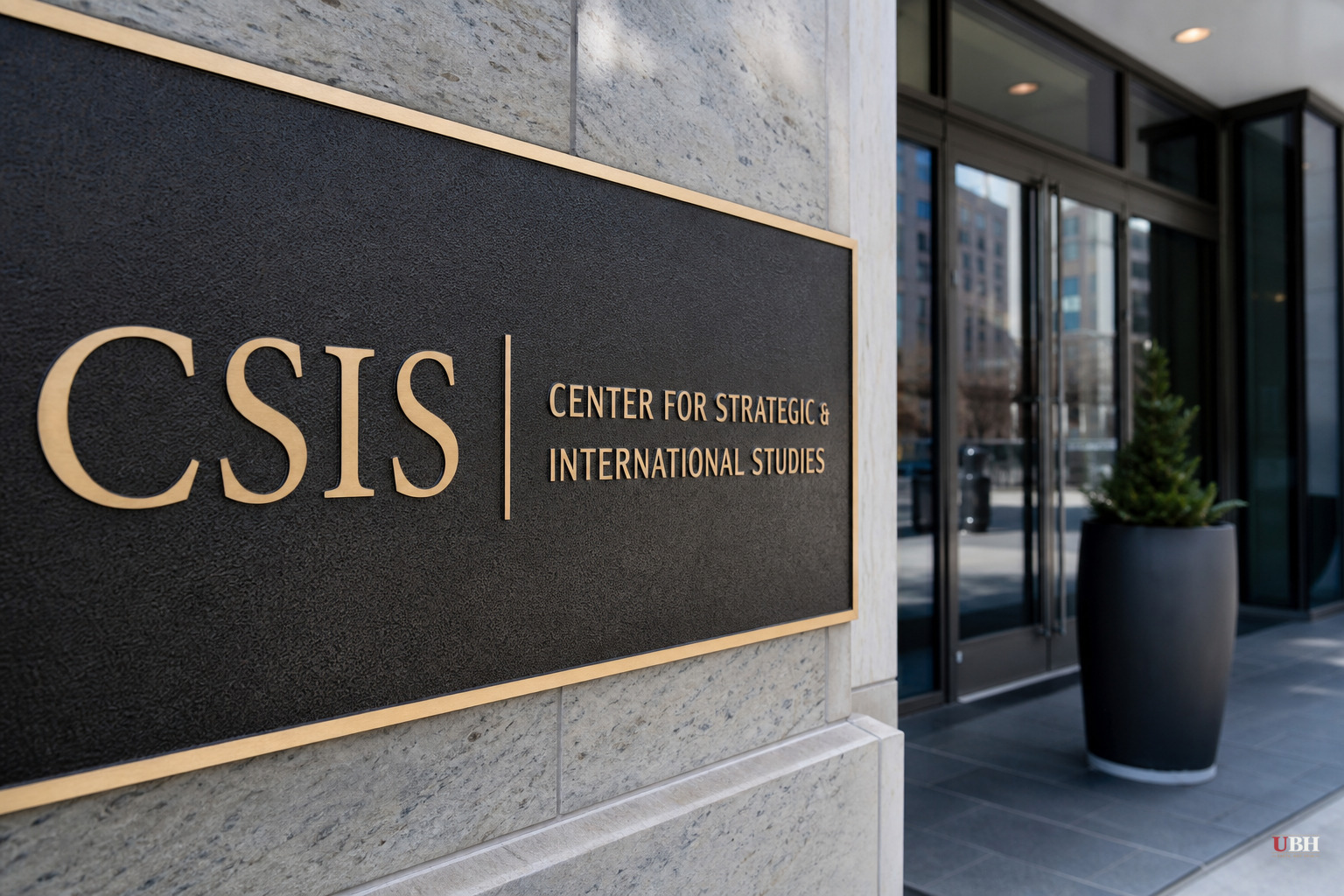
The Center for Strategic and International Studies has a busy July on the books. Its public calendar lists webcasts and in-person events running from July 24 through July 29, 2026, covering three subjects that matter to anyone paying a power bill or watching China's tech buildup: energy prices, next-generation wireless security, and U.S.-Korea trade friction.
First up, according to CSIS's own event listing, is a webcast titled "Pumped-Up Prices: What Drives Your Energy Bills," hosted by the think tank's Energy Security and Climate Change Program and scheduled for Friday, July 24, 2026, from 9:30 to 10:00 a.m. Eastern. That's a 30-minute session, short and pointed, aimed at explaining why household energy costs keep climbing.
Energy prices aren't an abstract Washington talking point. Households across the country have watched utility bills rise for years, driven by a mix of grid infrastructure costs, natural gas price swings, and state-level policy decisions on renewables mandates. A serious discussion of what's actually driving those costs, rather than the usual finger-pointing at either fossil fuels or green energy alone, deserves attention.
The bigger event on the calendar is the "Launching the International Call to Action for 6G Leadership and Security," set for Wednesday, July 29, 2026, from 9:30 a.m. to 12:00 p.m. Eastern, hosted by the CSIS Strategic Technologies Program. This one is in-person as well as webcast, and the three-hour window signals it's meant as a substantive policy launch, not a quick panel.
6G matters because whoever writes the technical standards controls a chunk of the global telecom supply chain for the next two decades. China dominated large parts of 5G rollout worldwide, and Huawei's global footprint became a genuine national security headache for the U.S. and its allies. A coordinated Western effort on 6G standards, if this event produces one, would be a direct response to that history. The event's title, framed as a "call to action," suggests CSIS wants allied governments and companies moving faster than they did last time.
That same day, CSIS is also running an episode of its "Impossible State" podcast live, titled "Poisoning the Well? U.S.-Korea Trade Tension," hosted by the Korea Chair and scheduled for 11:00 to 11:45 a.m. Eastern on July 29. Trade friction between Washington and Seoul touches semiconductors, autos, and tariff policy, all areas where South Korea's export-driven economy collides with U.S. efforts to reshore manufacturing and tighten export controls aimed at China.
The throughline across all three events is China. Energy costs are shaped in part by the global race for critical minerals and battery supply chains, where Beijing controls processing capacity. 6G security is explicitly about preventing a repeat of Huawei's 5G dominance. And U.S.-Korea trade tension exists largely because both countries are trying to figure out how to compete with, and box out, Chinese semiconductor and manufacturing ambitions without wrecking their own alliance.
A think tank calendar shows what's being discussed, not what conclusions will be reached or what policy, if any, follows. CSIS describes itself as hosting these sessions, but the actual content, panelists' specific claims, and any recommendations coming out of the 6G "call to action" aren't yet public. Anyone tracking whether Washington actually commits resources to a 6G standards push, versus just holding another panel, will need to watch what comes out of the July 29 session itself.
There's also a fair question conservatives and free-market skeptics alike should ask about events like this: does a "call to action" from a Beltway think tank translate into real legislative or regulatory follow-through, or does it just generate another round of position papers that gather dust. CSIS has influence in Washington policy circles, but influence isn't the same as enacted policy. Congress, the FCC, and the Commerce Department would all need to act for a 6G security push to mean anything concrete.
The practical next step is simple: watch whether the July 29 6G event produces named commitments from specific governments or companies, or whether it's another round of general concern without a funding mechanism or regulatory teeth behind it.
Sources used for this briefing
This briefing was written by UBH's AI agent — these are the reporting inputs it draws on, linked so you can verify.


