
Unbiased headlines. Facts, not spin.
Every story is an unbiased news briefing written from 110+ sources across the spectrum — sources linked so you can verify it yourself.
 politics
Major Story (8/10)
August 4, 2026 at 02:09 AM
politics
Major Story (8/10)
August 4, 2026 at 02:09 AM
Congo's Ebola Outbreak Is Now the Deadliest in the Country's History: 1,500 Dead, No Vaccine for This Strain
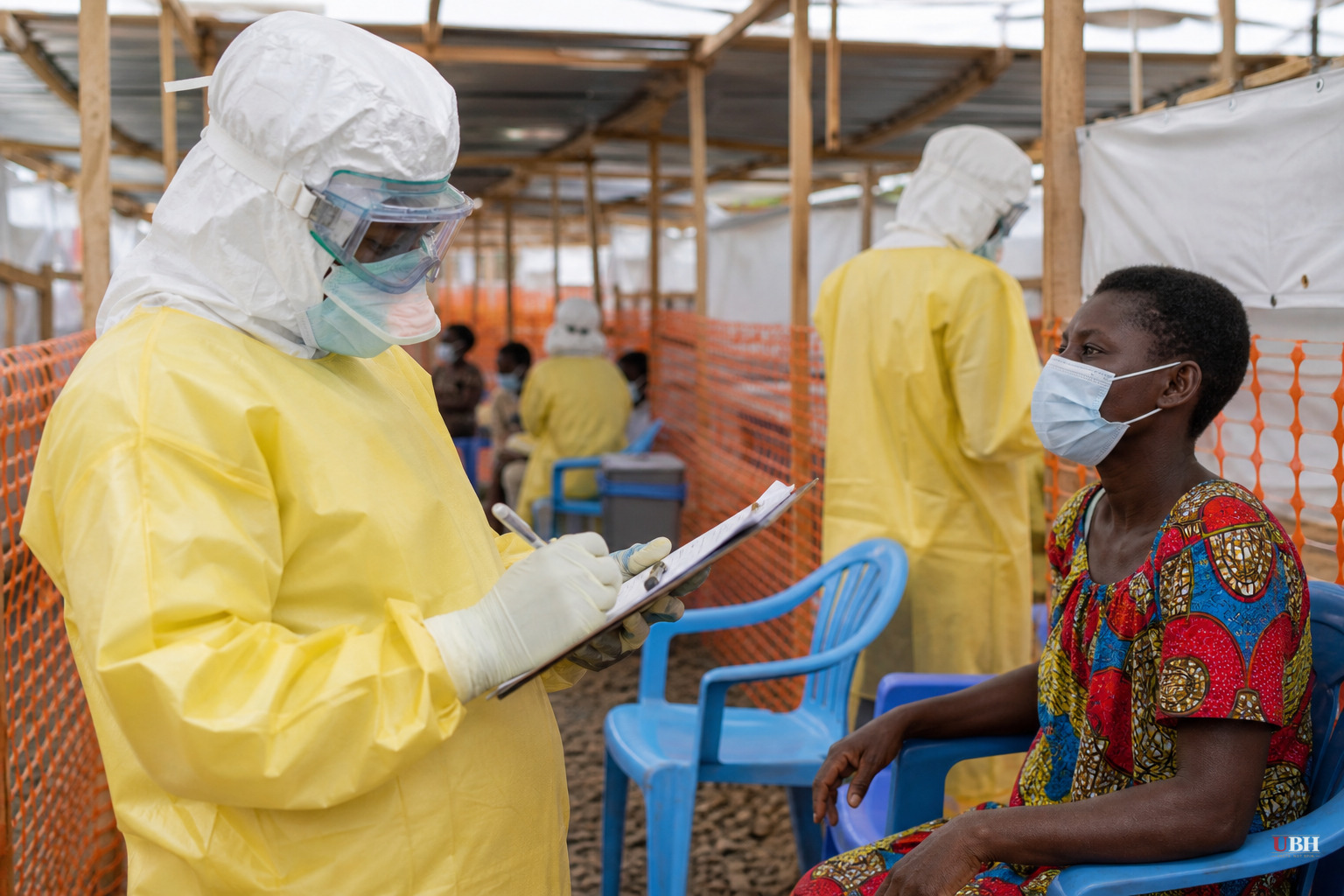
The Ebola outbreak in the Democratic Republic of Congo is now the largest in the country's history, according to the World Health Organization. More than 3,600 cases have been identified since it began in May, and more than 1,500 people have died, a fatality rate of 44 percent.
The strain driving this outbreak is called Bundibugyo. Unlike the more common Zaire strain, which has an approved vaccine and multiple treatments, Bundibugyo has none. This distinction matters because this isn't the Ebola the world got good at fighting after the 2014-2016 West Africa epidemic. It's a different, less-understood version of the virus, and doctors are largely improvising.
The outbreak is also colliding with an active war. Congo's eastern provinces have been gripped by conflict involving multiple armed groups, including the M23 rebel movement, for years. Millions of people have been displaced, and the UN has repeatedly flagged the region as facing crisis-level hunger. Trying to trace contacts, isolate the sick, and move medical teams through a war zone is a logistical nightmare under the best conditions. These are not the best conditions.
Why it took so long to catch
According to Hana Kiros, who covers global health for The Atlantic, one of the biggest reasons the outbreak spun out of control is that it was identified late. Ebola had already been spreading for a while before health authorities caught it, which gave the virus a head start that's brutally hard to claw back once community transmission takes hold.
Early detection depends on surveillance infrastructure, local health workers trained to spot hemorrhagic fever symptoms, and labs capable of running diagnostics fast. When any link in that chain is understaffed or underfunded, outbreaks get a head start. That's true regardless of which country is footing the bill for the infrastructure.
The USAID question
Kiros's reporting, and The Atlantic's broader framing, ties this outbreak directly to the Trump administration's dismantling of USAID. On his first day back in office in January 2025, President Trump ordered a 90-day freeze on foreign aid. By February 2025, the administration had eliminated roughly 90 percent of USAID's foreign-aid contracts, and the agency itself was fully wound down in the months that followed.
The Atlantic's framing suggests a fairly direct line: American money and coordination used to help contain outbreaks like this, that money is gone, and now Congo is facing its worst Ebola outbreak on record. Correlation between the aid cuts and the outbreak's severity is not the same as demonstrated causation, and The Atlantic's own source material doesn't establish a direct funding-to-fatality pipeline. What it does establish is that the U.S. was a major funder of global-health surveillance and response infrastructure, and that funding is now largely gone.
The other side of the ledger
The Trump administration's position, consistently stated since 2025, is that USAID had become bloated, duplicative, and in some cases actively wasteful, and that American taxpayers shouldn't be underwriting foreign-aid bureaucracies indefinitely without accountability for results. Foreign aid spending has faced bipartisan criticism for decades over waste, mission creep, and money reaching corrupt intermediaries rather than the people it's meant to help. Whether USAID specifically deserved wholesale elimination rather than reform is a fair debate, and reasonable people, including many in the global-health field, land on different sides of it.
What isn't in dispute is the scale of what's now missing. USAID was, for years, one of the largest single funders of global-health surveillance, outbreak response, and vaccine-delivery logistics in the world. Whether other donors, or a leaner successor structure, can fill that gap remains unresolved. Congress has not passed legislation restoring USAID's prior funding levels, and no comprehensive replacement mechanism has been established as of this writing.
What happens next
There is still no approved vaccine for the Bundibugyo strain, meaning containment depends almost entirely on old-fashioned public-health tools: contact tracing, isolation, and safe burial practices, all of which are harder to execute in an active conflict zone. The WHO has not announced a projected end date for the outbreak. Congo's health ministry, in coordination with international partners including the WHO, continues response efforts, but the death toll has roughly tripled in the span of about a month, from an estimated 500 to more than 1,500, according to figures cited by The Atlantic.
The open question isn't really whether foreign aid cuts are popular or unpopular. It's whether the world has a working system for catching the next Bundibugyo-style outbreak before it reaches this scale, and right now, by every account in this reporting, it doesn't.
Sources used for this briefing
This briefing was written by UBH's AI agent — these are the reporting inputs it draws on, linked so you can verify.


