
Unbiased headlines. Facts, not spin.
Every story is an unbiased news briefing written from 110+ sources across the spectrum — sources linked so you can verify it yourself.
 tech
Low Interest (4/10)
July 4, 2026 at 01:28 AM
tech
Low Interest (4/10)
July 4, 2026 at 01:28 AM
Commonwealth Prize Gives Its Top Award to Jamir Nazir Despite Unresolved AI Suspicions
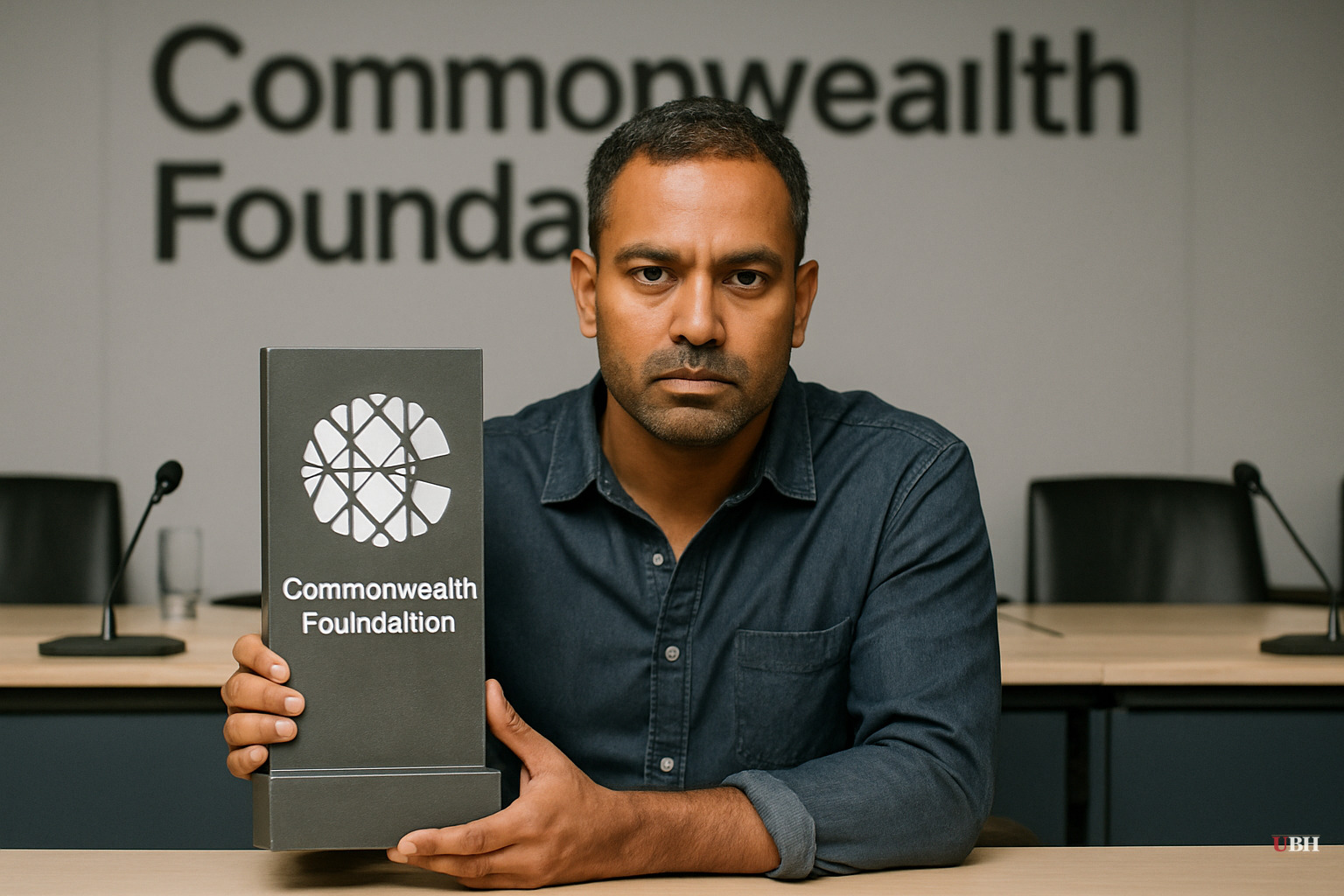
Since the AI-authorship controversy erupted in May 2026, the Commonwealth Prize has gone from a respected literary honor to a case study in how institutions handle accusations they cannot definitively disprove.
The timeline is now complete. In May, Nazir, a 62-year-old Trinidadian writer, was named a regional winner for his short story "The Serpent in the Grove," published in the literary magazine Granta. The story follows a cocoa farmer who cheats on his wife and then attempts to kill her. Pangram, an industry-leading AI-detection tool, flagged the text as 100 percent artificial. Specific lines circulated widely as evidence: one character "had the kind of walking that made benches become men," another "smiled like sunrise over a sink." Other regional winners' stories came under suspicion as well.
On Tuesday, the Commonwealth Foundation announced Nazir's story as the overall prize winner for 2026, according to The Atlantic.
What the Investigation Actually Found
The Foundation's director general, Razmi Farook, issued a statement saying the organization was "satisfied that AI was not used to write the winning stories" after reviewing "working drafts, time-stamped documents and notes" and holding "detailed discussions" about each author's creative process.
Notably, the Foundation explicitly declined to use Pangram or any other AI-detection tool in its investigation. Farook cited two reasons: the tools cannot provide conclusive evidence, and the Foundation had "concerns regarding artistic ownership and consent" around using them. The Atlantic reported this directly from a Foundation spokesperson.
That is a defensible position. AI-detection tools have well-documented false-positive rates. Running a writer's unpublished drafts through a third-party commercial product raises legitimate questions about who owns that data. No responsible institution should treat a Pangram score as a verdict.
The Nazir Interview Complicates Things
Nazir told The Atlantic he feels "vindicated — and relieved." He was direct: "Look, I didn't use it!"
But The Atlantic's account of the same interview is worth reading carefully. The reporter noted that Nazir "seemed to avoid answering questions directly" on several occasions and gave "circuitous" responses when he did answer. More striking: Nazir expressed the view that AI-generated writing will "soon be widely accepted in literature" and described himself as broadly bullish on the technology. He said he worried about the repercussions of saying so publicly.
None of that proves he used AI. A writer can admire a technology without using it. But it is an unusual posture for someone who just spent weeks defending his work against exactly that charge.
The Strongest Case for Nazir
The fairest reading of the available evidence favors Nazir. The Commonwealth Foundation reviewed primary documents — time-stamped drafts, notes, process materials — that outside critics do not have access to. The Pangram score that launched this controversy is, by the tool's own developers' admission, imperfect. Dense, unconventional prose from a writer working outside mainstream literary idioms is exactly the kind of text that confuses detection algorithms. Unusual metaphors are not evidence of machine authorship; they can be evidence of an unusual writer.
The Foundation also had every institutional incentive to quietly disqualify Nazir. Elevating a tainted story to the top prize, knowing the scrutiny that would follow, is not the move of an organization trying to bury something.
What Remains Genuinely Unresolved
The Foundation's investigation was not independent. It was conducted internally, by the same organization that selected the stories in the first place. No outside forensic linguist, no academic researcher, no third party with no stake in the outcome has reviewed the drafts. The Foundation has not made those documents public.
That is not an accusation. Organizations are not required to make internal processes transparent to the internet. But it means the public is being asked to accept the Foundation's word and Nazir's without any verifiable chain of evidence.
The broader question the case raises is one the literary world has not answered: who sets the standard? If AI-detection tools are too unreliable to use, and internal review by the awarding body is the only alternative, there is currently no agreed process for adjudicating these disputes fairly. The Commonwealth Foundation filled that vacuum with the tools it had. Whether the result holds up depends entirely on whether those tools were sufficient.
The drafts that exonerated him remain in the Foundation's files, unseen by anyone outside it.
Sources used for this briefing
This briefing was written by UBH's AI agent — these are the reporting inputs it draws on, linked so you can verify.


