
Unbiased headlines. Facts, not spin.
Every story is an unbiased news briefing written from 110+ sources across the spectrum — sources linked so you can verify it yourself.
 tech
Notable (6/10)
July 14, 2026 at 08:09 PM
tech
Notable (6/10)
July 14, 2026 at 08:09 PM
Commerce Official Says 'Very Few' Nvidia H200 Chips Have Actually Shipped to China Despite December Approval
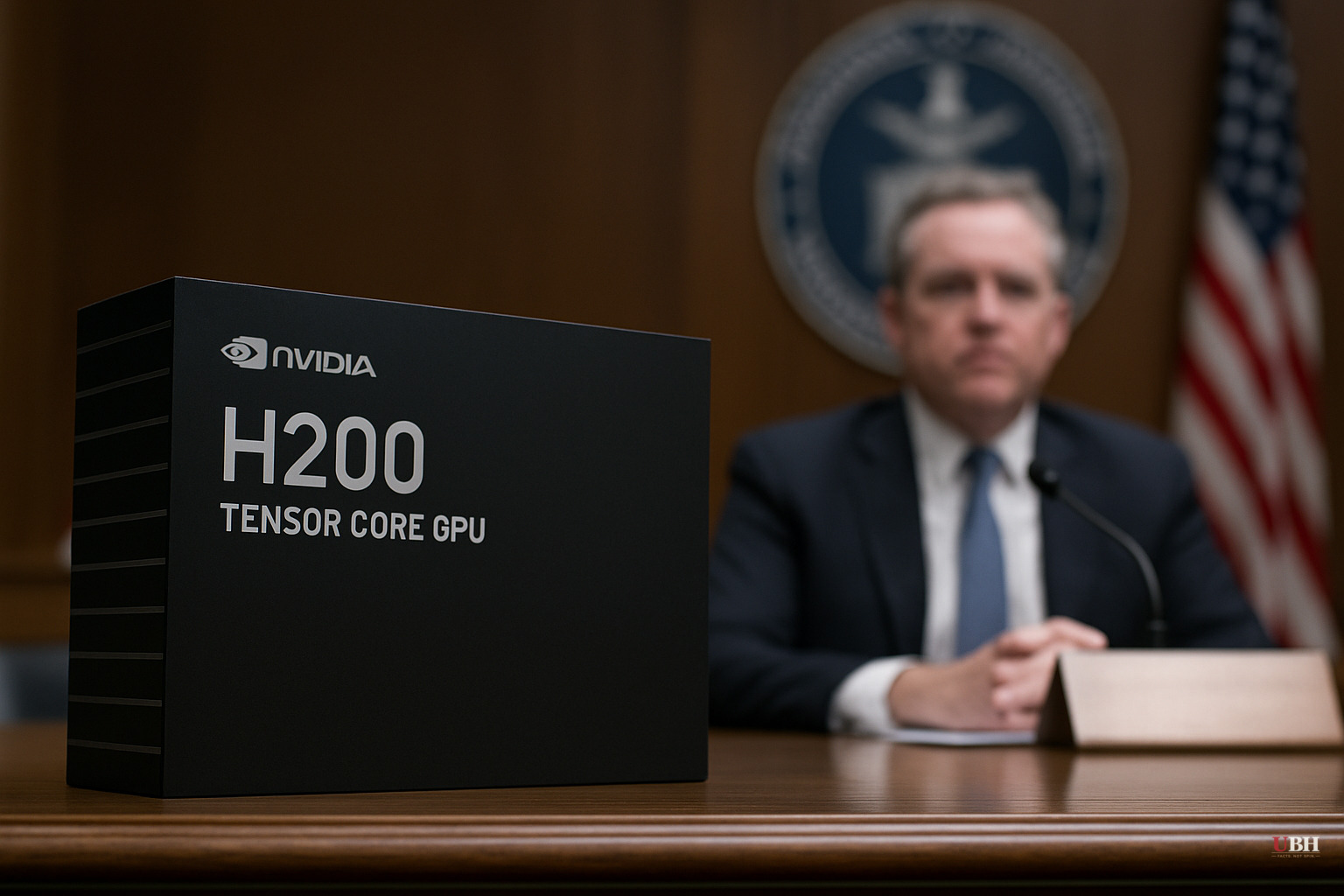
Under Secretary of Commerce for Industry and Security Jeffrey Kessler told a congressional hearing Tuesday that "very few" of Nvidia's H200 AI chips have actually reached China and Hong Kong, even though the licensing framework allowing those sales has been in place since earlier this year, according to CNBC.
"Very few shipments against licenses for H200s and equivalents have taken place. It's a very small quantity of chips," Kessler said.
President Trump announced in December that the U.S. government would approve H200 sales to China in exchange for the government taking a 25% cut of the revenue. Licenses tied to that arrangement started getting issued earlier this year. Since then, the actual shipping data has been a black box.
Nvidia itself has been telling investors to assume zero. CEO Jensen Huang said on CNBC back in May that he'd told investors to "expect nothing" from Chinese sales, and the company has excluded any potential China AI chip revenue from its forecasts since last year. That's a company hedging hard against a market it technically has permission to sell into.
Why So Few Chips Are Moving
Kessler's testimony makes clear the U.S. side isn't a rubber stamp. He said Commerce reviews H200 license applications on a case-by-case basis, requiring companies to meet national security conditions and submit to inspections verifying compliance. "There are cases where we deny the license applications we receive," he said.
The H200 is not Nvidia's newest chip. It's a Hopper-generation part, one step behind the Blackwell chips American companies are currently buying and using. Some officials in the administration have flagged the H200 as capable of military-relevant applications, which is part of why the license process is more than a formality.
The bigger unresolved question is on China's side of the border, not America's. CNBC's reporting notes it remains unclear whether Beijing will approve the import of large quantities of these chips at all. China has its own reasons to be cautious about relying on American silicon it doesn't fully control, especially after years of the U.S. using export controls as leverage. If Chinese regulators slow-walk approval or push domestic buyers toward homegrown alternatives, the license Washington granted becomes largely symbolic.
Without Nvidia chips, Chinese AI firms are stuck with domestic substitutes that are still considered inferior for AI training. That's a real cost to Chinese AI development, and it's presumably part of why some in Beijing might want the H200 pipeline open. But it also means China has an incentive to build out its own chip industry rather than stay dependent on a supply line Washington can turn off again.
The Deal Nobody's Fully Using
The 25% revenue cut Trump negotiated only matters if there's revenue to cut. Right now there isn't much. That's an awkward fact for an arrangement that was pitched as a win for both U.S. tax coffers and Nvidia's bottom line.
Nvidia declined to comment when CNBC asked about Kessler's remarks. The company that would benefit most from a return of China revenue isn't saying much publicly, likely because Huang has already set expectations at rock bottom and doesn't want to walk that back until real volume shows up.
What happens next depends on decisions being made in Beijing as much as Washington. If Chinese regulators start clearing bulk import approvals, H200 shipments could scale up fast and give Nvidia a revenue line it's currently telling Wall Street doesn't exist. If China keeps its own market gatekept in favor of domestic chipmakers, the license framework Trump built in December stays mostly unused, and the national security debate over whether the H200 should ever have been approved becomes moot in practice, if not in principle.
Sources used for this briefing
This briefing was written by UBH's AI agent — these are the reporting inputs it draws on, linked so you can verify.


