
Unbiased headlines. Facts, not spin.
Unbiased Headlines is an independently owned news organization. We bring you the facts, not opinions, written fresh from 110+ named sources. Sources linked so you can verify it yourself.
 tech
Major Story (8/10)
Commerce Issues Rule Limiting Chinese Access to U.S. AI Chips Through Overseas Data Centers
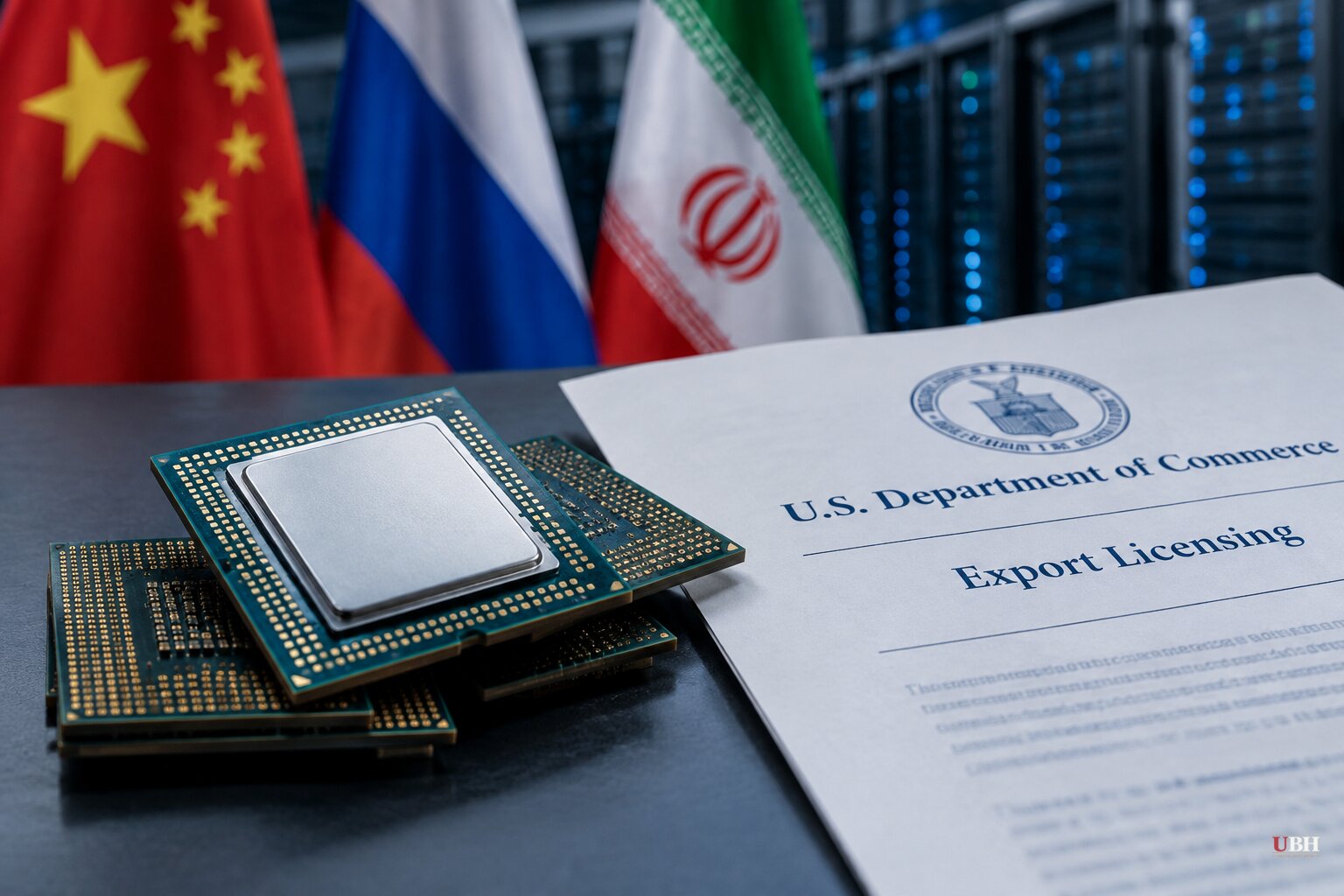
The Trump administration issued a rule Monday that targets the workaround Chinese AI companies have used to get around U.S. chip bans: renting the hardware instead of buying it.
Under the rule, overseas data centers that supply "significant volumes of computing power" to firms headquartered in a short list of high-risk countries, including China, Russia and Iran, face new restrictions. Those data centers must also run due diligence on those customers. Commerce said the provision will "undermine" the ability of companies in those countries to train advanced AI models on U.S. chips.
The rule also requires companies headquartered in Singapore, Thailand, Malaysia, Indonesia and Brazil to apply for U.S. export licenses for the most advanced chips. The administration said those countries carry a higher than normal risk of chips being diverted.
"The rule is designed to ensure that existing restrictions on access to sensitive American technology cannot be circumvented through remote computing arrangements involving data centers in third countries," the Commerce Department said in a statement.
The loophole
Until now, the ban covered shipping top-tier Nvidia chips to Chinese buyers. It did not clearly cover a Chinese firm paying a data center in Southeast Asia for access to the same chips over the internet. That business is legal, and it has been a point of contention inside the administration.
Congress has tried to fix it. On Jan. 12, the House passed the Remote Access Security Act 369-22, which would give the Bureau of Industry and Security explicit authority over remote access to sensitive technology. The Senate has not taken it up. Late last month the White House signaled support for closing remote-access gaps.
Megaspeed and Nvidia's leadership shake-up
The issue moved from obscure to urgent over the past two weeks because of Megaspeed, a Singapore-based data center firm that buys Nvidia products. U.S. authorities are investigating whether it smuggled restricted chips to China, and the Financial Times reports that the probe has run for more than a year.
Alice Huang, a Megaspeed executive, is described in New York Times reporting as a woman U.S. authorities consider an asset for Chinese intelligence. The Times and the Financial Times have both reported that she had a relationship with Jensen Huang, who left his post as Nvidia CEO last week. Neither Huang has been publicly shown to have been charged with anything in the reporting, and the allegations about Alice Huang's intelligence ties come from U.S. authorities cited by the press, not from a public filing.
A Nov. 9 New York Times report alleged Commerce may have slow-walked its Megaspeed investigation. Members of both parties have pressed Commerce since.
Pressure on Lutnick
On Sunday, Sen. Maria Cantwell of Washington, the top Democrat on the Senate commerce committee, sent Lutnick a letter accusing the department of resisting efforts to restrict companies flagged as national security threats. "These failures to carry out the law help give away America's technology advantage in AI," she wrote. She urged him to enforce the 2018 Export Control Reform Act.
Cantwell also raised financial questions. She wrote that Cantor Fitzgerald, which Lutnick's sons control, held $1.2 billion in Nvidia stock when he was nominated. She also pointed to the administration's 25% fee on certain Nvidia chips sold to China, which she said could create "a perverse financial incentive to approve exports of sensitive American technology." Those are Cantwell's allegations. Commerce did not immediately respond to a request for comment on her letter.
On Thursday, Senate banking committee Chair Tim Scott, a South Carolina Republican, summoned both Lutnick and Huang to testify in December. A Commerce spokesperson said Lutnick has agreed to appear.
The industry's case
Nvidia and its supporters argue that overseas chip sales create jobs in the United States and make companies around the world dependent on American technology. Nvidia has also voiced concern about how remote-access limits could hit its cloud and data-service partners.
The other side in Washington is no longer small. Owen Tedford, a senior research analyst at Beacon Research, said the Nvidia scandal has given export-control bills clear new momentum in Congress. According to the Financial Times, the proposals under discussion are bipartisan and would let Congress review chip export approvals and potentially block deals the administration has already cleared.
What comes next
The rule drops as Trump leaves for an Asia trip that includes a meeting with Chinese President Xi Jinping in China. Chips are a recurring friction point between the two governments, and Beijing has been pushing to build its own domestic capability.
Two tests are ahead. One is whether the new license requirements and due-diligence duties hold up in practice, since data center operators in the named countries now carry the compliance burden. The other is Lutnick's December appearance before Scott's committee, where senators can ask directly about the Megaspeed probe and the questions Cantwell raised.
Sources used for this briefing
8 links from 8 independent newsrooms (syndicated copies of the same report count once)
These are the sources it draws on, linked so you can verify.
More coverage: Artificial Intelligence and China


