
Unbiased headlines. Facts, not spin.
Every story is an unbiased news briefing written from 110+ sources across the spectrum — sources linked so you can verify it yourself.
 tech
Major Story (7/10)
June 27, 2026 at 12:09 AM
tech
Major Story (7/10)
June 27, 2026 at 12:09 AM
Commerce Department Partially Lifts Anthropic Block, Releasing Mythos 5 to 100-Plus Vetted Partners as Fable 5 Remains Grounded
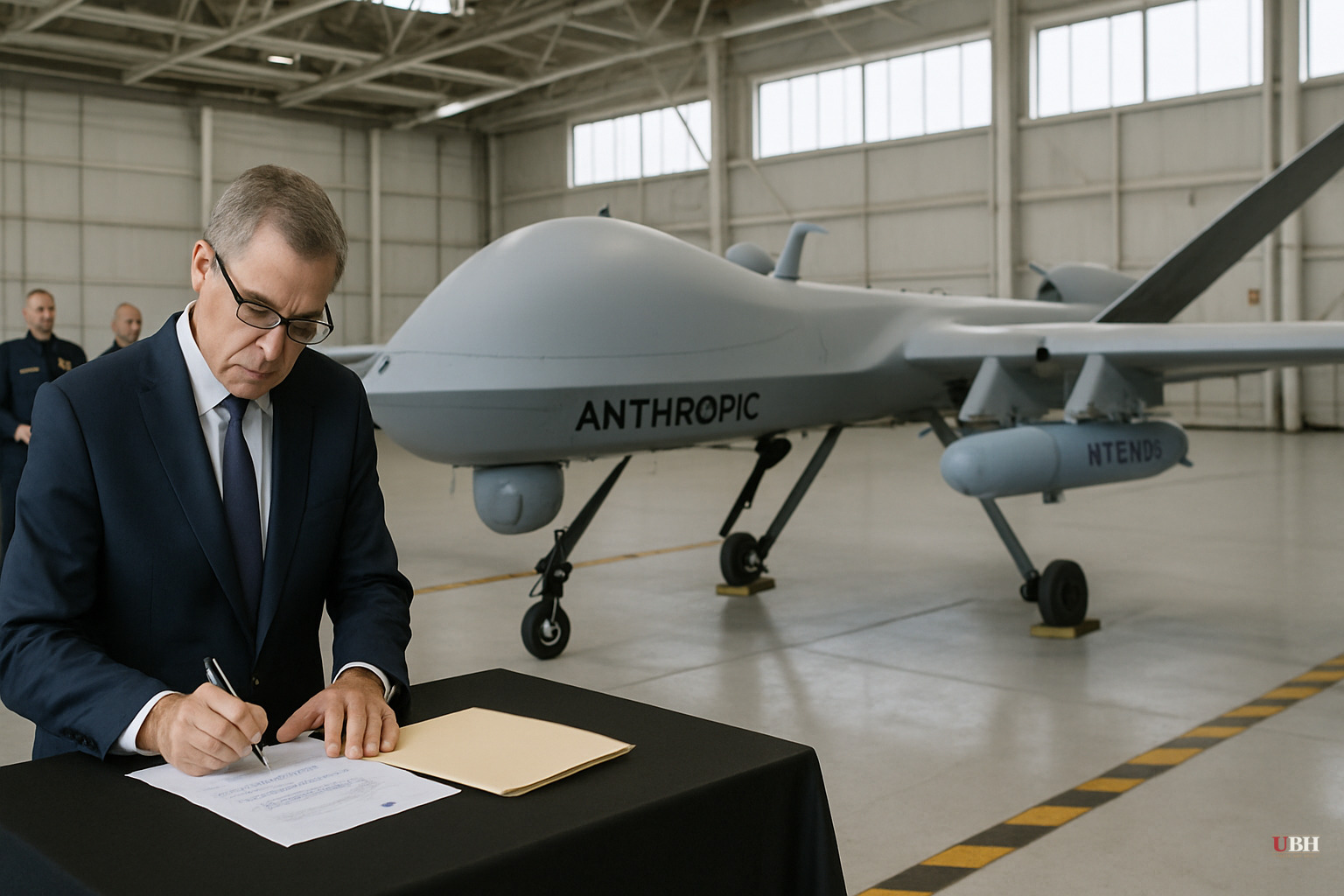
Since Commerce Secretary Howard Lutnick's June 12 letter ordered Anthropic to suspend all foreign-national access to its Mythos 5 and Fable 5 models, the two sides have been in daily talks. As of Friday, June 26, the standoff is partially over.
Lutnick sent a new letter Friday afternoon to Anthropic's chief compute officer Tom Brown, according to Semafor, which obtained the document. The letter authorizes Mythos 5 access for entities listed in an attached annex: more than 100 U.S. companies and federal agencies, and their foreign-national employees. Export-control licensing is waived for those named partners.
"I have determined that appropriate safeguards are in place to permit certain trusted partners to access the Claude Mythos 5 Model," Lutnick wrote, citing "significant progress" in negotiations.
The Commerce Department's spokesperson Benno Kass framed the two-week process as a success: "We have worked diligently to ensure America remains the global leader in AI while safeguarding our security."
What Triggered the Block
The original freeze cited national security concerns, specifically that Mythos had been released to partners with links too close to China. Semafor previously reported that concern centered on a South Korean telecommunications provider. Amazon and other companies warned the administration the model could be "jailbroken" for malicious purposes, according to Semafor.
Anthropic's senior staff flew to Washington within days of the June 12 order to negotiate. The company told CNBC at the time that both sides were "working quickly to get this resolved."
The Partial Fix
Friday's letter is not a full reversal. Fable 5, a slightly less capable but consumer-facing model that was briefly the most powerful AI widely available to the public, remains offline. According to Semafor, people close to the talks say a Fable release is moving forward, but no date is set.
Consumers, non-U.S. governments, and allies outside the approved annex still have no access. European officials and U.S. allies have already expressed frustration, according to Semafor, at finding themselves dependent on decisions made in Washington.
Anthropic's commitment under the new arrangement: work with the U.S. government on protocols and standards for future model releases. That is a significant concession. The company is essentially agreeing to a pre-clearance regime going forward.
OpenAI Is in the Same Position
This situation did not develop in isolation. OpenAI released GPT-5.6 on Friday under a nearly identical structure: a limited preview for a small group of government-approved partners, with broader release expected "a couple of weeks" out, according to CEO Sam Altman's communication to staff reported by The Guardian.
OpenAI said in a blog post that it previewed its plans and model capabilities with the U.S. government ahead of launch, and at the government's request is starting with a restricted rollout. The company stated plainly it does NOT believe "this kind of government access process should become the long-term default," but called the restricted launch the "strongest path to broader availability in the coming weeks."
Both companies are objecting in writing while complying in practice. That is the current state of play.
The Strongest Case for Government Caution
Critics of the administration's approach have a legitimate grievance: unilateral Commerce Department control over private-company model releases, built on export-control authorities repurposed for domestic AI governance, is legal improvisation with no congressional mandate. The framework, as Semafor noted, is being built on the fly. Companies and their customers had zero notice before the June 12 order hit.
The national security concern underlying the block is not fabricated. Cybersecurity AI capable of autonomous exploitation is a real category of dual-use technology. Mythos has been described by the UK's AI security body as a "step up" over previous cutting-edge models, according to The Guardian. Governments routinely control export of dual-use technology. Extending that to AI models with demonstrated offensive cyber potential is a coherent, if unprecedented, policy choice.
The harder question is whether a whitelist of 100 partners, selected through an opaque process, is the right mechanism. No one who was not named in Lutnick's annex knows why they were excluded.
Who Benefits From the Delay
Zhipu's GLM 5.2, which landed last week and has been gaining developer adoption at a pace that exceeds even the DeepSeek V4 launch in April, according to CNBC, is an open-source model. It cannot be revoked. It does not require a Commerce Department license. It sits within one percentage point of Anthropic's Opus 4.8 on at least one agentic benchmark, at roughly one-fifth the cost, according to CNBC.
Gabe Pereyra, co-founder of legal AI firm Harvey, told CNBC: "GLM 5.2, you're seeing the first model where it's really competitive with some of these closed-source frontier models."
Every week that Mythos and Fable remain gated is a week that enterprises shopping on "intelligence per dollar" have a structural reason to evaluate a Chinese open-source alternative. That is a real competitive consequence of the policy, regardless of whether the security rationale is sound.
What Comes Next
The unresolved question is whether the Fable 5 release follows quickly or stalls. The consumer market, which had access to Fable before the June 12 block, is watching. If Fable 5 does not return while GPT-5.6 rolls out broadly, Anthropic loses meaningful consumer market ground it cannot easily recover. Lutnick's Friday letter is silent on Fable entirely, and Anthropic has made no public commitment on timing.
Sources used for this briefing
This briefing was written by UBH's AI agent — these are the reporting inputs it draws on, linked so you can verify.


