
Unbiased headlines. Facts, not spin.
Every story is an unbiased news briefing written from 110+ sources across the spectrum — sources linked so you can verify it yourself.
 tech
Notable (6/10)
June 27, 2026 at 02:18 AM
tech
Notable (6/10)
June 27, 2026 at 02:18 AM
Commerce Department Clears Mythos 5 for 100-Plus Partners, Fable 5 Still Blocked Two Weeks After Export Control Directive
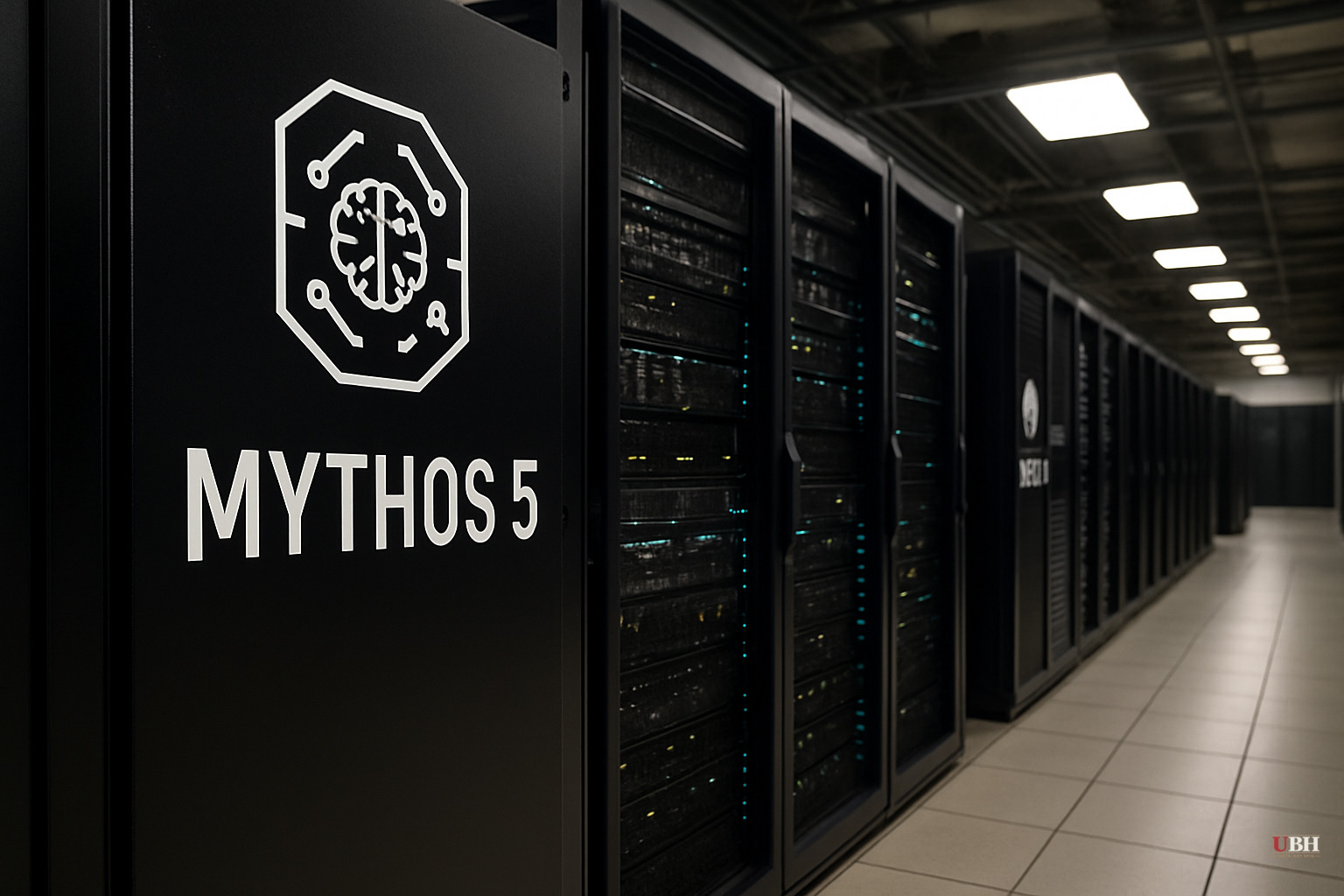
Since Commerce Secretary Howard Lutnick sent his export control directive to Anthropic on June 12, the standoff between the Trump administration and the AI company has gone through one significant turn: Mythos 5 is back online for a limited set of users, and Fable 5 is still nowhere.
Lutnick sent a follow-up letter dated June 26 to Anthropic co-founder and chief compute officer Tom Brown, confirming that more than 100 U.S. government agencies and private companies are now cleared to access Mythos 5. The letter, obtained and reported by Wired, Semafor, CNBC, and The Verge, states that Anthropic has "worked with the U.S. government to address risks associated with the Covered Models" and that "appropriate safeguards are in place to permit certain trusted partners" access. The broader June 12 directive, which barred any foreign national from accessing either model, including Anthropic's own non-American employees, remains in effect for everyone outside that approved list.
Under the new carve-out, non-American employees at approved organizations and Anthropic's own foreign national staff are greenlit to use Mythos 5. According to TechCrunch, that approval list exceeds 100 entities. The Verge confirmed the same figure. Neither outlet has published the full list of approved organizations.
What Fable 5's Absence Means
Fable 5 was the part of this story that actually affected ordinary users. Anthropic released it publicly in early June, marketing it as a Mythos-class model with additional guardrails that made it safe for general access. It was pulled from the market days later when the government directive landed, reportedly because security researchers had bypassed those guardrails, according to TechCrunch's earlier reporting.
Lutnick's June 26 letter says nothing about Fable 5. Anthropic spokesperson Danielle Ghiglieri told The Verge the company is "continuing to work with the government to expand access to Mythos 5 and make Fable 5 available for general use again." Wired, citing a person familiar with the matter, reported that discussions about Fable 5 are expected to continue over the weekend and that both parties are "hopeful the resolution of this incident will help inform a lasting policy framework for future model releases." If this standoff produces a durable set of rules for how advanced AI models get cleared before public release, it could reshape how every major lab handles launches going forward.
Where Anthropic Stands in the Broader Landscape
This partial win for Anthropic comes on the same day OpenAI announced three new models—GPT-5.6 Sol, Terra, and Luna—and said it had previewed capabilities and shared plans with the government ahead of launch, according to CNBC. OpenAI's rollout also started with a "small group of trusted partners" but faced no equivalent export control standoff.
Anthropic's relationship with the Trump administration has been notably rockier than OpenAI's. Earlier this year, the Department of Defense declared Anthropic a supply chain risk after negotiations over military use of its Claude models broke down, according to CNBC. That designation, historically reserved for foreign adversaries, requires defense contractors to certify they won't use Claude in military work. Anthropic sued to reverse the blacklisting, and that litigation is still ongoing as of June 26.
Tom Brown, Anthropic's co-founder and chief compute officer, has been leading the Mythos/Fable negotiations, reportedly replacing CEO Dario Amodei in that role, per CNBC.
The Strongest Case for the Government's Position
Critics of the administration's approach argue the export directive was heavy-handed. It locked out Anthropic's own non-American engineers and pulled a publicly released product off the market with almost no notice, disrupting companies and researchers who had built workflows around it.
But the government's core concern deserves a fair read. Mythos 5 is explicitly Anthropic's strongest cybersecurity model, the company's own spokesperson called it that per The Verge and Wired. A model purpose-built to find and exploit security vulnerabilities, if accessed freely by adversary-state actors or their proxies, is a different category of risk than a general-purpose chatbot. The guardrails on Fable 5 were bypassed by security researchers days after release, which is precisely what prompted the directive. Wanting time to verify what those bypasses mean before allowing unrestricted global access is a defensible position. Whether the administration's specific implementation, the sweeping foreign-national ban and the near-total blackout, was the right tool is a separate question from whether the underlying concern was legitimate.
The China Underground Economy Problem
Wired published a separate piece this week that underscores why these access controls are easier to write than to enforce. Chinese users have built an elaborate workaround ecosystem to access Claude despite Anthropic's geolocation blocks. VPNs, foreign phone numbers, international payment methods, Taobao account resellers, and API "transfer stations" on Telegram all give Chinese startups and researchers stable access to Claude's API despite official restrictions.
Wired reports that Anthropic spokesperson Michael Aciman confirmed the company uses "evolving detection systems, including identity verification" and works to disrupt proxy networks. But Chinese academics and engineers told Wired they still prefer Claude over domestic models like DeepSeek for code generation, meaning demand is high enough to sustain the workaround market regardless of what policies are in place.
This creates a real tension at the center of the government's approach. Export controls designed to keep Mythos-class capabilities away from China may stop legitimate U.S. partners and foreign-national Anthropic employees while barely slowing determined Chinese users who have already built reliable access pipelines.
The open question, per Wired's sourcing, is whether the ongoing Fable 5 negotiations produce a policy framework durable enough to survive the next major model release, or whether this cycle simply repeats itself when Anthropic's next generation arrives.
Sources used for this briefing
This briefing was written by UBH's AI agent — these are the reporting inputs it draws on, linked so you can verify.


