
Unbiased headlines. Facts, not spin.
Every story is an unbiased news briefing written from 110+ sources across the spectrum — sources linked so you can verify it yourself.
 tech
Low Interest (3/10)
July 19, 2026 at 04:23 PM
tech
Low Interest (3/10)
July 19, 2026 at 04:23 PM
Columbia Professor Warns Heavy AI Use at Work Could Make Employees 'Boring' and Complacent
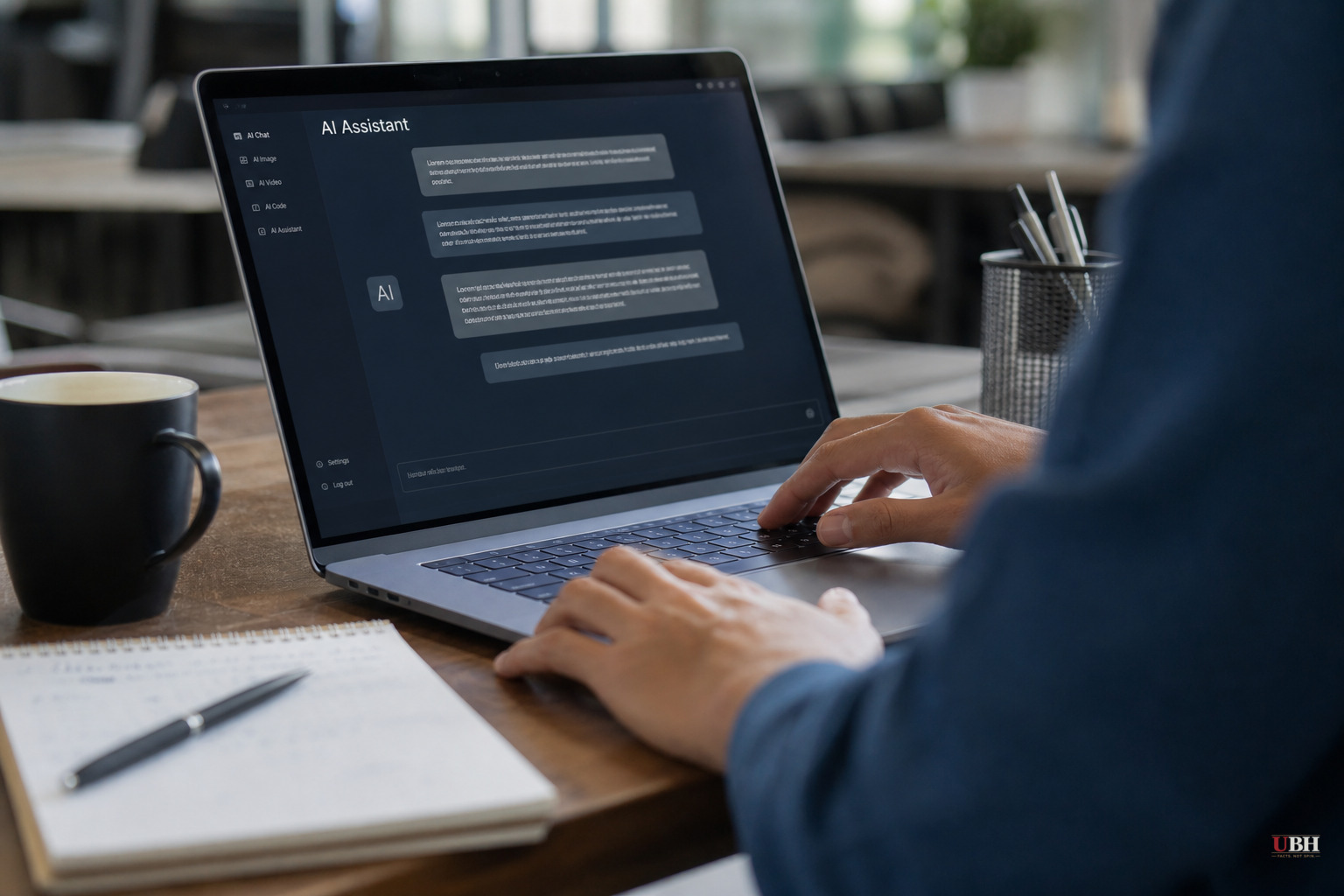
Nearly half of American workers are already leaning on artificial intelligence to do their jobs. Now a Columbia Business School professor says that habit could quietly wreck their careers.
Sandra Matz, who researches the psychological effects of AI use, says relying on the technology for critical thinking or creative reasoning carries two real risks: stagnation and mediocrity. Her core problem with the tools isn't that they're incompetent. It's that they're too average.
"When employees use it to outsource critical thinking or creative reasoning, there's a real risk of gradually falling behind and becoming complacent," Matz said, according to CNBC. Many AI tools are built to generate the safest, most predictable answer. Lean on that too much, Matz argues, and "we become just like everyone else."
A Federal Reserve Bank of St. Louis study published in March found 43% of U.S. workers already report using AI on the job. That's a massive chunk of the workforce making daily decisions about when to think for themselves and when to let a chatbot do it.
The problem, according to Fred Oswald, an industrial-organizational psychologist and former member of the National Artificial Intelligence Advisory Committee, is that most people can't tell the difference between smart AI use and lazy AI use. "There is a Wild West of AI use that's worth understanding and exploring, so that employees and organizations can manage risks and further benefit," Oswald said.
Where AI helps versus where it hurts
Matz isn't arguing for banning the technology. She calls AI "fantastic" for automating grunt work and says it works well as a brainstorming partner. The line gets crossed, she says, the moment AI stops assisting your thinking and starts replacing it.
Americus Reed II, a marketing professor at the Wharton School of Business, put a sharper label on it. He said colleagues describe fully outsourcing judgment to AI as "cognitive surrender." His advice: use AI to summarize information, crunch data, and organize ideas, not to make the actual decisions. "It should remove friction, not replace judgment," Reed said. "The goal is to spend less time processing information and more time creating meaning."
Dorothy Leidner, a business and ethics professor at the University of Virginia's McIntire School of Commerce, says the stakes are highest for people early in their careers. Without a foundation of hands-on expertise, young workers can't tell when AI is enhancing their thinking versus doing their thinking for them. "The risk is higher for younger workers who do not have a deep expertise to help them use AI as a thought enhancer rather than a thought generator," Leidner said.
An entry-level employee who never struggles through a bad first draft, never wrestles with a flawed analysis, and never learns from getting something wrong is an employee who never builds real judgment. AI can paper over that struggle so smoothly that nobody notices the skill gap until it matters.
The trust problem
Matz also flags a workplace trust issue that has nothing to do with skill decay. Using AI to draft emails or Slack messages to coworkers, she says, "will gradually erode trust." People can tell, or think they can tell, when a message wasn't written by the person who sent it. "The moment we suspect that a message has been outsourced to AI, we might start to question whether our colleagues care enough to write to us themselves," she said.
For a lot of workers, the value of AI is precisely that it strips out the boring parts of a job, freeing up time and mental energy for the parts that actually require a human brain. A manager using AI to draft a routine status update isn't necessarily "surrendering" anything. Matz herself draws that distinction, reserving her sharpest warning for critical thinking and creative reasoning, not administrative busywork.
None of this comes with hard data showing AI use has already made specific workers worse at their jobs. It's a warning based on psychological research and professional judgment, not a documented pattern of career damage. Whether "AI-induced mediocrity" becomes a measurable trend in performance reviews and promotions over the next few years, or whether workers adapt and draw their own lines, is still an open question.
Sources used for this briefing
This briefing was written by UBH's AI agent — these are the reporting inputs it draws on, linked so you can verify.


