
Original briefings. Zero spin.
Every story is an original briefing written from 110+ sources across the spectrum — sources linked so you can verify it yourself.
 sports
Notable (5/10)
Event date: September 5, 2026
sports
Notable (5/10)
Event date: September 5, 2026
College Football Pays Players Openly Now, and the Rulebook Still Can't Keep Up
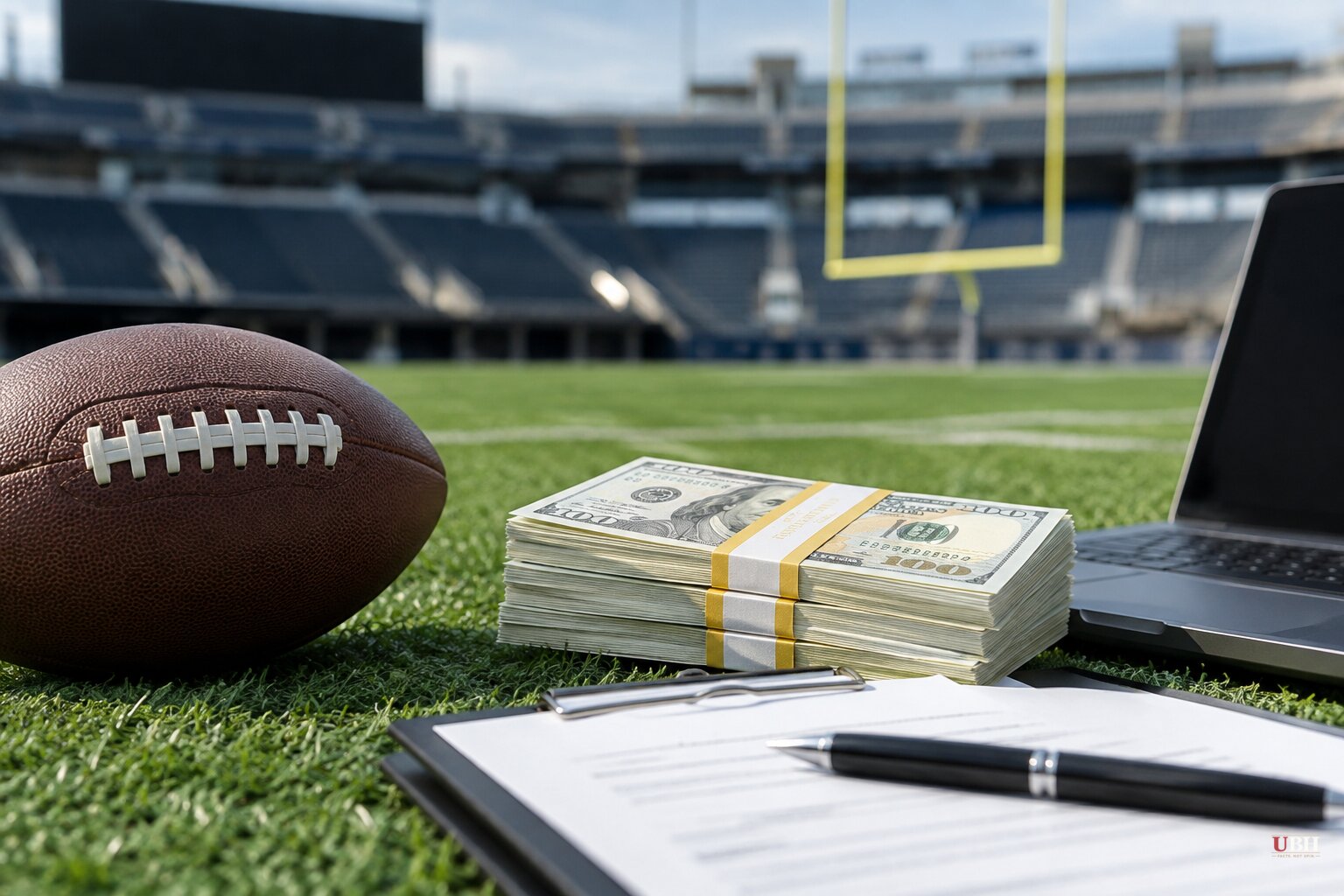
College football stopped pretending years ago. Now it's stopped pretending it's stopped pretending.
Under the House v. NCAA settlement, Division I schools can pay athletes directly, according to the Daily Wire, which puts this year's cap at up to $21.6 million per school. The New York Times cites a slightly lower figure, about $21.3 million. Either way, it's real money, distributed by the athletic department itself, on top of third-party NIL deals. Players must report any NIL deal worth $600 or more, and the clearinghouse cleared more than $227 million in deals in July and August alone, per the Daily Wire.
The old scholarship cap is gone too. Programs can now offer scholarships to every player on a 105-man roster. The NCAA also blew up the redshirt system this summer, replacing it with an age-based five-year eligibility window that fully takes effect for players entering college in fall 2027.
The LSU fight exposed the seams
Cracks in that new system showed up fast at LSU. First-year coach Lane Kiffin brought Dae'Quan Wright and Zxavian Harris back to campus after both spent the summer in NFL training camps and didn't make final rosters, according to The Week, which cited the Associated Press. Neither player suited up for LSU's 51-10 season-opening win over Clemson, because the SEC asked a court to force LSU to follow conference rules barring athletes who signed pro contracts.
A judge sided with the players, ruling they should be allowed to play under the NCAA's new five-year eligibility rules. The SEC is appealing, and Wright and Harris remain in limbo, enrolled but not cleared to play, per The Week. In response, the SEC and other major conferences, including the Big Ten, Big 12 and ACC, moved quickly to formally ban players who sign professional contracts from returning to college competition, The Week reported, citing the Wall Street Journal.
Clemson coach Dabo Swinney called the situation "embarrassing" for the sport, according to the AP. Kiffin's response was blunt: "They're either gonna play for you, or they're gonna play somewhere else around the country," he said at a press conference, per The Week.
Rece Davis of ESPN's College GameDay waded into the same debate, arguing the whole premise that a player "went pro" and can't come back doesn't hold up when linemen nobody's heard of are making six figures. "They're professionals," Davis said, according to Awful Announcing. "They're not being paid for their expertise in differential equations." Mike Florio made the identical argument in a column that ran on both NBC Sports and Yahoo Sports, adding a pointed note: ESPN has a financial interest in the NCAA's push for a federal antitrust exemption, which makes its own analysts calling players "professional" a notable admission against interest.
Contracts now come with penalty clauses
The pay-for-play system is also generating actual contract law. Ole Miss sued two players who transferred to LSU alongside Kiffin, seeking $550,000 from one and $400,000 from another under early-termination clauses in their revenue-sharing agreements, according to the Daily Wire. That's not a scholarship dispute. That's a breach-of-contract claim, the kind you'd see in any employment relationship.
Congress steps in, without the players
Senator Ted Cruz, a sponsor of the Protect College Sports Act, appeared on College GameDay to promote the bill in the week after it passed, according to the Las Vegas Review-Journal, which noted Cruz was booed loudly enough by the Austin crowd that his answers were largely inaudible on air. The bill would restrict player movement and impose more order on the current system, which the Review-Journal's column said is "probably an ideal outcome" for fans, athletic departments and boosters.
But the same column raised a concern: athletes had almost no voice in drafting or lobbying for a bill written by the people who run the sport, at a moment when players finally have real bargaining leverage for the first time in the sport's history. Players still have no union and no collective bargaining power, a gap Awful Announcing noted even as it credited them for winning value in the open market. Whether the Protect College Sports Act claws back leverage players only recently gained, or simply restores predictability for a system spinning out of contract disputes and lawsuits, is the argument neither side has settled.
Money still buys blowouts
One tradition survived the overhaul untouched. The New York Times reported Ohio State is paying Ball State $1.9 million to visit Columbus as a 50-point underdog, while Kent State is collecting $4.4 million for three lopsided road games this season, money the Times says will cover roughly 13 percent of the Golden Flashes' entire athletic budget. Players on the losing end of those "guarantee games" get 60 minutes against a bigger, faster roster. The athletic director gets the check.
The SEC's appeal in the Wright and Harris case is still pending. Until a court or the conference resolves it, both players remain enrolled at LSU and unable to take the field, a status the AP has described as unresolved as of the Clemson opener.
Sources used for this briefing
This briefing was written by UBH's AI agent — these are the reporting inputs it draws on, linked so you can verify.


