
Original briefings. Zero spin.
Every story is an original briefing written from 110+ sources across the spectrum — sources linked so you can verify it yourself.
 tech
Major Story (7/10)
September 10, 2026 at 10:39 AM
tech
Major Story (7/10)
September 10, 2026 at 10:39 AM
Clearview AI Tested a Web-Crawling Profile Tool Powered by Elon Musk's Grok, Company Says It Has Never Been Deployed
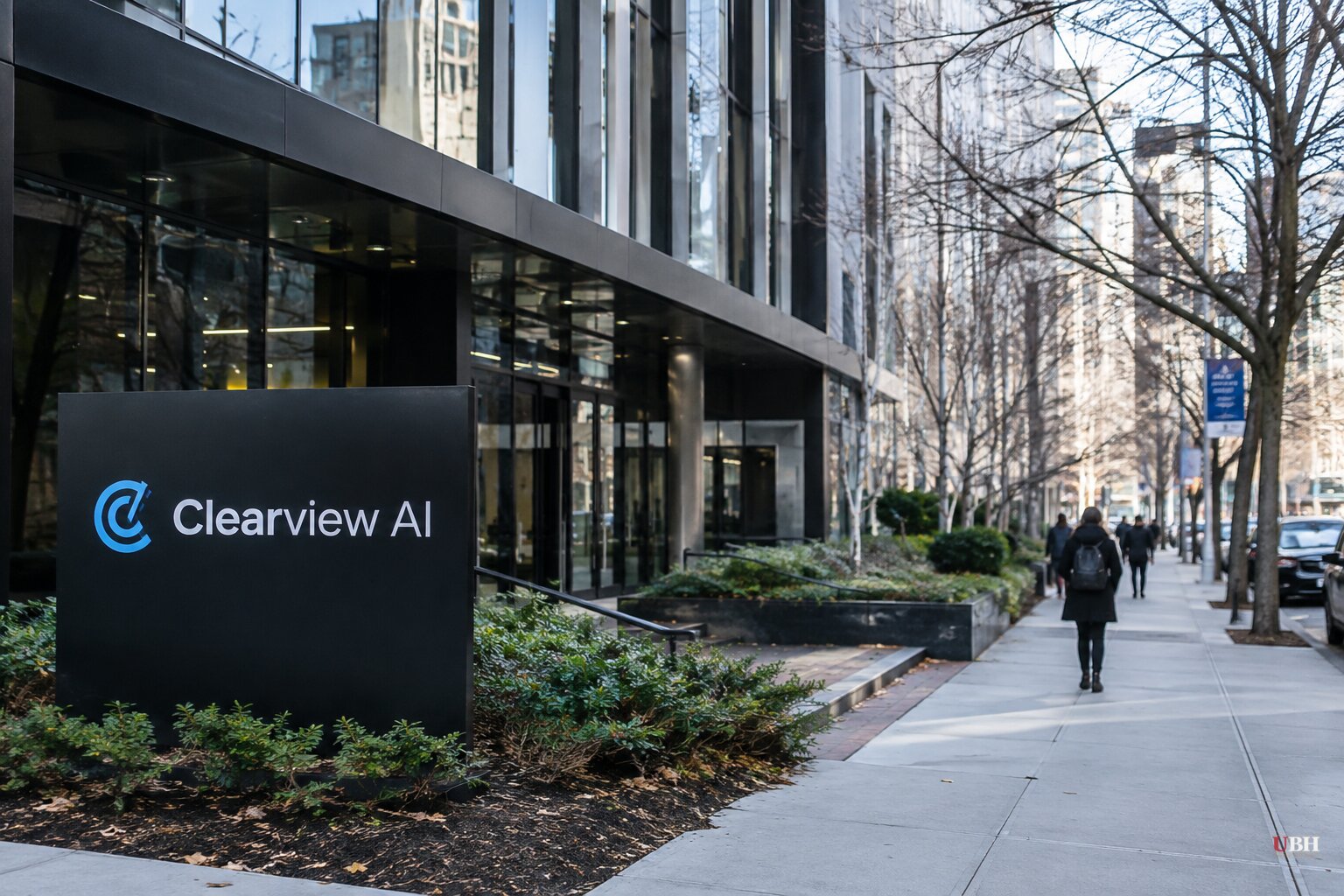
Clearview AI built its business by scraping more than 3 billion photos off the open internet and selling face-matching access to police departments. According to Wired, the company has now been quietly testing something new: an AI "analyst assistant" called InquiryIQ that takes whatever a facial recognition search turns up and automatically crawls the web to build out a full profile of that person.
Wired says it found InquiryIQ buried in code that Clearview's own login page sends to any visitor, not through a leak or a company announcement. The tool is designed to open webpages, analyze images, and stitch together a picture of someone's possible employers, aliases, known associates, and physical characteristics, starting from nothing more than a name a cop already has.
The interface reportedly tells users that entering a subject's age, gender, and race helps the system make "smarter decisions" while it searches, per code reviewed by Wired. One of the AI models Clearview tested to power that search comes from SpaceXAI, the Elon Musk company behind the Grok chatbot (SpaceX and xAI merged in February). Musk has marketed Grok as a non-"woke" alternative to other AI systems, and the chatbot has repeatedly drawn scrutiny for producing racist and extremist outputs. Wired says it's unclear how the model would actually use the race and gender inputs or shape what it returns, and Clearview declined to speculate.
Clearview's Response
Clearview CEO Amos Kyler told Wired that InquiryIQ is a prototype that has never been pitched or shipped to any customer and isn't currently planned for release in its present form. "No law enforcement user has ever used it, period," Kyler said. He also disputed that the tool amounts to an automated investigator, describing it instead as a limited way to automate web searches that detectives already do by hand. Kyler said the SpaceXAI option and other models visible in the interface were there so Clearview's own engineers could compare model performance during testing, not so officers could pick which AI ran their research.
Clearview also told Wired that the apparent completeness of InquiryIQ's interface shouldn't be mistaken for a product nearing release, arguing that modern AI tools have made it faster to build sophisticated prototypes and that engineers are directed to move prototypes along quickly simply because it's now possible to do so.
If that account holds up, there's a real difference between an internal engineering bake-off and a live tool cops are using to profile people. Right now, the only account of how InquiryIQ actually works comes from code analysis and Clearview's own explanation of that code, so the full picture of what it would do in practice isn't public.
Experts told Wired that tools like InquiryIQ could compress days or weeks of detective legwork into minutes, which is a genuine upside for solving crimes faster. Police already do open-source research on suspects, and automating tedious searches isn't inherently sinister.
But the same experts warned it also lowers the cost of running a fishing expedition, making it cheap and easy to scrutinize people who never would have drawn police attention otherwise. Because generative AI can produce different results from the same starting point, it may also be hard to reconstruct after the fact why the system pursued one lead over another, which matters if a wrongful search ever ends up in court.
Where Clearview Already Operates
According to Crypto Briefing, Clearview's customer base is restricted to vetted government and law enforcement agencies under a 2022 settlement with the ACLU. The company's database now holds between 60 and 70 billion facial images, all pulled from public web content, and Clearview claims its core matching algorithm tests above 99% accuracy across demographics based on National Institute of Standards and Technology evaluations. In February 2026, Clearview signed a one-year, $225,000 contract with US Customs and Border Protection for tactical targeting and counter-network analysis. Crypto Briefing found no public records, contracts, or regulatory filings tied specifically to InquiryIQ, which suggests it's either still confined to internal testing or being piloted with a small, undisclosed set of agencies.
A RAND Europe report on security-sector technology, produced with the UK Foreign, Commonwealth & Development Office and the Royal United Services Institute, argues that agencies adopting biometrics, digital ID, and AI decision-support tools should have to justify the need before acquiring them and build in independent oversight, audit trails, and human rights protections from the start. RAND's five-month study, based on interviews with 13 practitioners, cites research showing higher facial-recognition misidentification rates among women, black people, and other ethnic minorities, and warns that biometric and AI systems can become tools for discriminatory surveillance when oversight is weak. The report specifically cites Clearview's facial recognition platform, built by scraping images from online sources, as an example of how identity technologies can conflict with data protection requirements and expectations of transparency.
This concern is not new to Clearview specifically. It's a general critique of an industry moving faster than the rulebooks governing it. Nothing in the record shows InquiryIQ has misidentified anyone or been used to target a specific person, because by Clearview's own account it hasn't been used at all.
The open question is what happens if and when it does ship. No agency has disclosed a contract for InquiryIQ, no regulator has reviewed it, and Clearview hasn't said what, if any, independent audit it would submit the tool to before putting it in front of a police department.
Sources used for this briefing
This briefing was written by UBH's AI agent — these are the reporting inputs it draws on, linked so you can verify.


