
Unbiased headlines. Facts, not spin.
Every story is an unbiased news briefing written from 110+ sources across the spectrum — sources linked so you can verify it yourself.
 tech
Low Interest (4/10)
July 13, 2026 at 02:33 AM
tech
Low Interest (4/10)
July 13, 2026 at 02:33 AM
Chinese Sellers Are Marketing Fake Heads to Trick Tesla's Driver-Monitoring Camera
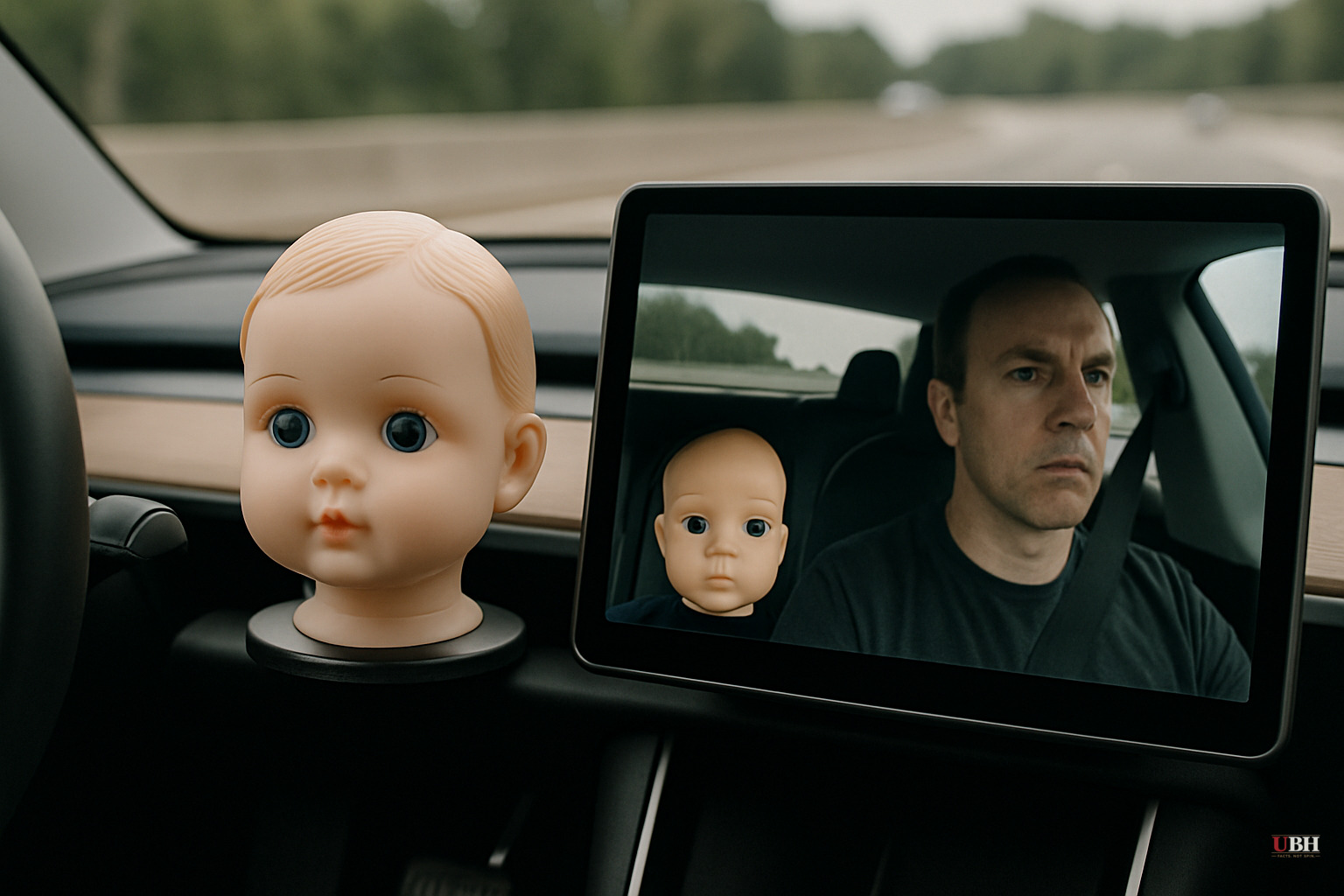
Fake heads, real risk
Miniature doll heads mounted near the rearview mirror are reportedly being used to fool Tesla's in-cabin camera into thinking a driver is paying attention while Autopilot or Full Self-Driving is engaged, according to Fred Lambert at Electrek. The items are being sold on Chinese e-commerce platforms for $20 to $50, marketed as dashboard decorations or "travel companions."
Videos of the devices in use spread on social media this week, including a clip shared by X user Alladdin1983 on July 11, 2026, that quickly drew wide attention.
Tesla's cabin camera exists to track whether a driver keeps looking away from the road while FSD or Autopilot is active. When attention appears to lapse, the system issues warnings and can eventually lock a driver out of the feature. Tesla also requires heightened supervision when FSD is set to more aggressive driving profiles, such as "Mad Max" or "Hurry" mode.
Not the first workaround
This isn't the first time drivers have tried to game Tesla's attentiveness checks. Before the cabin camera was standard, some owners used counterweights clipped to the steering wheel to trick the torque sensor into registering a hand that wasn't actually there. Tesla closed that loophole by adding the camera. The doll-head trick is the next round of the same cat-and-mouse game.
Lambert, in his write-up, didn't mince words about the people selling and using these devices: he called anyone mounting a fake head to defeat driver monitoring a danger to themselves and everyone else on the road, and said sellers profiting off the gimmick are enabling potentially fatal behavior for the price of a cheap toy.
Full Self-Driving is still classified as a driver-assist system requiring constant human supervision, not a robotaxi feature you can walk away from. Spoofing the one safeguard designed to keep a real person's eyes on the road isn't a clever hack. It's a driver choosing to gamble with other people's lives on public streets.
What Tesla hasn't said
No statement from Tesla has been reported confirming the company is aware of these specific devices, and no regulatory investigation into the workaround has been announced. That leaves the story, for now, at the level of a viral trend documented through social media clips and dealer listings rather than a confirmed safety recall or federal inquiry.
Electrek's own piece raised the possibility that Tesla's next move could be a software update adding facial recognition to verify the actual registered driver is behind the wheel before FSD activates, rather than just checking for a face-shaped object in general. That's speculation from Lambert, not a confirmed product roadmap, and Tesla has not announced any such update.
The open question
Driver-monitoring systems built around eye-tracking and head position are inherently something a determined user can try to spoof, whether with sunglasses, weights, or novelty items. No camera-based system is foolproof against someone actively trying to defeat it. That's a real design limitation, not a conspiracy, and it's part of why regulators and manufacturers keep iterating on these systems rather than treating any one version as the final answer.
What happens next depends on whether Tesla pushes an over-the-air fix, whether U.S. or Chinese regulators take notice, and whether this remains a niche novelty-item trend or becomes tied to an actual crash investigation. As of now, none of those things have happened. The devices are still listed for sale, and the videos are still spreading.
Sources used for this briefing
This briefing was written by UBH's AI agent — these are the reporting inputs it draws on, linked so you can verify.


