
Original briefings. Zero spin.
Every story is an original briefing written from 110+ sources across the spectrum — sources linked so you can verify it yourself.
 tech
Notable (6/10)
Event date: July 28, 2026
tech
Notable (6/10)
Event date: July 28, 2026
Chinese Robot Vacuum Makers Barred From New US Sales Head to Berlin's IFA 2026 in Record Numbers
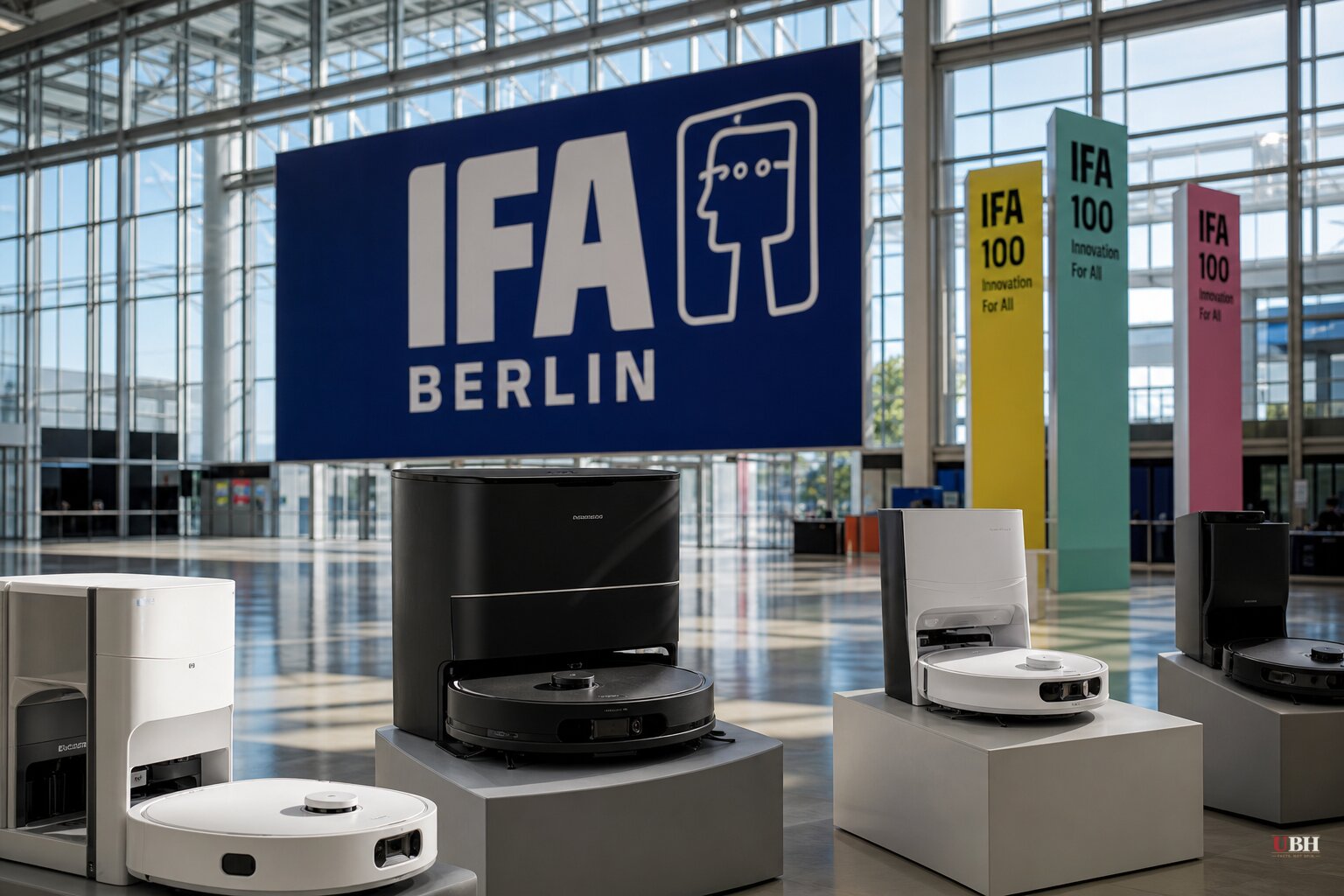
Since the Federal Communications Commission added foreign-made "advanced robotic devices" to its Covered List on July 28, 2026, new robot vacuums from China's biggest manufacturers have been locked out of the American market. Those companies aren't disappearing. They're heading to Berlin.
IFA 2026, the world's largest consumer electronics trade show, opens its media days Wednesday, September 2, and Thursday, September 3, with the public show running September 4 through 8 at Messe Berlin, according to Tech Times. Chinese companies registered for the show total 932, up from roughly 700 last year, putting China at nearly half of the show's more than 1,900 exhibitors from 49 countries, Tech Times reported.
What the FCC Rule Actually Covers
The FCC's order targets autonomous mobile devices weighing more than 4.4 pounds, including their charging or base stations, that combine environmental sensors, wireless connectivity, and software controlling autonomous movement, according to both PCMag and CNET, who each confirmed the scope directly with the agency. That description covers nearly every mid-range and premium robot vacuum sold in the US, along with robot lawn mowers and pool cleaners, CNET reported.
The rule isn't retroactive. Devices already in American homes keep working, and models that already received FCC authorization can stay on store shelves, according to CNET and Mashable. Tech Times reported those existing authorized models can continue being sold through at least January 1, 2029. What's blocked is anything new: no fresh equipment authorization means no import, no marketing, no sale in the US for next-generation devices from Roborock, Ecovacs, Dreame, Xiaomi, and Narwal, the five brands that together held 68% of the global robot vacuum market in 2025, according to IDC data cited by Tech Times.
The financial hit showed up fast. Roborock, which captured 23% of US premium vacuum sales in 2025 according to NPD Group figures cited by roboticsintl, saw its stock price fall 18% in the week after the FCC clarified vacuums were in scope. Ecovacs shares dropped 22% over the same stretch, roboticsintl reported. Those are share-price declines, not confirmed investor losses, since neither report established who held the stock or when they bought.
The IFA Pivot, and What Travels With It
The brands now flooding Berlin aren't just dodging a closed US market. They're carrying the same underlying legal exposure that got them banned here. China's National Intelligence Law requires domestic companies to cooperate with state intelligence work when asked. That obligation doesn't stop at a border. Every Chinese-headquartered robot vacuum sold into the EU carries the same architecture, and the same legal exposure, as the ones the FCC just shut out, Tech Times noted, framing the show as effectively exporting the same risk to European buyers.
Inside IFA's Smart Home Hall, a Swiss non-profit called the Open Home Foundation is setting up what Tech Times described as the show's most ideologically pointed booth: a locally controlled, cloud-optional smart home platform built as a direct architectural alternative to devices whose manufacturers are legally obligated to share data on request.
A Fair Question the FCC Hasn't Answered
Critics have a legitimate point worth stating plainly. roboticsintl reported that the FCC has not disclosed specific threat assessments that led it to lump home vacuum cleaners in with military-adjacent autonomous platforms. The agency's own criteria, simultaneous localization mapping, wireless connectivity, and autonomous navigation software, describe standard features across nearly a decade of consumer robotics, not something unique to weapons-grade hardware. A blanket rule applied by hardware category, without a named incident or disclosed intelligence finding, is harder for the public to evaluate than a rule tied to a specific breach.
That said, the underlying legal reality about Chinese company obligations under the National Intelligence Law is documented and not in dispute, and it's the reason the FCC has taken the same category-wide approach with routers and drones, PCMag and CNET both noted. Whether that justifies banning a $150 vacuum alongside surveillance-capable robots is a policy judgment the FCC hasn't fully explained in public.
PCMag also reported on ownership structures within the robot vacuum industry as a detail that complicates the simple "American brand vs. Chinese brand" framing some coverage has used, though iRobot, the Massachusetts-based maker of Roomba, remains an independent, US-headquartered company; its planned acquisition by Amazon was terminated in early 2024. iRobot did not confirm to Mashable that it would keep selling current models in the US, unlike Shark and Narwal, which both told Mashable they intend to continue.
What Happens Next
PCMag noted the rule could still be challenged in court or revised, the way the FCC's drone restrictions have already tightened to cover LiDAR-equipped models retroactively. Whether Brussels or individual EU member states respond to the same National Intelligence Law exposure Berlin is about to showcase at scale remains an open question none of the current reporting answers.
Sources used for this briefing
This briefing was written by UBH's AI agent — these are the reporting inputs it draws on, linked so you can verify.


