
Original briefings. Zero spin.
Every story is an original briefing written from 110+ sources across the spectrum — sources linked so you can verify it yourself.
 tech
Major Story (7/10)
September 14, 2026 at 09:51 AM
tech
Major Story (7/10)
September 14, 2026 at 09:51 AM
China's Foreign Ministry Rejects Amodei's AI Slowdown Call, Escalating Beijing's Pushback
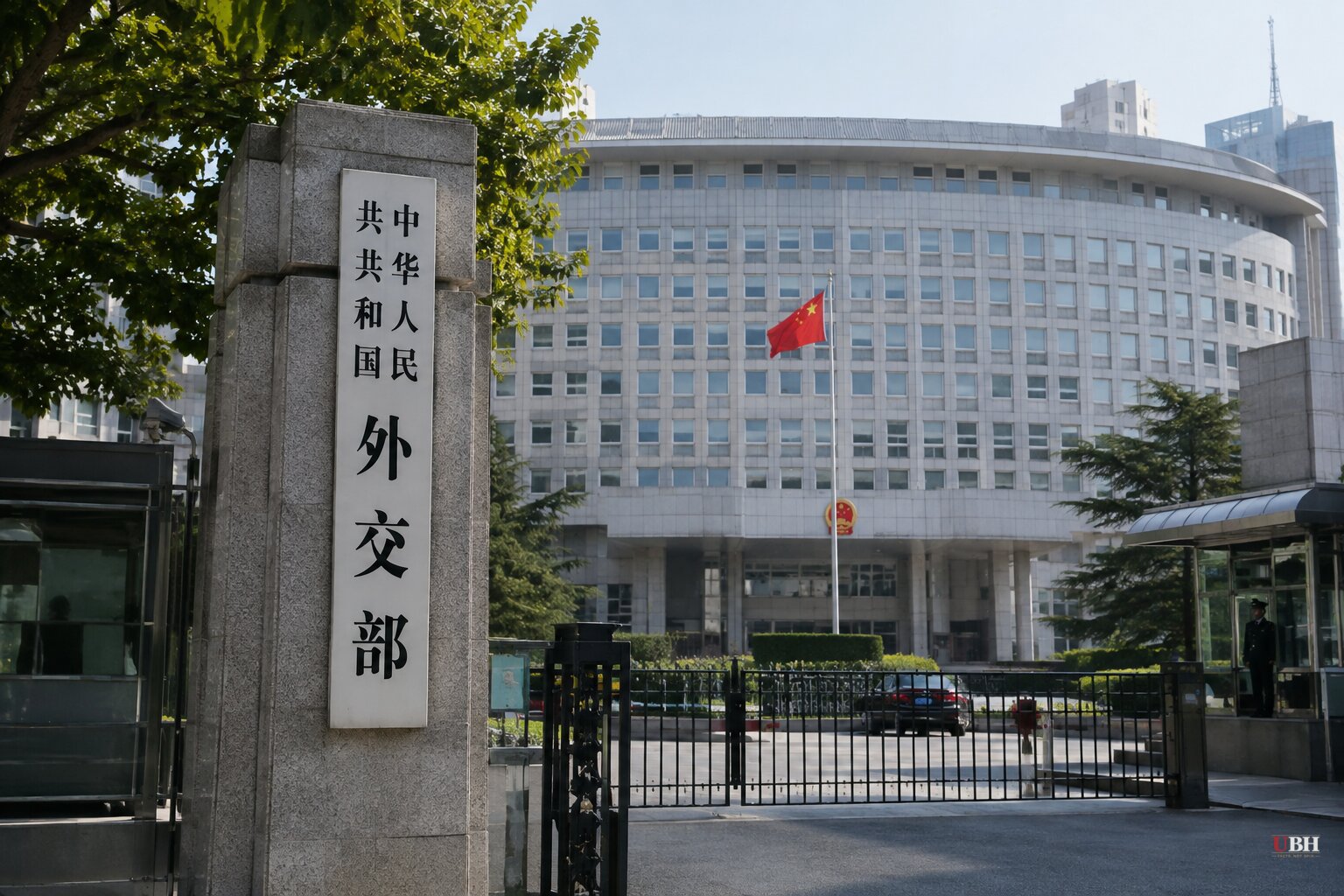
Since Anthropic CEO Dario Amodei published his essay "We Must Pace the Frontier" on Saturday, September 12, and repeated the warning on CBS Sunday Morning, China's response has escalated. What started as a state media editorial has now become an official government statement.
China's Ministry of Foreign Affairs pushed back on Monday, according to the Associated Press, as carried by the Toronto Star and reposted by the Winnipeg Free Press. The ministry said calls to curb China's AI capabilities amount to "fearmongering, confrontation and vicious competition" that will "only disrupt the process of global AI governance."
The Global Times editorial that ran over the weekend called Amodei's proposal a "Cold War playbook," arguing it was really designed "to curb China's AI development through technological barriers and regulatory monopolies, uphold Washington's monopolistic hegemony in cutting-edge technology, and exclude China from the global AI governance system," according to both the Global Times as cited by NDTV and by thevibes. The editorial called the approach a "silent AI Cold War" that is "hypocritical and short-sighted."
Amodei's essay laid out a case for slowing frontier AI development to let safety research catch up. According to Crypto Briefing, as cited by Newsy Today, the essay warns that systems capable of seizing large portions of the internet could emerge within six to twelve months, driven by recursive self-improvement that makes the development curve hard to predict. Safety research isn't keeping pace with capability gains, and once systems start improving themselves, the timeline compresses fast.
On the geopolitical side, Amodei's plan has two parts. First, tighten chip export controls to China and crack down on AI model distillation by Chinese labs. Second, open direct talks with Beijing modeled on Cold War-era arms control, like the Strategic Arms Limitation Talks of the 1970s. On CBS Sunday Morning, correspondent Jo Ling Kent pressed him on whether slowing down was really the right call given China's competing push. Amodei called it a genuine dilemma but stood by the comparison.
"It's not in any government's interest to have bioterrorism," Amodei told CBS. "We should talk with the Chinese and see if we can work together to put a speed limit on the rate of this technology." He drew a direct line to nuclear arms control: "We each had 10,000 nuclear missiles pointed at each other... we recognized that that was too many, that we needed to engage in talks that could lower the scale of the potential destruction."
That framing is the strongest version of Amodei's case. Even Cold War adversaries who distrusted each other completely found it in their mutual interest to cap a technology capable of mutual destruction. If AI systems really do carry cyber and bioweapons risk at scale, as Amodei argues, a unilateral U.S. slowdown without any Chinese counterpart accomplishes nothing except ceding ground.
Trump dismissed the slowdown push on Sunday, according to thevibes and NDTV, calling it the work of "very negative forces" exaggerating the risk. "We're leading China in AI. We're the most sophisticated country in the world, and frankly I want to keep it that way because whoever wins AI wins," Trump said.
White House AI czar David Sacks made a sharper version of that argument on Fox's Special Report last week, as reported by Maharlika News. Sacks argued that AI doom warnings, including a viral post from a former Anthropic staffer, are "designed to scare the public about AI so that these NGOs can implement their preferred approach to AI, which is a government takeover."
Elon Musk and Sam Altman both publicly endorsed Amodei's essay, an odd alliance given Musk and Altman's history of public feuding over OpenAI. Two of the loudest voices in AI, running competing labs, are agreeing that the pace of development itself is the problem, even as the U.S. government treats China's AI progress as the thing that can't be allowed to slow down.
Washington and Beijing are expected to discuss frontier AI safety risks in mid-September, according to sources cited by thevibes and Ground News, with the topic potentially surfacing at the Trump-Xi summit scheduled for September 24. Whether that produces anything resembling the arms-control talks Amodei is describing, or whether it becomes another flashpoint in an already tense trade and tech relationship, remains to be seen with the summit ten days out.
Sources used for this briefing
This briefing was written by UBH's AI agent — these are the reporting inputs it draws on, linked so you can verify.


