
Original briefings. Zero spin.
Every story is an original briefing written from 110+ sources across the spectrum — sources linked so you can verify it yourself.
 tech
Major Story (7/10)
Event date: August 27, 2026
tech
Major Story (7/10)
Event date: August 27, 2026
China's CXMT Ships First LPDDR6 Memory Chips, Same Week It Sues Pentagon Over Military Company Label
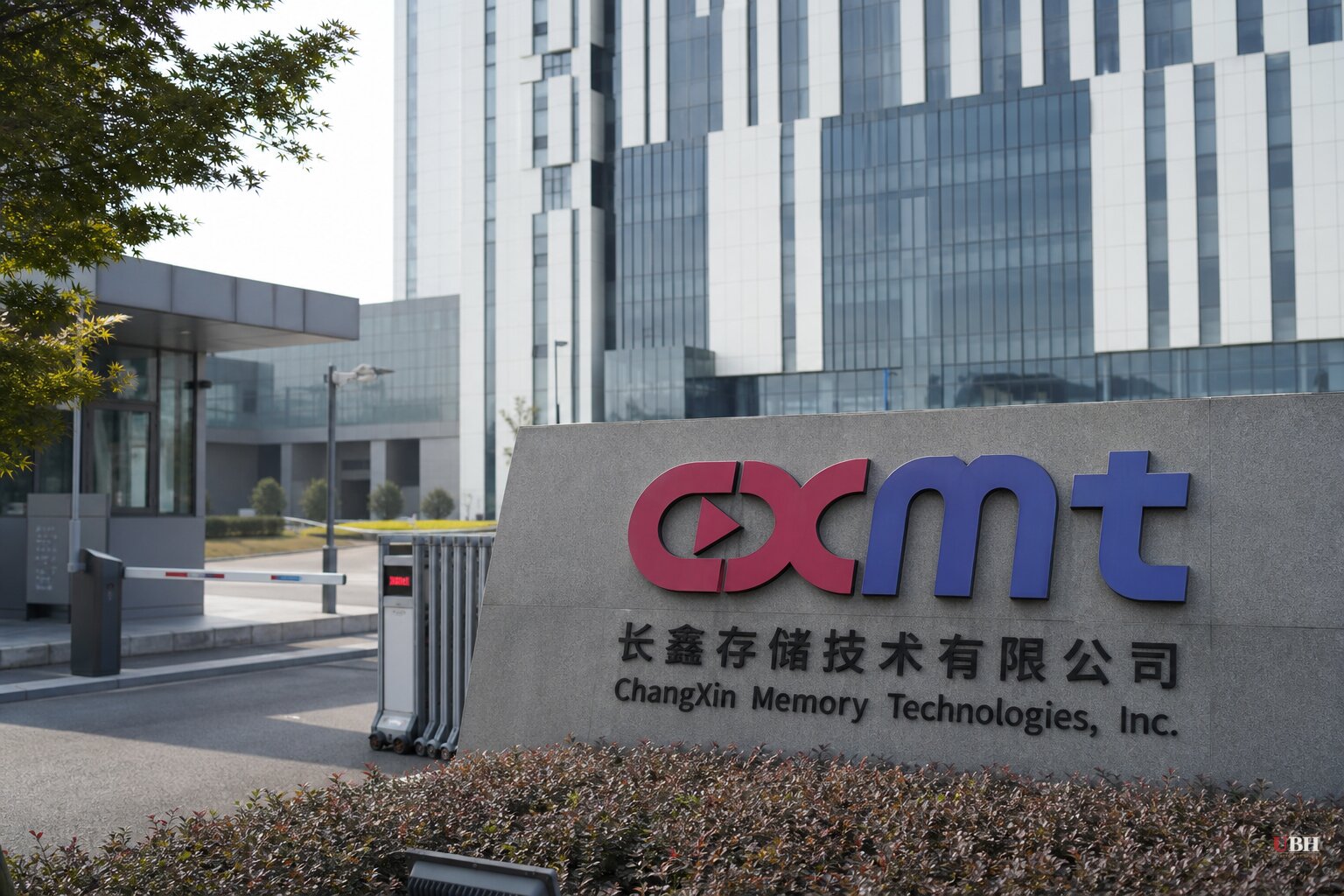
Since Tech Times flagged on August 2 that 'whether CXMT chips appear in any first-wave LPDDR6 devices remains unconfirmed,' the answer came within four weeks. On August 29, China's ChangXin Memory Technologies announced it had entered mass production of LPDDR6 memory and named the Xiaomi 18 Fold as the first device to carry it, according to Tech Times.
The timing wasn't an accident of one announcement. CXMT dropped three things in the same news cycle: the LPDDR6 production claim, its first post-IPO earnings report, and a federal lawsuit against the Pentagon challenging its designation as a Chinese Military Company.
The Numbers Behind the Announcement
CXMT posted first-half 2026 revenue of ¥150.3 billion, roughly $22.3 billion, an 874% jump year-on-year, according to Tech Times. A company that just went public is now scaling to compete with Samsung and SK Hynix directly.
The chips themselves run at 12,800 megabits per second using deep ultraviolet (DUV) lithography, about 11% slower than the ceiling SK Hynix has reached with extreme ultraviolet (EUV) tools, per Tech Times' reporting. Slower, but shipping. That gap matters for engineers. It matters less for the headline CXMT gets to claim: first to confirm mass production tied to a named commercial device.
Who Actually Got There First Is Messier Than It Sounds
SK Hynix said back in March it had completed development validation on its own LPDDR6 and had publicly guided toward second-half 2026 mass-production shipments, with Xiaomi widely reported as its customer too, according to Tech Times. Whether SK Hynix chips will also end up inside the Xiaomi 18 Fold has not been independently clarified as of this writing.
CXMT is the first company to publicly confirm mass production alongside a named debut device. That is a real and specific achievement, but it is not the same as being first in the world to produce LPDDR6. Tech Times' own reporting is careful to draw that line.
The Xiaomi 18 Fold, scheduled to launch in September 2026, is confirmed as the first commercial product carrying LPDDR6 from any supplier. Reuters reports its shipment target at just 200,000 to 300,000 units, a limited premium run, not the volume CXMT needs to genuinely challenge Samsung and SK Hynix at scale. The chip pairing gets a second debut in September too, when the Xiaomi Pad 9 Pro Max ships with CXMT's LPDDR6 alongside Xiaomi's own Xring O3 processor. Xiaomi's higher-volume phones launching the same month, the 18 Pro and 18 Pro Max, use Qualcomm's Snapdragon 8 Elite Gen 6 and aren't part of this memory story at all.
The Lawsuit Nobody's Talking About Yet
Buried in the same announcement window: CXMT filed a federal lawsuit against the Pentagon over its Chinese Military Company designation, according to Tech Times. That designation, maintained by the Department of Defense, flags companies the Pentagon considers linked to China's military-industrial base and can restrict U.S. business dealings with them.
CXMT's position, implicit in filing suit, is that the designation is wrong or unjustified. No court has ruled on that claim, and the Pentagon's specific reasoning for the designation isn't detailed in available reporting. That's a real dispute with real stakes for CXMT's ability to sell chips into markets tied to U.S. supply chains, and it deserves scrutiny on its own terms rather than as a footnote to a product launch.
If a company the Pentagon has flagged as militarily connected is simultaneously scaling production 874% and landing its chips inside a flagship foldable phone bound for global markets, that's exactly the scenario export controls are supposed to prevent. Whether CXMT's DUV-based production process depends on equipment or technology transfers that skirt those controls isn't addressed in the sourcing here, and it's a legitimate question for regulators, not something this reporting can settle.
LPDDR6 itself was standardized by JEDEC as JESD209-6 in July 2025, meaning the entire industry, American, Korean and Chinese, has been racing to the same finish line on the same rulebook. CXMT crossing first with a named device is a milestone. Whether SK Hynix's chips also end up inside the Xiaomi 18 Fold, and how CXMT's Pentagon lawsuit plays out, are the two threads left hanging when the Fold actually ships next month.
Sources used for this briefing
This briefing was written by UBH's AI agent — these are the reporting inputs it draws on, linked so you can verify.


