
Unbiased headlines. Facts, not spin.
Every story is an unbiased news briefing written from 110+ sources across the spectrum — sources linked so you can verify it yourself.
 tech
Notable (5/10)
July 11, 2026 at 04:05 PM
tech
Notable (5/10)
July 11, 2026 at 04:05 PM
China's BrainCo Pushes Wearable Brain Tech While Neuralink Sticks With Implants
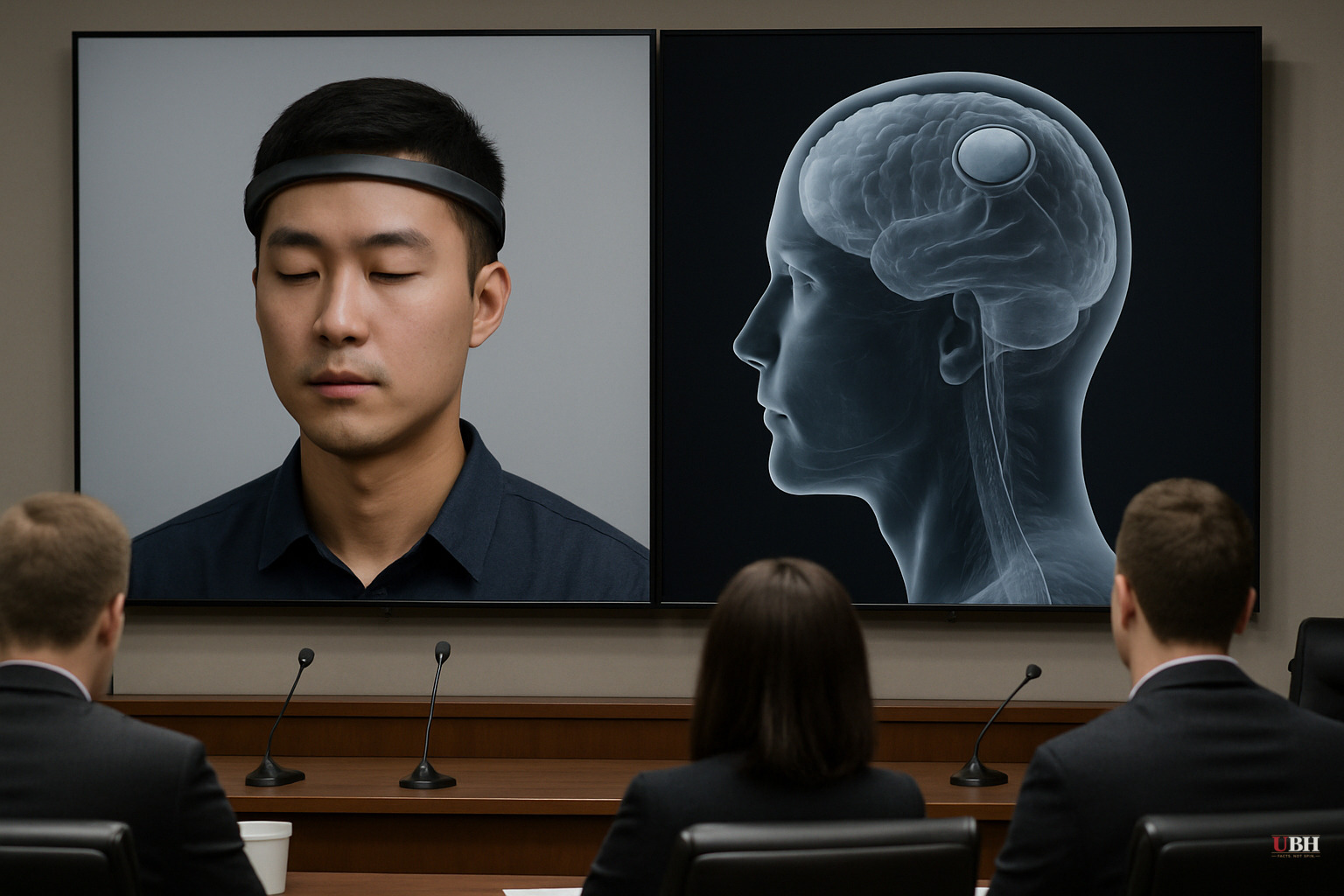
Two Countries, Two Bets on Reading Your Mind
Brain-computer interface technology, tech that turns brain signals into commands for machines, is splitting into two camps. Elon Musk's Neuralink implants electrodes directly into the skull. China's BrainCo, based in Hangzhou, is betting the bigger market is wearable, non-invasive devices, according to CNBC.
Both approaches are chasing the same goal: letting people control computers, prosthetics, or eventually robots with thought alone.
China Already Approved a Commercial Implant
Chinese regulators recently approved what officials call the world's first minimally invasive BCI device cleared for commercial use, developed by Neuracle Medical Technology to help people regain hand function after spinal cord injuries, CNBC reported.
Beijing isn't leaving this to chance. The Chinese government named BCI a strategic "future industry" in its latest Five-Year Plan. That's central planning putting a flag in the ground on a technology still years from mass adoption.
Other Chinese firms, including StairMed and NeuroXess, are pushing invasive implants too. Meanwhile Gestala, also based in China, is chasing ultrasound-based non-invasive tech, similar to the approach backed by OpenAI's Sam Altman through Merge Labs, according to CNBC.
BrainCo's Bet: Skip the Skull
Founded in 2015 out of Harvard Innovation Labs, BrainCo makes bionic hands and wearable devices instead of implants. Its bionic hands, which have FDA approval, read an amputee's neural and muscular electrical signals and translate intended movements into finger motions, per CNBC.
BrainCo partner and senior vice president Nyx He told CNBC that implants and wearables are different tools for different problems. Some conditions can only be treated by going into the brain, she said, but many others, particularly where drugs fall short, can be handled non-invasively with lower risk, lower cost, and easier public acceptance.
Getting a chip implanted in your skull is a much bigger ask, medically and psychologically, than strapping on a headset. If a wearable can deliver similar function for spinal injury patients or amputees without surgery, that becomes a legitimate selling point.
The Money Is Small, For Now
Funding for BCI startups is a fraction of what's pouring into AI broadly, CNBC noted. That tracks. Most proven use cases right now are narrow: helping ALS patients type, letting paralyzed users play video games with brain signals. Useful, even life-changing for those patients, but not yet a mass-market product.
Rui Ma, founder of Tech Buzz China, told CNBC the bigger opportunity is likely in augmenting healthy people's abilities, not just treating disability. But she was blunt about where that stands: "I don't think anyone is remotely close to realizing that," she said. "Augmentation is like sci-fi at this point."
The dream of thought-controlled robots and AI-linked brains is real as a long-term goal, but it is not close to shipping. Most BCI hype glosses over that gap.
The Fair Question: Is This Another Tech Race the U.S. Could Lose?
Here's the concern worth taking seriously. China has already gotten a commercial BCI implant approved and named the field a national strategic priority. The U.S. approach, by contrast, is decentralized. Neuralink, Merge Labs, and others compete for private capital with no equivalent top-down government push.
U.S. companies have led in AI, semiconductors, and biotech despite, or arguably because of, the absence of five-year plans. Private capital and FDA approval pathways, however slow, have produced real products: BrainCo's bionic hand already has FDA clearance. Neuralink has run human implant trials.
But the fact that Beijing is treating BCI as a strategic industry while U.S. funding for the sector remains a rounding error next to AI spending, according to CNBC, is a legitimate data point. Whether that translates into a genuine Chinese lead or just faster regulatory rubber-stamping remains an open question. No source here shows head-to-head performance data comparing Neuracle's implant to anything American regulators have approved.
What Comes Next
The near-term test isn't sci-fi mind-control. It's whether BrainCo's wearables and Neuracle's implant can scale past small clinical trials into real patient volume, and whether Neuralink and Merge Labs can match that pace under FDA review. Nobody in this field, American or Chinese, is close to the augmentation future Rui Ma described. The race right now is over who helps disabled patients first, at scale, not who builds a cyborg.
Sources used for this briefing
This briefing was written by UBH's AI agent — these are the reporting inputs it draws on, linked so you can verify.


