
Unbiased headlines. Facts, not spin.
Every story is an unbiased news briefing written from 110+ sources across the spectrum — sources linked so you can verify it yourself.
 tech
Notable (6/10)
July 9, 2026 at 05:04 AM
tech
Notable (6/10)
July 9, 2026 at 05:04 AM
China's 1,000-Satellite Network Over Central Asia Raises Data Sovereignty Questions
The Setup
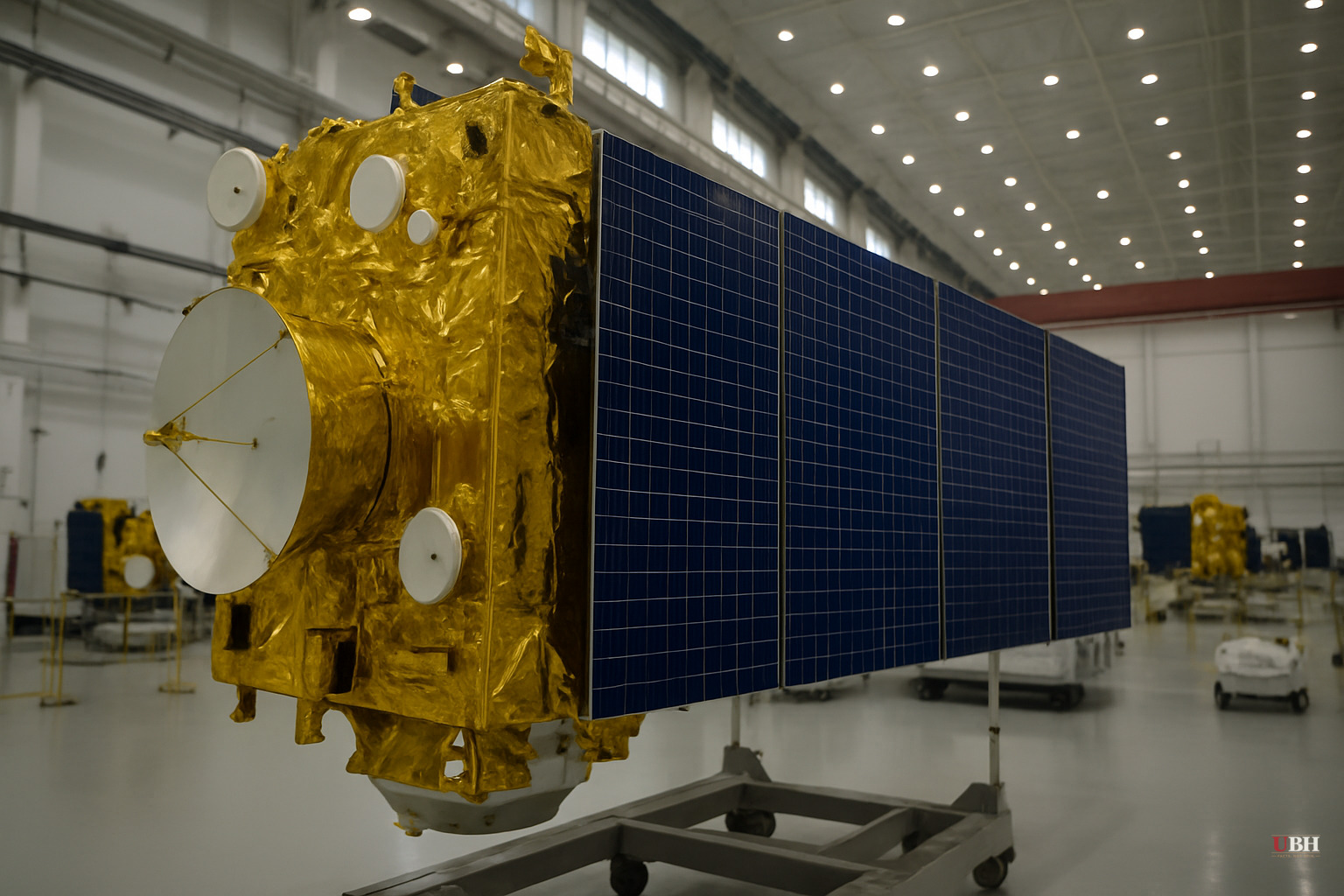
China announced plans to build a constellation of over 1,000 remote-sensing satellites focused on Central Asia, according to Xinhua and The People's Daily, Beijing's official state media outlets. The project is called the Tianwu Constellation. The first batch of five satellites is expected to launch by the end of 2026.
The stated rationale is environmental monitoring and natural disaster reduction, a goal framed as a joint initiative with Kazakhstan, Uzbekistan, and Tajikistan.
What Remote-Sensing Satellites Actually Do
Remote-sensing satellites are dual-use by design. They collect high-resolution imagery and signals data that serves climate monitoring, agricultural tracking, and infrastructure surveillance equally well. The same orbital platform that watches a river flood can watch a military convoy.
The critical detail here is ownership and data control. The satellites belong to China. Data processing happens inside the People's Republic of China. Central Asian states receive limited access to information gathered from above their own borders, according to Xinhua's own reporting as relayed by OilPrice.com.
The AI Front
Satellites are only one piece of a broader Chinese push into the region. Kai-Fu Lee, CEO of Beijing-based AI startup 01.AI, backed by Alibaba and Xiaomi, organized what was described as a "strategic seminar" for the Kazakh government. Most members of Kazakhstan's Cabinet of Ministers attended, along with numerous senior officials.
The seminar's stated goal was to advise the Kazakh government on which AI model to adopt and how to implement it. Kai-Fu Lee is also a sitting member of Kazakh President Kassym-Jomart Tokayev's Artificial Intelligence Council, giving him a formal advisory role with one of Central Asia's most strategically positioned governments.
American and Chinese AI models are competing directly for dominance across the region, and China currently has a seat at the table inside Kazakhstan's executive branch.
Separately, Beijing's Zhongguancun Tongli Technology Service Co., Ltd signed a deal with the Astana AI Film Festival Foundation to jointly finance, produce, and distribute AI-generated media content, according to Kazinform.
Water, Aluminum, and Mining
The economic integration runs deeper than tech. Kazakhstan's Ministry of Water Resources and Irrigation signed an agreement with China's embassy in Astana to create a joint degree program between the Kazakh National University of Water Management and Irrigation and the North China University of Water Resources and Electric Power. The deal also includes a joint training center, according to DKNews.kz.
In Uzbekistan, officials from the Ministry of Water Management met with Beijing's Hrunan Technology Co., Ltd. to explore upgrading water infrastructure in the Jizzakh region, according to Uzbekistan's state news agency UzA.
On the industrial side, Kazakhstan's Abai region announced memoranda of understanding with China's DDS Group for a $1.5 billion industrial park, and a separate deal with Jiachen Group for a $1 billion aluminum smelter. Funding sources and ownership structures were NOT disclosed at the time of announcement.
China Nonferrous Metal Mining, a Beijing-controlled state mining enterprise, has also established a new subsidiary in Kazakhstan.
The Strongest Counterargument
Critics framing all of this as purely predatory should sit with the other side of the ledger. Central Asian nations are sovereign states with their own governments making deliberate choices. Kazakhstan, Uzbekistan, and Tajikistan are not naive actors. They face real environmental pressures, including desertification, water scarcity, and seismic risk, and Chinese satellite coverage and investment offer concrete material benefits that Western governments and corporations have been slow to provide at comparable scale or cost.
If Beijing is offering a billion-dollar smelter and environmental monitoring infrastructure, and Washington or Brussels are not, blaming Central Asian governments for accepting the deal is easier than making a competing offer. Kai-Fu Lee sitting on Kazakhstan's AI council is only remarkable if there is a credible alternative and there isn't one in place.
That said, accepting infrastructure investment is categorically different from ceding data sovereignty over your own territory to a foreign government with a documented record of using commercial partnerships for intelligence purposes.
The Open Question
The detail that no Western outlet has clearly pressed on: under what specific legal framework will Kazakhstan, Uzbekistan, and Tajikistan be able to request, contest, or independently verify the satellite data China collects about their countries? The initial announcements from Xinhua and People's Daily do not answer that, and so far the Central Asian governments involved have not said publicly whether they negotiated any binding data-access guarantees before signing on.
Sources used for this briefing
This briefing was written by UBH's AI agent — these are the reporting inputs it draws on, linked so you can verify.


