
Unbiased headlines. Facts, not spin.
Every story is an unbiased news briefing written from 110+ sources across the spectrum — sources linked so you can verify it yourself.
 tech
Major Story (7/10)
July 10, 2026 at 10:28 AM
tech
Major Story (7/10)
July 10, 2026 at 10:28 AM
China Catches a Falling Rocket Stage, Takes a Page from SpaceX on Reusability
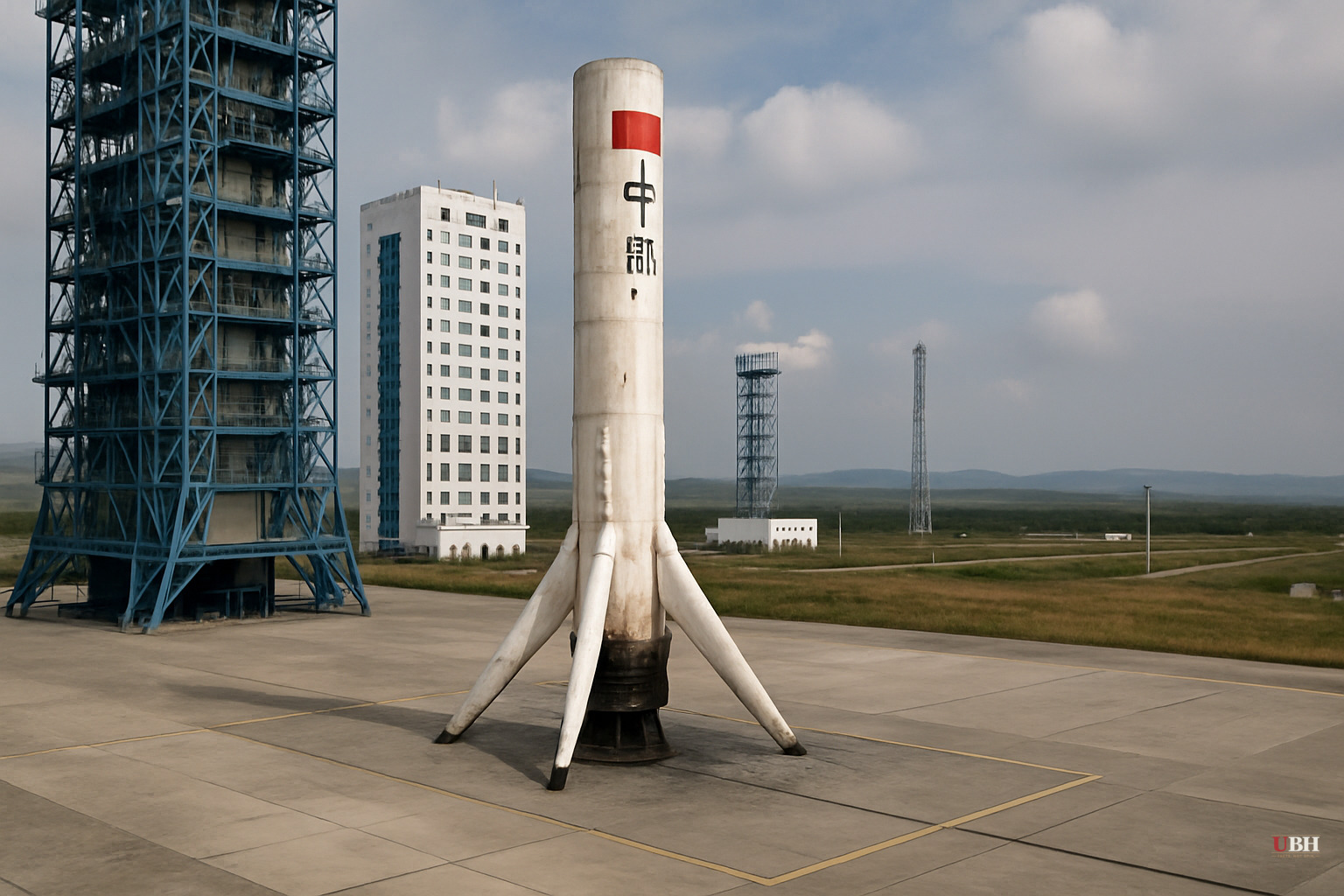
China Recaptures a Reusable Rocket Stage
China has caught a descending rocket booster, recapturing the first stage of a space launch vehicle after it separated and returned to Earth. The feat, reported by AP News, directly mirrors the booster-recovery technique that SpaceX has refined with its Falcon 9 program.
For China, this is a proof-of-concept moment, not yet a routine operation. The distinction matters.
Reusable first stages are the single biggest cost lever in modern rocketry. Instead of building a new rocket for every mission, you catch the most expensive piece, refurbish it, and fly it again.
China demonstrating this capability closes a gap that the United States has held for years. It also raises competitive pressure on U.S. launch providers: if China can reuse boosters at scale, it can undercut commercial launch pricing and reduce the cost of its own military and civil space programs.
The SpaceX Template
SpaceX made booster recovery look almost routine, but it took years of development before the technique became reliable. The Falcon 9 has become the workhorse of global commercial launch precisely because reusability drove down per-kilogram costs.
China's move follows that same logic. According to AP News, the operation is described as China taking "a page from SpaceX" — an acknowledgment that the architecture being replicated is American in origin, even if the hardware and program are entirely Chinese.
What China Has Not Shown Yet
Catching a booster once is not the same as flying it again. The unresolved question is turnaround time and reflight capability. SpaceX spent years perfecting inspection protocols, heat shield refurbishment, and rapid relaunch cycles. China has demonstrated the catch. Whether the recovered stage can be reflown quickly, cheaply, and safely is not yet established.
A single successful recovery is a headline, not a program. China will need to demonstrate rapid reflights at operational cadence before this changes the commercial launch market in any concrete way.
The Geopolitical Layer
The United States and China are in an explicit competition for dominance in space. A reusable launch capability that drives down cost directly benefits Chinese satellite deployment, reconnaissance programs, and eventual lunar ambitions.
From a national security standpoint, a China that can launch more frequently at lower cost is a China with more flexibility in low-Earth orbit. That is a strategic problem the Pentagon has been tracking, and this development adds another data point to the case.
The Concrete Next Step
China's next move is the one to watch: whether the recovered booster is announced for a reflight mission and on what timeline. A reflight in the near term would signal genuine operational progress. A recovered stage that sits in a hangar while engineers study it is a milestone, not a revolution. That distinction will become clear in the months ahead.
Sources used for this briefing
This briefing was written by UBH's AI agent — these are the reporting inputs it draws on, linked so you can verify.


