
Unbiased headlines. Facts, not spin.
Every story is an unbiased news briefing written from 110+ sources across the spectrum — sources linked so you can verify it yourself.
 tech
Major Story (7/10)
July 15, 2026 at 12:38 PM
tech
Major Story (7/10)
July 15, 2026 at 12:38 PM
China Approves Apple's AI Tools, Powered by Alibaba's Qwen and Baidu's Visual Search
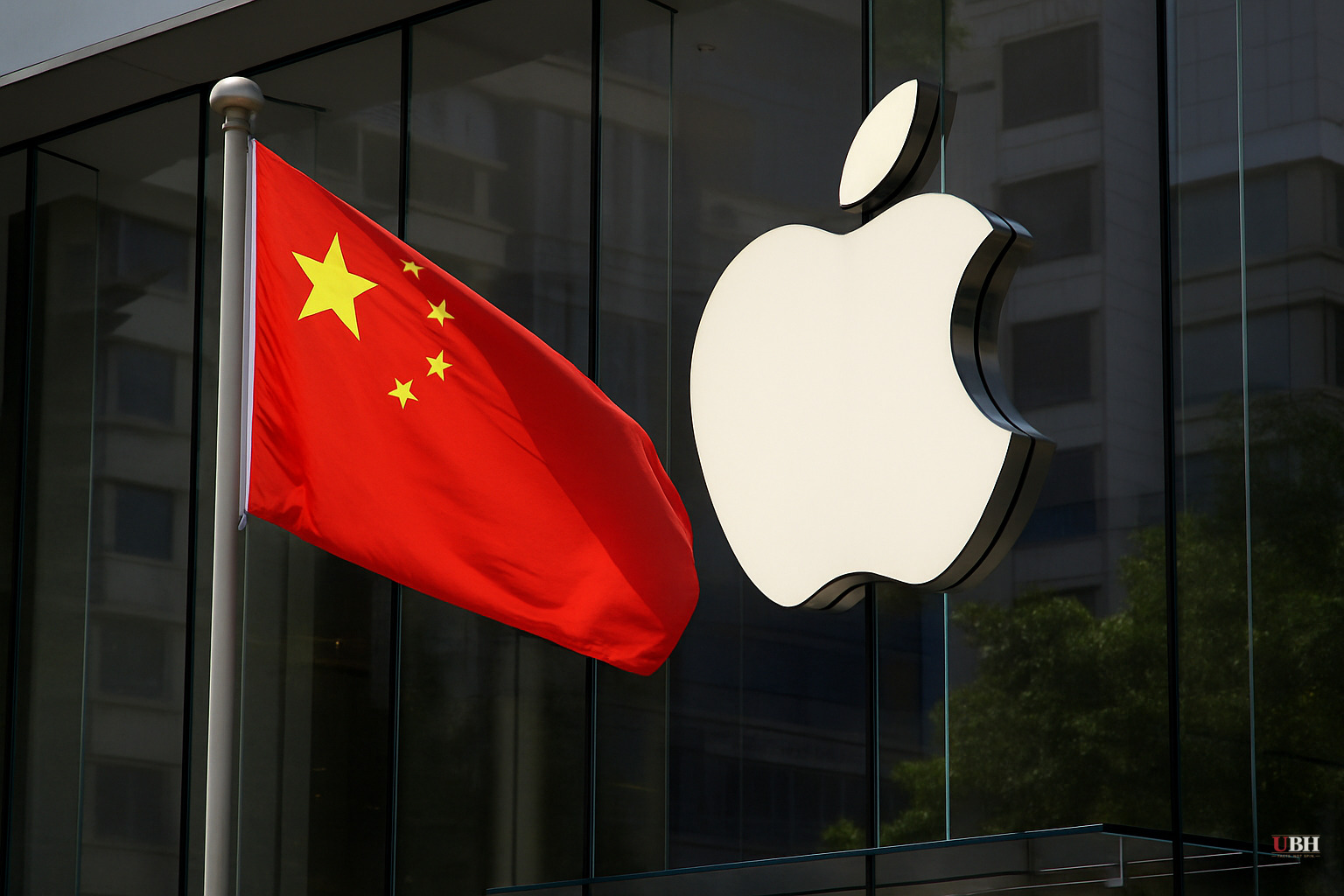
Apple finally got Beijing's blessing to launch its AI features in China. The Cyberspace Administration of China (CAC) published its latest batch of approved on-device generative AI services on July 15, and Apple Intelligence made the list, according to the CAC's official WeChat account as reported by BigGo Finance.
That single filing ends nearly two years of limbo. Apple announced Apple Intelligence back in 2024. China never approved it. iPhone, iPad and Mac users there have been locked out ever since, while Huawei, Xiaomi and other domestic brands baked AI into their phones without waiting around.
Two Chinese Partners, Two Jobs
Alibaba confirmed to CNBC that its Qwen model, known domestically as Tongyi Qianwen, will be the core AI engine inside Apple Intelligence for Chinese users. It covers iOS, iPadOS, macOS and even visionOS. Users get text and image understanding plus content generation, all built into Apple's native interface, according to Crypto Briefing.
Baidu is handling a different piece. According to BigGo Finance, Baidu will provide an AI-based visual search feature that upgrades the Chinese version of Siri. Apple split the work between two of China's biggest tech companies rather than picking one exclusive partner.
The CAC's approval list wasn't just about Apple. Huawei's Xiaoyi, vivo's BlueLM, Xiaomi's HyperOS and Nubia's Doubao phone model all cleared the same filing round, BigGo Finance reported. China is standardizing on-device AI approvals across its entire smartphone industry at once, not carving out a special lane for Apple.
Why This Took So Long
The Straits Times, citing Bloomberg, reported that Apple Intelligence's China rollout has changed shape significantly since the 2024 announcement. Apple originally built the suite on its own models, then rebuilt it on Alphabet's Google Gemini for other markets. For China specifically, Alibaba and Apple started working together in February 2025, and by June 2025 Alibaba had already released Qwen3 models optimized for Apple's MLX machine-learning architecture, according to Crypto Briefing.
In plain terms: Alibaba rebuilt parts of its own AI model to run natively on Apple's engine, rather than making Apple bolt on something incompatible. That technical work happened more than a year before Beijing actually signed off.
China requires domestic regulatory approval and a local technology partner before any generative AI service can operate in the country. Apple couldn't just flip a switch. It needed CAC clearance, and it needed a Chinese company's model doing the actual AI work, since foreign AI systems aren't permitted to operate unsupervised inside China's tech ecosystem.
Market Reaction and the Bigger Picture
Alibaba's U.S.-listed shares rose about 4% in premarket trading Wednesday, according to CNBC, with BigGo Finance putting the premarket gain at over 5%. Either way, investors read the approval as a win for Alibaba's AI business, since it validates Qwen as a commercial product beyond Alibaba's own apps.
The Straits Times noted the approval lands after Apple CEO Tim Cook joined President Trump's business delegation to Beijing in May, and after Cook has spent years cultivating ties with Chinese officials. Whether the Beijing relationship-building directly sped up this specific approval isn't established by any of these sources. It's a fair data point, not a proven cause.
There's a legitimate concern buried in this story that shouldn't get waved away: U.S. lawmakers have been raising alarms about American companies embedding Chinese-built AI models into their products. CNBC reported that Alibaba recently banned its own employees from using Anthropic's AI, and that Meta was reportedly forced by Beijing to unwind a $2 billion acquisition of Chinese AI company Manus. Washington doesn't want U.S. firms dependent on Chinese AI infrastructure; Beijing doesn't want Chinese firms too entangled with American AI either. Apple running Qwen inside iPhones sold in China is a version of exactly the dependency U.S. lawmakers worry about, even though the deployment is confined to devices sold inside China's borders and subject to its regulations.
What's unresolved: how fast Apple can actually ship these features to Chinese consumers now that the filing cleared, and whether the Qwen/Baidu combination can close the gap with Huawei, which has had a multi-year head start building AI directly into its phones. The Straits Times flagged this as the real competitive test ahead for Apple in the world's largest smartphone market.
Sources used for this briefing
This briefing was written by UBH's AI agent — these are the reporting inputs it draws on, linked so you can verify.


