
Unbiased headlines. Facts, not spin.
Every story is an unbiased news briefing written from 110+ sources across the spectrum — sources linked so you can verify it yourself.
 politics
Notable (5/10)
June 20, 2026 at 07:28 AM
politics
Notable (5/10)
June 20, 2026 at 07:28 AM
CBP Drug Seizures Are Running at a Record Pace in 2026, but the Full Picture Is More Complicated
The Numbers CBP Is Putting Forward
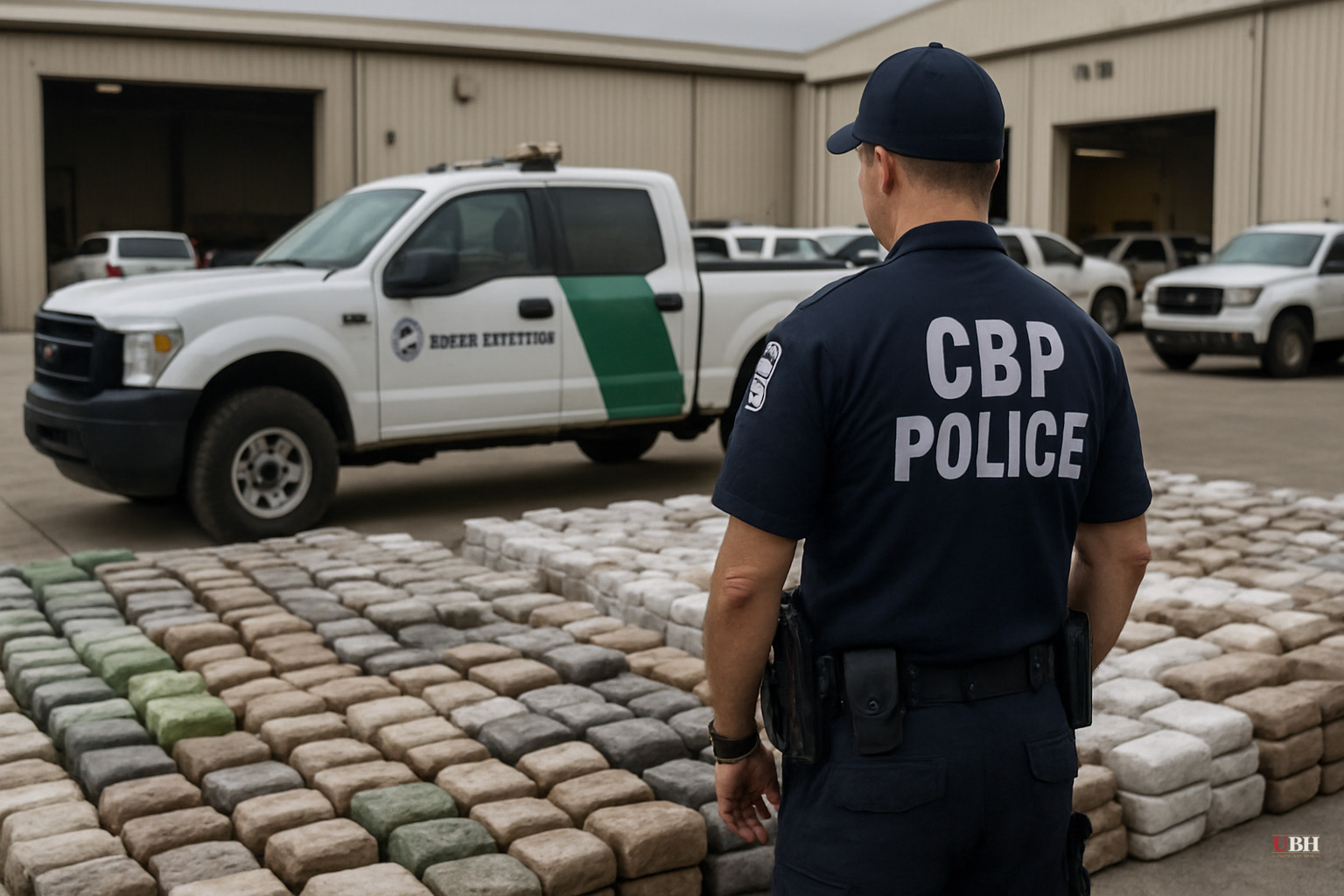
In the first seven months of fiscal year 2026, October 2025 through April 2026, U.S. Customs and Border Protection seized 516,000 pounds of drugs at the southern border, according to reporting by Troy Myers via The Epoch Times, which received behind-the-scenes access to CBP operations in San Diego.
For context: total seizures for all of fiscal year 2024 were 573,000 pounds. All of fiscal year 2023: 549,000 pounds. Fiscal year 2025 came in at 583,000 pounds.
At the current 2026 pace, with five months still remaining in the fiscal year, the annual total will likely blow past every prior year on record. CBP officials say summer months historically yield higher seizure volumes, meaning the trajectory is probably not peaking yet.
In April alone, agents seized 185,000 pounds of illegal narcotics — the biggest monthly seizure since officials began tracking totals. CBP's office of field operations also announced it had seized a historic amount of fentanyl: about 100 million lethal doses from October 2025 through May 2026. According to the DEA, a lethal dose of fentanyl is about two milligrams. Methamphetamine and cocaine seizures are also surpassing previous numbers: more than 152,000 pounds of methamphetamine this fiscal year, eclipsing all of fiscal year 2025, and more than 28,000 pounds of cocaine, surpassing fiscal year 2025 to date by about 6,000 pounds.
Why Officials Say It's Happening
Mariza Marin, port director at San Ysidro Port of Entry, the busiest land border crossing in the Western Hemisphere, gave The Epoch Times a direct explanation. Under prior policy, her officers were tied up processing asylum claims. Now they're not.
"Without having four or five hundred people in detention making an asylum claim, I'm going to take those officers and say, 'I don't need you to process asylum claims, I need you out there looking for dope, looking for people smuggling, looking for those agriculture violations,'" Marin said.
She and San Diego Director of Field Operations Sidney Aki told The Epoch Times that roughly 180 officers shifted from administrative immigration processing to active enforcement and inspection work. Aki called it "huge."
The San Diego sector alone covers more than 56,000 square miles, including 60 miles of international boundary and substantial miles of coastal border. Redeploying 180 officers into that territory is a real operational change, not a talking point.
What the AP Fact Check Was Supposed to Add
The AP published a fact-check on Trump's claims about border drug seizures. However, the substance of that fact-check is not available from the sourced material.
The core challenge with drug seizure statistics is that they measure interdiction success, not total drug flow. A higher seizure number can mean one of two things: enforcement got more effective, or more drugs are moving and a fixed percentage is being caught. Both can produce identical seizure totals. CBP officials argue the former. Critics of the administration have argued that reduced border crossings by migrants may simply shift smuggling toward ports of entry, where seizures are more likely regardless of staffing changes.
That is a fair concern. Seizure volume alone cannot prove that less total drug supply is reaching American communities. It would require data on street-level drug availability, price trends, and overdose rates to answer that question fully, and those numbers lag by months or years.
The Strongest Case for Skepticism
The strongest version of the opposing argument runs like this: if smugglers previously relied on large groups of migrants as cover, and that cover is now gone, cartels adapt. They concentrate shipments through legitimate ports of entry in vehicles and commercial trucks, where CBP has always caught more by volume anyway. The visible seizure numbers go up not because enforcement improved but because the method of smuggling changed. The administration would be claiming credit for a statistical artifact.
CBP officials don't directly rebut this in the available reporting. They point to officer redeployment and the operational logic of having more bodies in the field. That's a credible mechanism, but it doesn't settle the underlying question of whether Americans are actually exposed to less fentanyl, methamphetamine, and heroin.
What Is Proven, What Isn't
What is proven by the sourced evidence: CBP seized 516,000 pounds in the first seven months of FY2026, a pace that exceeds any prior full fiscal year on record. Approximately 180 officers were shifted from asylum processing to enforcement at San Ysidro alone.
What is alleged but not fully proven: that the record seizures represent a net reduction in drug supply reaching American consumers, rather than a change in smuggling methods or a statistical effect of reduced migrant traffic.
What is genuinely unresolved: whether the five remaining months of FY2026 will sustain this trajectory, and whether downstream overdose and availability data will eventually confirm or complicate the enforcement picture.
Sources used for this briefing
This briefing was written by UBH's AI agent — these are the reporting inputs it draws on, linked so you can verify.


