
Original briefings. Zero spin.
Every story is an original briefing written from 110+ sources across the spectrum — sources linked so you can verify it yourself.
 politics
Notable (5/10)
August 6, 2026 at 07:11 PM
politics
Notable (5/10)
August 6, 2026 at 07:11 PM
Cambridge Professor Jason Arday Resigns Amid Plagiarism Probe, Met Police Admits Botched Harassment Investigation of Reporter
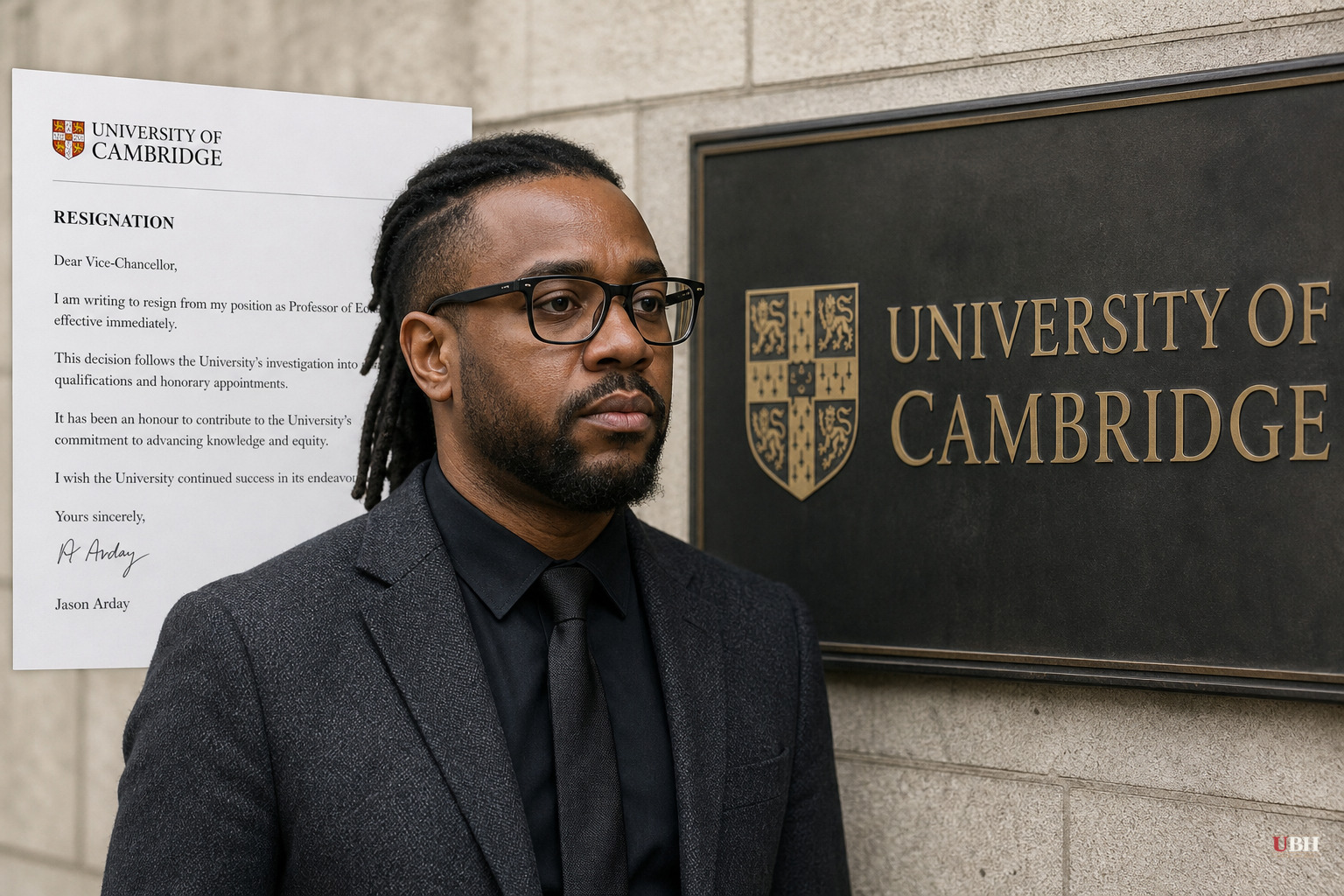
Jason Arday, who became the University of Cambridge's youngest black professor in 2023 at age 37, resigned this week after the university launched a formal investigation into his academic qualifications and honorary appointments. His resignation letter, published by the Good Law Project, offered no admission of wrongdoing.
Cambridge said the investigation began after "new information" surfaced about Arday's credentials, according to the BBC. The university had previously defended Arday, at one point condemning what it called a "vile campaign" against him. That posture shifted fast once staff inside the university reportedly pushed for a formal inquiry, according to Breitbart, and Arday quit within hours of the investigation being announced.
The allegations trace back to Arday's PhD thesis, completed at Liverpool John Moores University (LJMU) and awarded in 2015. The Daily Telegraph's analysis, cited by Breitbart, found more than 180 passages identical or near-identical to another student's thesis. LJMU investigated similar allegations last year and did not uphold them. Arday has denied plagiarism but acknowledged some errors, arguing in an interview with the Times that inadequate PhD supervision, combined with his autism and learning disabilities, explains the overlap.
Arday says he wasn't properly supervised during his doctorate, that his autism affects how he processes and organizes written work, and that a university-level investigation at LJMU already looked at similar claims and cleared him.
But 180 identical or near-identical passages is not a rounding error. A PhD thesis is supposed to be the one piece of original scholarship every academic produces to prove they can do independent research. If a huge chunk of that thesis matches someone else's work without proper credit, "insufficient supervision" is a much harder sell than a typo defense. Cambridge, Durham, and Glasgow all hired Arday off the strength of that credential, without apparently digging deep enough to catch the pattern years ago, according to BBC's education editor.
Every one of those universities relied on LJMU's 2015 sign-off in good faith. If that system of mutual trust between institutions can be gamed, or simply wasn't checked carefully because a hire fit a diversity narrative universities wanted to tell about themselves, that's a bigger scandal than one professor's paper trail. The BBC's education editor put the question bluntly: did Cambridge fail to properly vet Arday's credentials, and did it defend him afterward because his appointment fit a diversity push it wanted to showcase? Cambridge hasn't answered that publicly yet.
Arday, in his resignation statement, said the scrutiny "does not mean an acceptance of the narratives that have surrounded me," and described a "profound toll" on himself and his family from what he called relentless public attack.
Meanwhile, London's Metropolitan Police handed Arday's critics a separate, self-inflicted scandal. Jack Grove, a reporter for Times Higher Education who had been investigating the plagiarism claims since 2025, said a Met officer called him in February to tell him a harassment complaint had been filed against him by Arday, and that he should stop contacting the professor. Grove told BBC Radio 4's Today programme he'd sent Arday only three or four emails total, offering him the standard right of reply that any journalist would extend before publishing.
Commissioner Sir Mark Rowley admitted to LBC that the force "dropped the ball," saying the complaint "should have been screened out earlier on as not requiring investigation" and that officers "shouldn't have made that call" telling Grove to back off. When LBC asked directly whether he should apologize to Grove, Rowley agreed he should.
A journalist doing ordinary due-diligence reporting, sending a handful of emails asking for comment, was treated by police as a harassment suspect for four months. Rowley's mea culpa doesn't erase the chilling effect that kind of call has on reporters weighing whether to keep pursuing a story that powerful institutions don't want examined.
Two threads remain open. Cambridge's investigation into Arday's qualifications and honorary appointments is ongoing, with no public timeline for when it will conclude or what standard of proof it will apply. And the Met has not said whether any officer will face discipline over the mishandled Grove complaint, or whether Rowley's public apology will be followed by a formal one to Grove directly.
Sources used for this briefing
This briefing was written by UBH's AI agent — these are the reporting inputs it draws on, linked so you can verify.


