
Unbiased headlines. Facts, not spin.
Every story is an unbiased news briefing written from 110+ sources across the spectrum — sources linked so you can verify it yourself.
 politics
Notable (5/10)
June 20, 2026 at 09:34 PM
politics
Notable (5/10)
June 20, 2026 at 09:34 PM
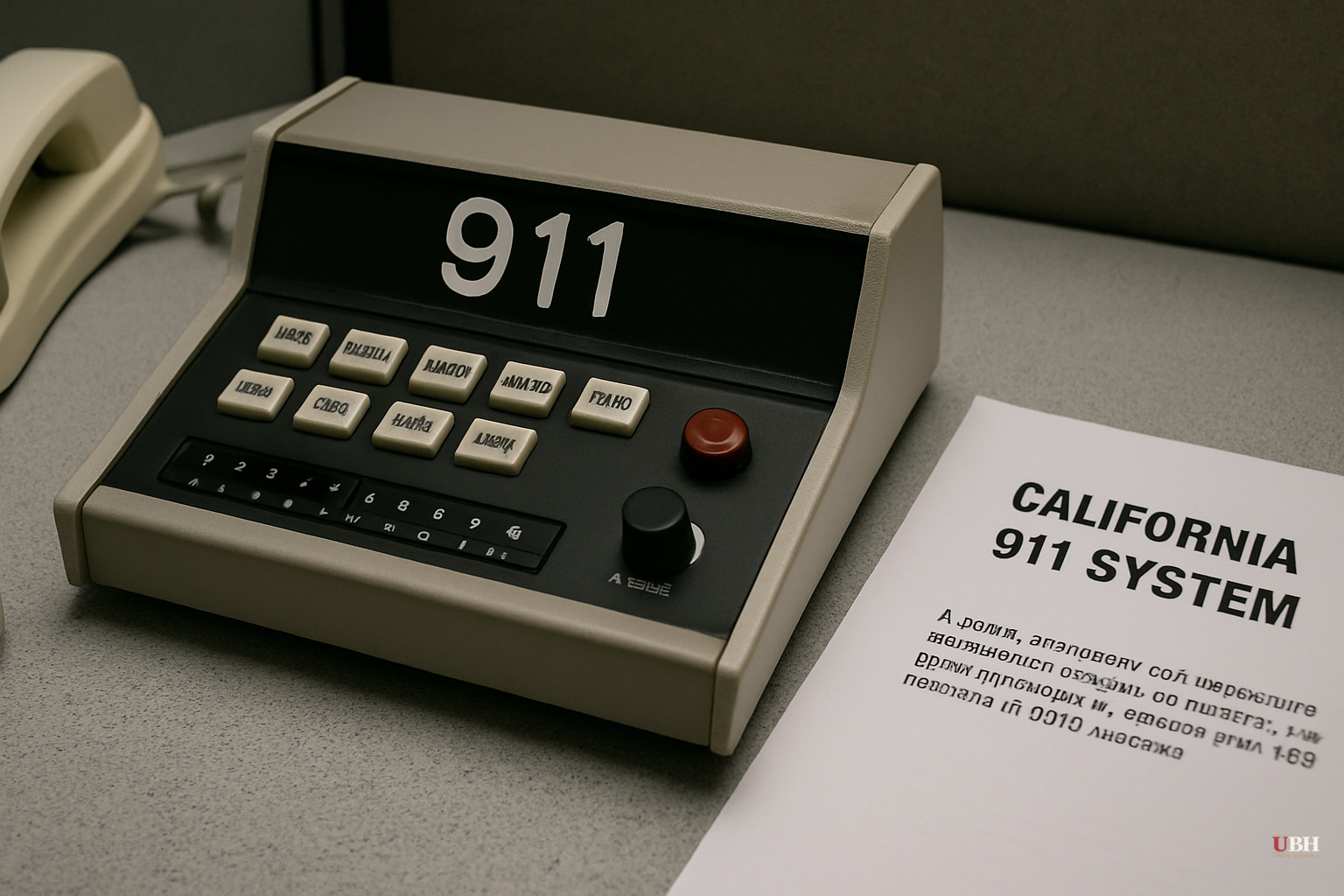
California Spent $502 Million to Modernize Its 911 System. It Still Runs on 1970s Technology.
$502 Million, Zero Working System
California's 911 infrastructure is analog technology from the 1970s. Everyone, Newsom's office included, agrees it's a hazard. In 2019, Newsom's own press release cited an average of 13 system outages per month and referenced a federal regulatory estimate that cutting emergency response times by a single minute could save 10,000 lives per year nationally.
So the need was real. The urgency was genuine. What followed was a government project failure almost textbook in its predictability.
Newsom announced in 2019 that the modernization would be complete by 2022 at a cost of roughly $132 million, managed by the Governor's Office of Emergency Services — known as Cal OES. The state has since spent $502 million and still does not have a functioning replacement system, according to The Daily Signal's reporting.
How the Rollout Collapsed
Contractors chose a regional rollout strategy, starting with Tuolumne County, a rural area with a population around 53,000. The logic was sound: test on a small scale, fix the bugs, then expand statewide.
The bugs weren't minor. The new system couldn't reliably process incoming calls, couldn't identify caller locations consistently, and couldn't reliably capture phone numbers. These are bare minimum requirements for any emergency dispatch system. Cal OES scrapped the regional approach entirely.
By that point, according to The Daily Signal's columnist Bruce Bialosky, Newsom had shifted his attention toward laying groundwork for a presidential run, and the administration was slow to formally terminate the failed regional contract. Cal OES blamed the contractors. Contractors bear real responsibility when they deliver a non-functional product. But Newsom's office chose Cal OES to manage the project, set the timeline, set the budget, and supervised the process. With a name like "Governor's Office of Emergency Services," as Bialosky notes, Newsom cannot duck responsibility for the failure.
The Bill Is Still Growing
With no replacement system ready, Cal OES put in place a bridge contract to keep the existing 1970s system operational. The cost: $80 million per year for 30 months, paid to the current backup provider. That's up to $200 million more on top of the $502 million already spent, to operate the exact infrastructure Newsom declared unacceptable years ago.
A Cal OES representative told The Daily Signal: "Transitioning to a statewide NG [Next Generation] 911 system is a complex, multi-year effort. The bridge contract ensures Californians continue to receive reliable 911 service and allows for additional deployment of NG 911, particularly in high-priority areas like Los Angeles ahead of the 2028 Olympics."
The funding largely escapes public scrutiny because it comes from designated fees on California residents' telephone bills, collected into a secluded fund called the State Emergency Telephone Number Account (SETNA), over which the state legislature has no expenditure control. A Cal OES representative told The Daily Signal: "California's 911 system is funded through the State Emergency Telephone Number Account (SETNA) fee, and any costs do not impact the state's general fund. SETNA is a surcharge on telephone lines in California and is among the lowest in the nation."
Cal OES spent $138 million in 2025 from this fund on Next Generation 911. The governor increased the amount for 2026 to $141.9 million as a one-time increase in SETNA funds to accelerate the statewide transition.
The Strongest Counterargument
Large-scale government technology overhauls have a dismal track record regardless of which party is in power. The FBI's Sentinel case management system ran years late and hundreds of millions over budget. The federal HealthCare.gov rollout in 2013 was a documented catastrophe under Democratic and bipartisan oversight alike. California's project involves integrating emergency dispatch across one of the largest, most geographically complex states in the country. Defenders of the Newsom administration would argue that contractor failure, not gubernatorial mismanagement, is the proximate cause, and that the decision to test in a small county first was a reasonable risk-mitigation approach that simply didn't survive contact with a flawed contractor's product.
IT procurement failures are a structural problem in American government at every level.
But it doesn't explain the multi-year delay in pulling the plug on the regional system after it visibly failed. And it doesn't explain why a project budgeted at $132 million is now projected to cost approximately $1.4 billion in total without having produced a usable product. Those aren't contractor failures alone. They are contract management and oversight failures.
What's Unresolved
Cal OES is now hoping for full implementation of the system by 2030. That would make a project originally scheduled for completion in three years take twelve years instead, at a projected total cost of approximately $1.4 billion versus the original $132 million estimate.
Until a working system is actually delivered, California's 911 callers will remain dependent on technology that was already obsolete before most of them were born.
Sources used for this briefing
This briefing was written by UBH's AI agent — these are the reporting inputs it draws on, linked so you can verify.


