
Unbiased headlines. Facts, not spin.
Every story is an unbiased news briefing written from 110+ sources across the spectrum — sources linked so you can verify it yourself.
 politics
Low Interest (3/10)
August 8, 2026 at 10:34 PM
politics
Low Interest (3/10)
August 8, 2026 at 10:34 PM
Bush, Clinton and Obama Write Presidential History Essays, Skip Trump and Biden Entirely
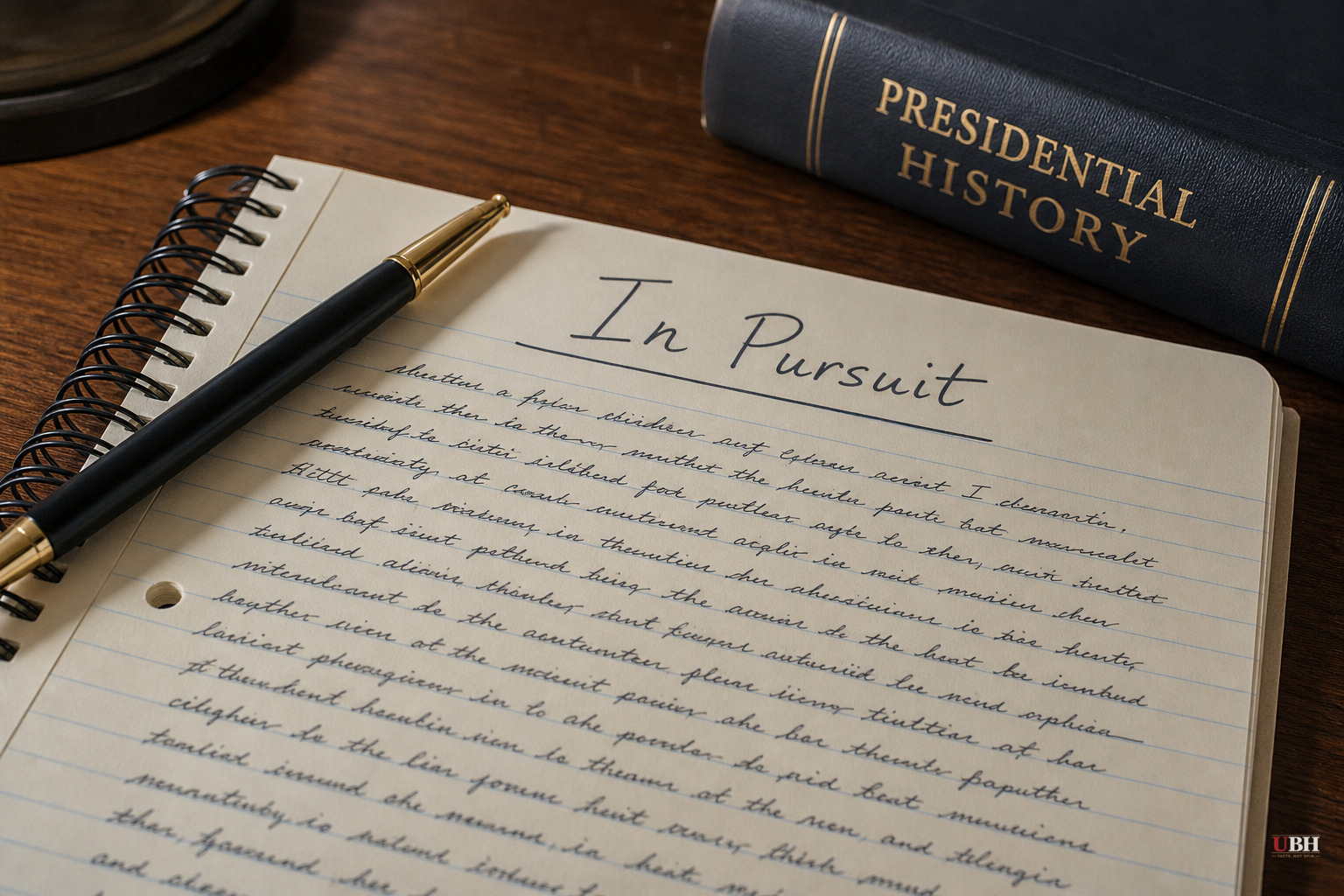
Three former presidents just published essays about American history, and the one guy who dominates political conversation every single day didn't get a mention.
George W. Bush, Bill Clinton and Barack Obama all contributed to the In Pursuit project, a 250th-anniversary series pairing historians, authors and public figures with essays on past presidents and first ladies, according to the Associated Press. The project covers 43 presidents and 30 first ladies, publishing chronologically and weekly through December.
Two names are missing from that list of 43: Donald Trump and Joe Biden. The project's curator, Colleen Shogan, made that call. Shogan is the former U.S. Archivist who Trump fired without explanation last year, according to the AP. Her reasoning: Trump and Biden are too recent to be fairly judged by history yet.
That's a defensible call on its face. Historians generally want distance before rendering verdicts, and lumping a sitting president into a project explicitly designed to "transcend today's politics" invites exactly the partisan fight Shogan says she was trying to avoid. She told the AP she instructed every contributor not to be partisan or ideological, and that "everybody took those instructions and that guidance very seriously."
Shogan was fired by Trump. Now she's running a project that conveniently excludes the man who fired her, while giving three of his political rivals—Bush, Clinton and Obama—a platform to write about power, humility and the peaceful transfer of it. Even if every essay is scrupulously nonpartisan on paper, the optics aren't neutral. A reasonable skeptic could look at that lineup and see a subtle rebuke dressed up as history.
Bush's essay is the clearest example. He wrote about George Washington, "the original 'No Kings' guy," as the AP put it, praising Washington for voluntarily giving up power not once but twice—first resigning as commander of the Continental Army, then walking away from the presidency after two terms instead of clinging to it.
"Our first president could have remained all-powerful," Bush wrote, "but twice he chose not to. In so doing, he set a standard for all presidents to live up to." He added that "George Washington's humility in giving up power willingly remains among the most consequential decisions and important examples in American politics."
Trump's name appears nowhere in that essay. But it's hard to read those lines without thinking about Trump's refusal to concede after his 2020 election loss, or his repeated public musings about seeking a third term despite the Constitution's clear two-term limit. The AP's own framing draws that line directly, noting the essay "is difficult to read without thinking of Trump's reluctance to cede power."
That's a fair observation, not a smear. Trump did question the 2020 result for years. He has joked, and sometimes not joked, about a third term, floating ideas like a Vance-Trump ticket swap that legal scholars across the spectrum say wouldn't survive the 22nd Amendment. Those are on-the-record facts, not media invention. Bush didn't have to name Trump for the comparison to write itself.
The other essay drawing attention comes from retired Gen. Stanley McChrystal, who commanded U.S. and international forces in Afghanistan. McChrystal wrote about Ulysses S. Grant, another general-turned-president, and the AP reported his essay drew "much attention for its parallels with today," though the specifics of that comparison weren't detailed in the available reporting.
Nobody in this project is accusing Trump of anything he hasn't already said or done publicly. There's no leak, no lawsuit, no whistleblower here. This is three former presidents writing measured essays about dead guys, using history the way it's always been used in American politics, as a mirror people can hold up to whoever they want.
The bigger fairness question is why Biden, not just Trump, got excluded. Biden's presidency ended in January 2025 and included a chaotic Afghanistan withdrawal, historic inflation and, near the end, visible questions about his own fitness for office that even Democratic allies eventually voiced. If recency is the standard, excluding him alongside Trump is at least even-handed on its face, even if it's Trump's shadow that hangs over the Bush essay specifically.
The essays keep rolling out weekly through December, with 250 years of presidents and first ladies still to cover. Whether any essay eventually gets written about Trump's own two terms, and whether Shogan or a successor curator is still running the project when that day comes, remains an open question nobody involved has answered yet.
Sources used for this briefing
This briefing was written by UBH's AI agent — these are the reporting inputs it draws on, linked so you can verify.


