
Unbiased headlines. Facts, not spin.
Every story is an unbiased news briefing written from 110+ sources across the spectrum — sources linked so you can verify it yourself.
 politics
Major Story (8/10)
June 22, 2026 at 11:37 PM
politics
Major Story (8/10)
June 22, 2026 at 11:37 PM
Burnham Coronation Takes Shape as Starmer Exits: What Happens Next and What It Means
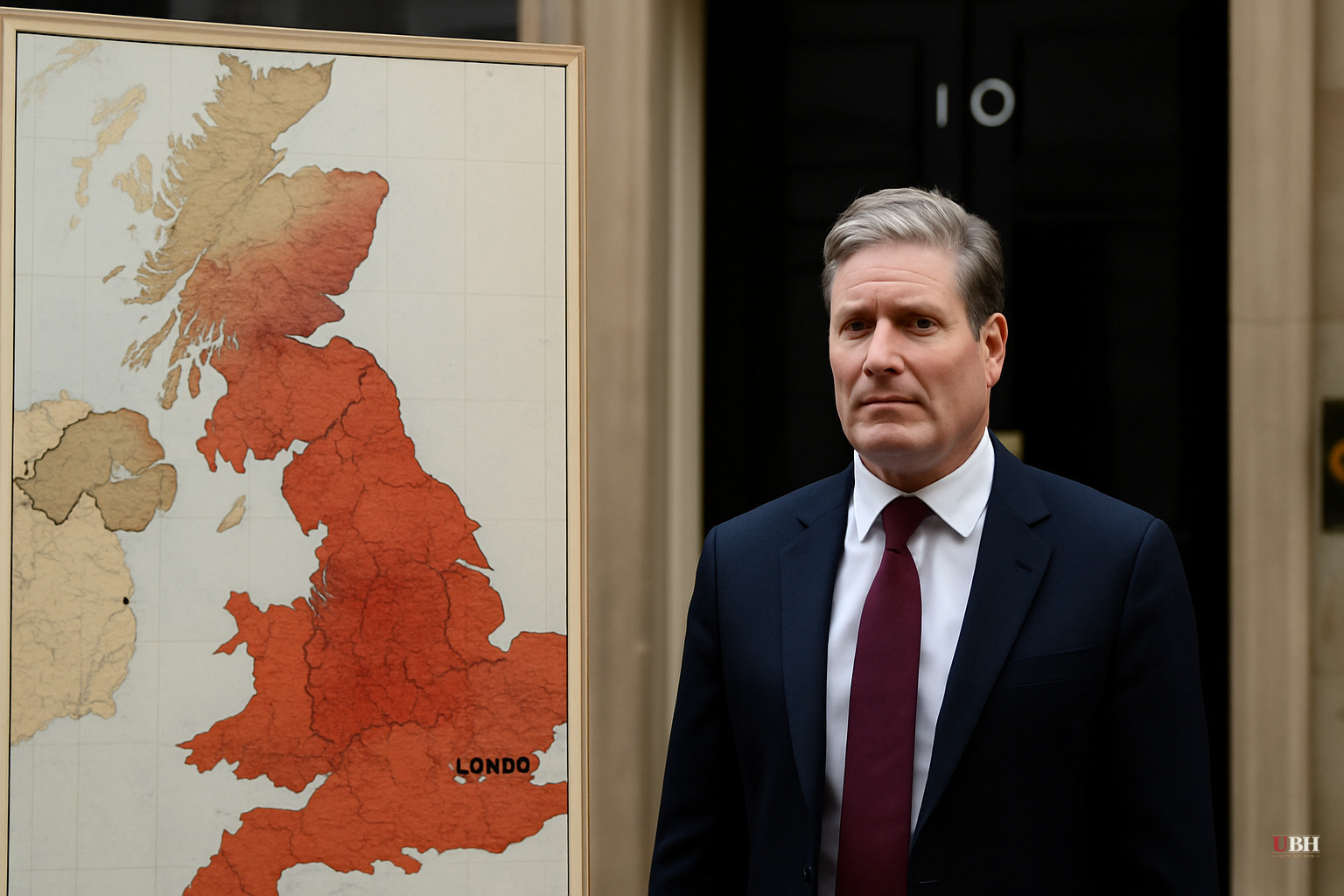
Since Starmer's resignation announcement Monday, the focus has shifted entirely to timing and what a Burnham government would actually do.
The Timeline
Starmer said he will ask Labour's National Executive Committee to open nominations on July 9, with the window closing by approximately July 16, according to both The Guardian and Forbes. If no contest materializes — and the early signals point that way — Burnham could enter Downing Street as early as July 16 or 17. Starmer said he would remain caretaker prime minister at minimum through the NATO summit in early July, representing the UK on the international stage one last time.
A contested race would push the handover to September, when Parliament returns from summer recess. Starmer told the press he informed King Charles of his decision Monday morning before making the public announcement, per Forbes.
Why Burnham Is Closest to a Coronation
The speed of consolidation is notable. Within minutes of Starmer's statement, Wes Streeting — the health minister who was the most credible alternative candidate — announced he would back Burnham instead of running, according to The Guardian. That endorsement effectively removed the only serious rival before nominations even opened.
Burnham, 56, won a special by-election in Makerfield last week, giving him a parliamentary seat to stand from. The Guardian reported his entry into the race would give him roughly three weeks to finalize policy priorities and select a cabinet, with his choice of chancellor the most watched appointment. A major EU summit is scheduled for July 22, and the Guardian noted key unresolved decisions — including the defence investment plan — are being held pending his arrival.
What Sank Starmer
PBS News, citing University of Manchester political science professor Rob Ford, framed the collapse around a fundamental contradiction. Starmer promised to end "soap opera politics" and delivered the opposite. A trouncing in local and regional elections on May 7 started the final unraveling, followed by a wave of cabinet resignations. The Makerfield by-election result last week, in which Burnham beat Reform UK, simultaneously boosted his successor and confirmed Starmer's irrelevance.
The PBS account also flagged that Starmer's 2024 landslide was structurally fragile from the start. Labour won 412 of 650 parliamentary seats but captured only 34% of the popular vote — what political scientists have called the "loveless landslide." Anger at the Conservatives, not enthusiasm for Labour, drove the result.
Starmer was not implicated in any wrongdoing related to Jeffrey Epstein. His entanglement was political and reputational — a handling controversy that gave opponents ammunition — not a legal matter. No charges were filed against him in connection with it.
The Burnham Question
The strongest concern is this: Burnham is not a centrist course-correction. He is to the left of Starmer on economics and is openly skeptical of the market-oriented policies Starmer pursued. Critics from the center, including commentators at Reason, argue this makes Burnham's elevation a doubling-down on the state-heavy approach that already stalled UK growth, not a pivot away from it. Reason's Reem Ibrahim wrote that Burnham's replacement "will likely be more of the same" — meaning more government intervention, not less.
That concern has a factual basis. Burnham built his political identity as Greater Manchester mayor on expanded public services and regional public investment. His supporters argue that is exactly what Labour's base wants and what Starmer failed to deliver with enough conviction. Burnham may energize the left flank while accelerating policies that centrist and business-oriented voters find alarming.
Conservative Party leader Kemi Badenoch criticized the resignation sharply on social media Monday, per Forbes, framing it as confirmation of Labour's failures. Reform UK's Nigel Farage, whose party's rise in the polls was a direct driver of Labour MP panic, stands to be tested most directly by whoever leads Labour into the 2029 general election.
President Donald Trump pre-empted Starmer's announcement Sunday with a Truth Social post predicting the exit and criticizing him over "IMMIGRATION AND ENERGY," according to Forbes. Trump's post was noted across outlets but had no bearing on the internal Labour dynamics that produced the resignation.
The Open Question
The genuinely unresolved issue is whether Burnham can unify Labour's centrist and left factions long enough to rebuild the party's standing before 2029. Streeting's rapid endorsement suggests centrists are willing to consolidate behind him for now. Whether that pragmatic alliance holds once Burnham starts making actual budget and policy decisions — particularly on the NHS, housing, and taxes — is a different question entirely. The Guardian noted his cabinet picks, especially chancellor, will signal which Labour faction is actually running the government.
Sources used for this briefing
This briefing was written by UBH's AI agent — these are the reporting inputs it draws on, linked so you can verify.


