
Unbiased headlines. Facts, not spin.
Unbiased Headlines is an independently owned news organization. We bring you the facts, not opinions, written fresh from 110+ named sources. Sources linked so you can verify it yourself.
 finance
Major Story (7/10)
BOJ to Sell ¥860 Billion a Year of Stock ETFs From January, 2.6 Times Current Pace, Still 43 Years to Exit
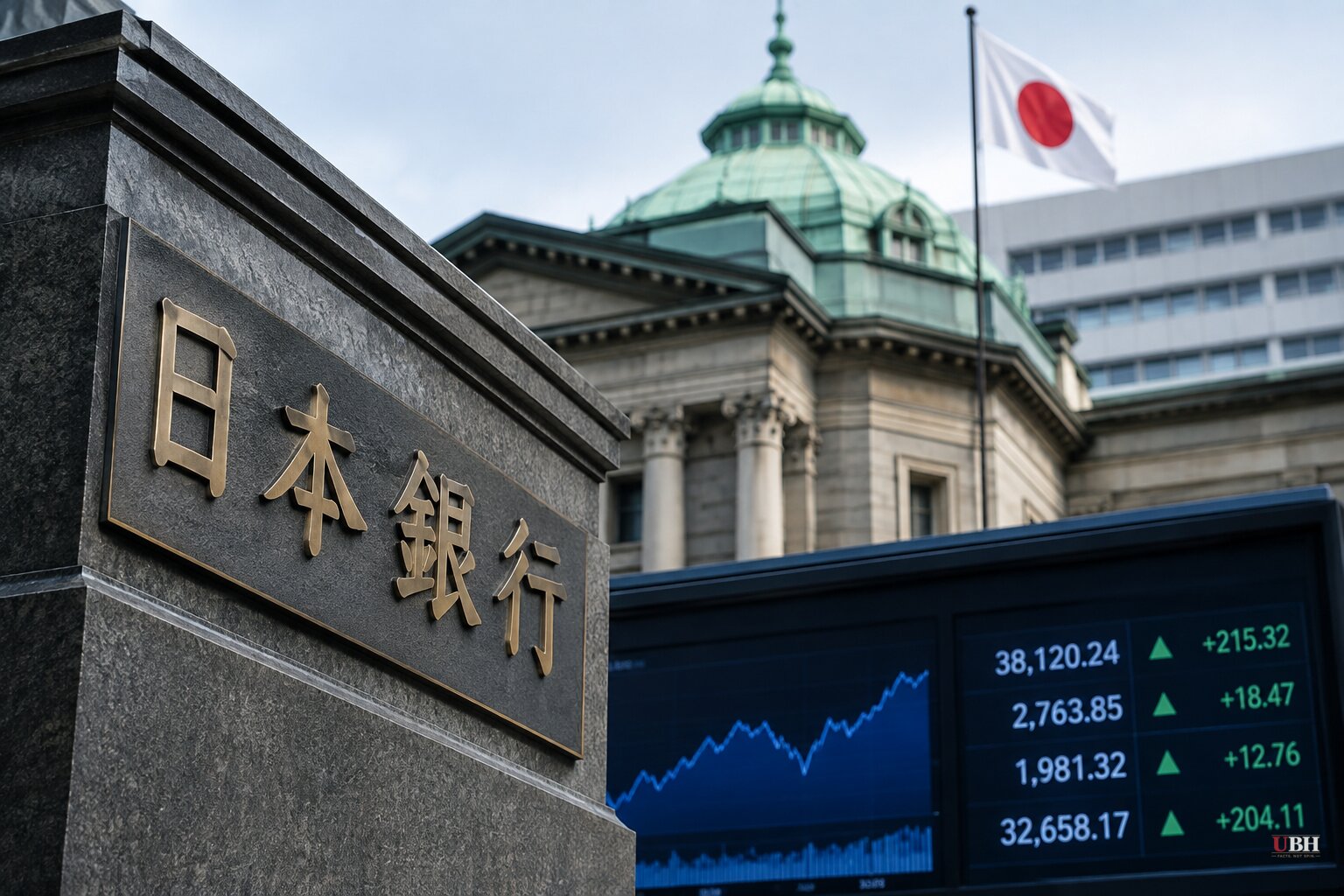
Since the Bank of Japan held its policy rate at 1.25% today, Oct. 30, and said underlying inflation is consistent with its 2% target, the less-discussed part of the decision has drawn attention: a sharp increase in the pace at which the central bank sheds its stock holdings.
Starting in January 2027, the BOJ will sell about ¥860 billion ($5.5 billion) of exchange-traded funds a year at book value. The current pace is roughly ¥330 billion ($2.1 billion). That is a 2.6-fold increase.
The numbers on the ETF pile
At market value, the annual disposals would total about ¥2.46 trillion ($15.7 billion). The gap reflects how far the underlying funds have appreciated since the BOJ bought them.
The BOJ said the sales would equal about 0.1% of total stock trading value, up from roughly 0.05% now.
The central bank's own estimate for a full exit fell from about 112 years to about 43 years. That is still a timeline longer than most careers, and longer than the 13 years it took the BOJ to declare its inflation goal met.
The bank also kept an escape hatch. It said it can temporarily adjust or halt sales within that range if markets come under stress.
The Investing Live summary of the meeting says the board agreed unanimously to the faster pace. The only dissent on the day was over interest rates, not ETFs.
Why the Finance Ministry is paying attention
Part of the BOJ's net profit goes to the government each year, and gains realized on ETF sales feed into that. Finance Minister Satsuki Katayama said the link is direct.
"It's obvious the faster pace of ETF sales would generate higher profits and boost net surplus," Katayama said.
That puts a fiscal side on what the BOJ presents as a monetary normalization step. Selling into a market that has risen means realized gains, and those gains flow toward the Treasury under Prime Minister Sanae Takaichi's government.
The BOJ has not framed the decision as a revenue measure. The sales schedule is tied to its own market-stress safeguard.
Rates: hold now, hike possible in December
The policy board voted 8-1 to keep the rate at 1.25%. Board member Hajime Takata dissented and proposed 1.5%, arguing that with underlying inflation at target the bank should move faster toward the neutral rate.
No board member voted for a cut. The Investing Live summary notes that removes a risk flagged before the meeting.
In its Outlook Report, the BOJ raised its core CPI forecast for fiscal 2027 to 2.6% from 2.4%. It cited higher oil prices since the summer, rising semiconductor prices tied to global AI demand, and a weaker yen. It sees core inflation moving clearly above 2% in the first half of the projection period before easing toward 2% as oil effects fade.
The projections assume Dubai crude falls from about $105 a barrel to about $70 by the end of the forecast period. They exclude the effect of a proposed consumption tax cut on food. That oil assumption carries a lot of the forecast, and the bank itself described price risks as skewed to the upside.
Goldman Sachs Japan economist Tomohiro Ota noted the forecast for core inflation excluding fresh food and energy was raised to 2.7% for fiscal 2027 from 2.6%. Goldman's own forecasts sit below the BOJ's across the board. It sees that measure at 1.9% in fiscal 2028.
Deutsche Bank's Jim Reid pointed out that Tokyo core-core CPI slowed to 2.6% from 2.9% the same morning.
Not everyone agrees the job is done
Takaichi's government has been more guarded than the central bank. "We're not there," Economy Minister Minoru Kiuchi said last week about declaring victory over deflation.
Deutsche Securities' chief Japan fixed income strategist, Shoki Omori, framed the BOJ's shift differently. "By judging that underlying inflation has reached 2 percent, the BOJ has changed what it is trying to do: it is no longer a central bank trying to get to its target, it is one trying to keep inflation from running away from it," he said.
Capital Economics' Marcel Thieliant expects the policy rate to reach 2% by the middle of next year. "If anything, the risks are tilted towards further tightening thereafter," he said.
The Investing Live summary puts the market's December hike pricing at around 80% before the meeting and expects it to firm, with the yen near 157.8 per dollar. That is the outlet's own market read, not a BOJ signal.
What comes next
The faster ETF schedule does not begin until January 2027, so no change in selling takes effect before the BOJ's next policy meeting in December. Whether the board hikes then, over the guarded stance of Takaichi's cabinet, is the next test of how much room the central bank has to act. The ETF stock overhang will take decades to clear regardless.
Sources used for this briefing
7 links from 4 independent newsrooms (syndicated copies of the same report count once)
These are the sources it draws on, linked so you can verify.


