
Unbiased headlines. Facts, not spin.
Unbiased Headlines is an independently owned news organization. We bring you the facts, not opinions, written fresh from 110+ named sources. Sources linked so you can verify it yourself.
 finance
Low Interest (4/10)
finance
Low Interest (4/10)
Birkenstock Stock Jumps Up To 20% After Company Raises Sales Forecast
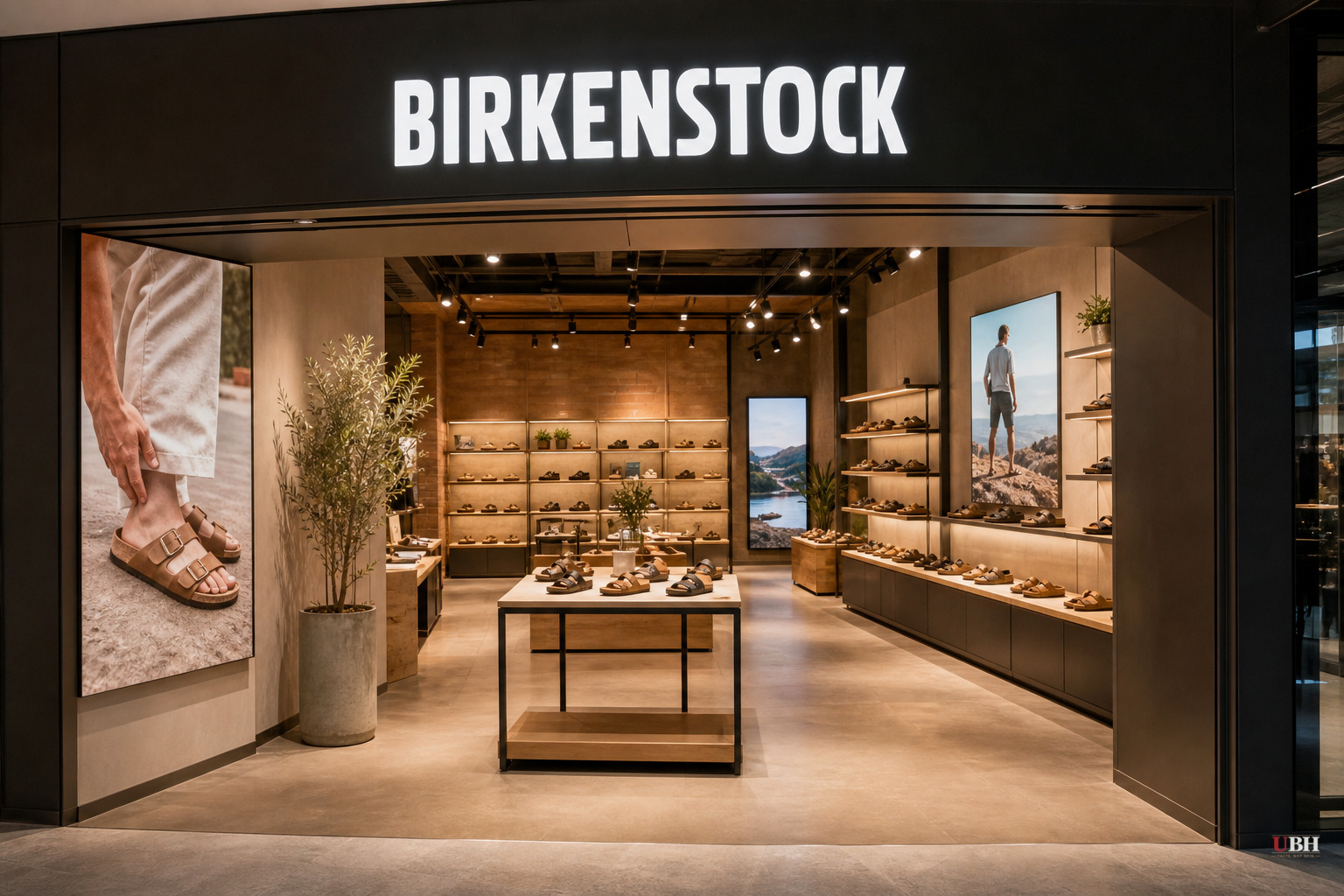
Birkenstock told investors on Thursday, August 13, that demand for its sandals, clogs and now closed-toe shoes shows no sign of slowing down. The German footwear maker raised its full-year sales growth forecast to 15% on a constant-currency basis, the top end of its previous 13% to 15% range, according to Reuters.
Wall Street liked what it heard. Shares jumped as much as 20% during Thursday trading, hitting a three-week high of $46.30 on the NYSE, according to Mint. Reuters put the early move at about 15% to $43.29, while MarketReview clocked shares at $43.21, up 17.6%, around 11:03 a.m. Eastern. The stock is still well off its $63.68 record high from two years ago, per Reuters.
The numbers behind the pop
Fiscal third-quarter revenue, for the three months ended June 30, came in at 719.5 million euros ($829.1 million), up 13% year-over-year on a reported basis and 15% in constant currency, according to Reuters and MarketReview. That beat the average analyst estimate of 713.4 million euros compiled by LSEG.
Direct-to-consumer sales, meaning Birkenstock's own stores and website, rose 14% on a reported basis and made up nearly 39% of quarterly revenue, Reuters reported. The company opened 13 new owned stores during the quarter, bringing its global total to 124, according to MarketReview.
Business-to-business revenue, sales through wholesale partners, rose 13% reported and 15% in constant currency. MarketReview reported that Birkenstock said most of that growth came from existing retail doors rather than adding new locations, driven by broader product selection and strong full-price selling.
Full-price selling matters here. For a premium brand like Birkenstock, growth that comes from sticker-price purchases rather than markdowns signals real demand, not clearance-rack desperation.
Where the growth is coming from
Geographically, growth was broad. Asia-Pacific sales rose 18% on a reported basis, and MarketReview noted that excluding Australia, where a distributor acquisition skewed the timing of reported sales, Asia-Pacific growth was closer to 30%. The Americas grew 11% reported, and Europe, the Middle East and Africa rose 15%.
Product-wise, the standout was the Naples clog, whose sales more than quadrupled from a year earlier, according to Reuters. Closed-toe styles excluding the iconic Boston clog rose more than 50%. Mint reported the company is also leaning into cheaper plastic footwear aimed at beach-goers, a move designed to pull in new customers while giving loyal fans a reason to buy an extra pair.
Simeon Siegel, an analyst at Guggenheim Securities, told Reuters that "BIRK's underlying revenue growth has been consistently industry leading," adding that "the noise of the nuance has been loud but the underlying growth has been there the entire time." That's a direct response to investor worries earlier this year that Birkenstock's premium pricing strategy was starting to backfire.
The profit picture is messier than the headline
Net profit actually fell 15% year-over-year to 110 million euros, and earnings per share dropped 13% to 0.60 euros from 0.69 euros a year earlier, according to Mint. That decline stemmed from 22 million euros in non-recurring, non-cash charges tied to an accelerated share repurchase and the refinancing of senior notes.
Strip those one-time costs out, and the picture flips: adjusted net profit rose 15% to 134 million euros, and adjusted EPS increased 19% to 0.74 euros. Reuters, however, reported that adjusted EPS of 0.74 euros actually missed the analyst estimate of 0.76 euros, a detail some coverage glossed over in favor of the top-line beat.
Adjusted EBITDA rose 11% to 242 million euros, but the adjusted EBITDA margin slipped to 33.7%, down 70 basis points from 34.4% a year earlier, according to Mint. MarketReview reported Birkenstock now expects full-year adjusted EBITDA to reach at least 710 million euros, with reported revenue landing at the high end of its 2.30 billion to 2.35 billion euro range. Annual profit guidance stayed unchanged at 1.90 to 2.05 euros per share.
Tariffs and the Middle East, mitigated but not gone
Birkenstock flagged currency swings, U.S. tariffs and a higher expected tax rate as ongoing pressures on profitability, according to MarketReview. On the geopolitical front, CFO Ivica Krolo said the company had reduced the expected financial hit from the conflict in the Middle East to a high single-digit millions of euros for the second half, down from an earlier estimate of 10 million to 12 million euros. Krolo told analysts on the earnings call, "We were able to mitigate much of the pressure through adjustments in the delivery routes and strength in the other parts of the region."
Investors will get the next full read on whether Birkenstock's premium strategy keeps working when the company reports fiscal fourth-quarter and full-year results after its fiscal year closes at the end of September.
Sources used for this briefing
3 links from 3 independent newsrooms (syndicated copies of the same report count once)
These are the sources it draws on, linked so you can verify.


