
Original briefings. Zero spin.
Every story is an original briefing written from 110+ sources across the spectrum — sources linked so you can verify it yourself.
 tech
Notable (6/10)
September 7, 2026 at 10:11 PM
tech
Notable (6/10)
September 7, 2026 at 10:11 PM
Bengaluru's Pixxel Raises $100 Million, India's Largest-Ever Space-Tech Funding Round
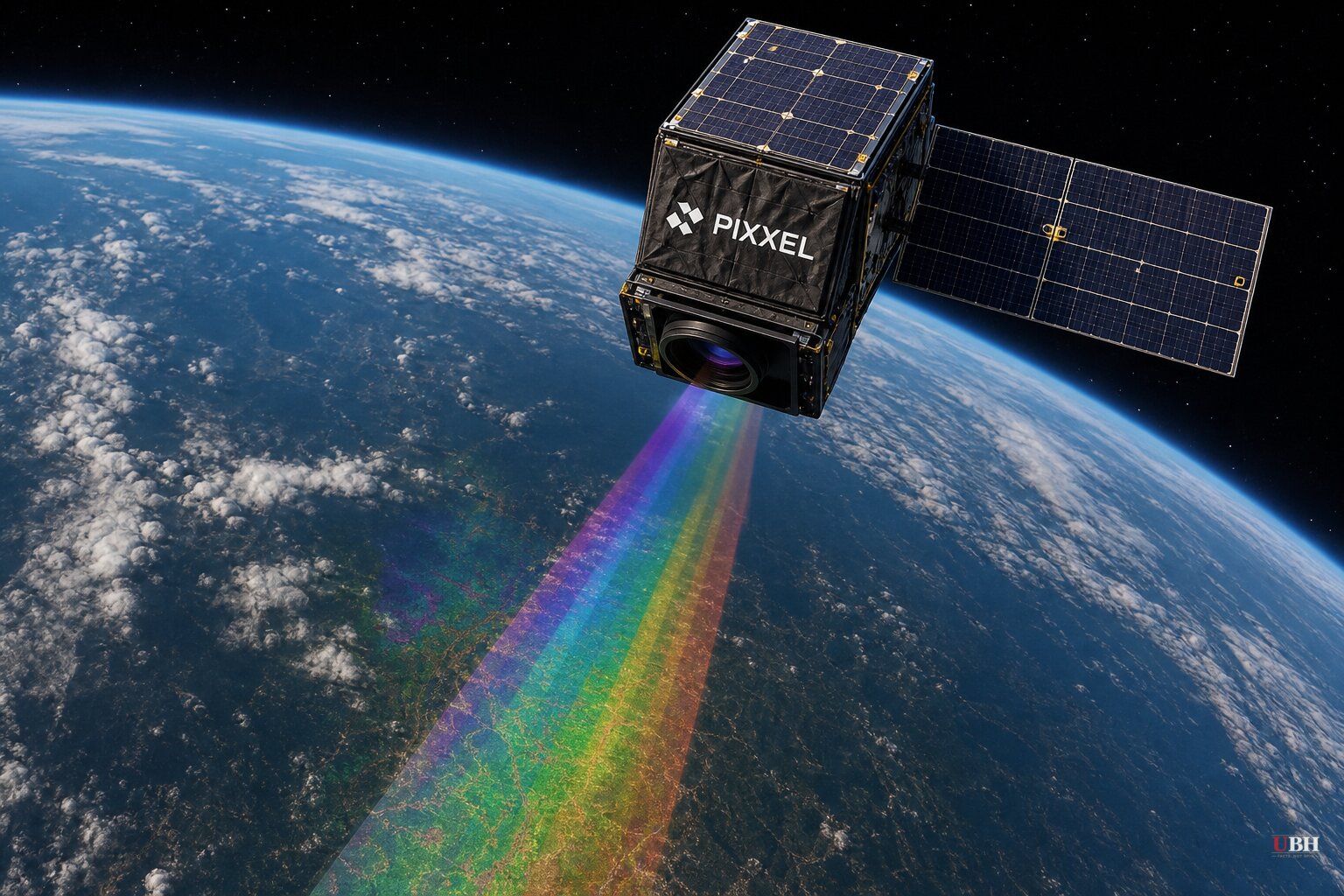
Pixxel, a Bengaluru company that runs the world's only commercial hyperspectral satellite constellation, closed a $100 million Series C round on Monday, September 7. This is the largest single fundraise in the history of India's space-tech industry, according to Business Standard, The Hindu, and Reuters. Temasek, Singapore's sovereign wealth fund, and Seraphim Space Investment Trust, a London-listed space venture firm, co-led the round. New investors 360 ONE Asset and Seoul-based IMM Investment joined, alongside existing backers Radical Ventures and growX Ventures, according to The New Indian Express. The round brings Pixxel's total capital raised to $195 million. No party disclosed an official valuation. Tech Times pegged it at roughly $400 million. Pixxel hasn't put a number on the record.
What Pixxel Actually Builds Pixxel was
founded seven years ago by Awais Ahmed and Kshitij Khandelwal. Its six Firefly satellites, all launched by 2025 on SpaceX rideshare missions, carry hyperspectral sensors that split incoming light into more than 135 narrow spectral bands across visible, near-infrared, and short-wave infrared wavelengths, according to Tech Times. A standard satellite camera captures just red, green, and blue. Crop disease shows up in infrared reflectance before it's visible to the human eye. Methane leaks alter an oil field's infrared signature, and mineral deposits produce spectral responses that ordinary multispectral satellites can't resolve, per Tech Times. Firefly delivers this at 5-meter resolution across a 40-kilometer swath, revisiting any point on Earth within 24 hours. Customers include the US National Reconnaissance Office, the Indian Air Force, and NASA, which has Pixxel under a $476 million Commercial SmallSat Data Acquisition contract running through November 2028, according to Tech Times. Reuters and The New Indian Express both note the company is backed by Google.
Four Places the Money Goes
The Hindu reports the funding is earmarked for four priorities: extending sensing capability through the next-generation Honeybee constellation and high-resolution optical satellites; building out Aurora, the company's Earth-intelligence software that turns raw sensor data into decision-ready analysis; deepening sovereign Earth-observation work for governments; and scaling manufacturing through Gigapixxel, a new high-rate production facility. Honeybee will keep Firefly's 5-meter resolution but extend into short-wave infrared, CEO Awais Ahmed told The Times of India. International News and Views reports the first Honeybee satellite is expected to launch in 2027, and that Pixxel plans to add synthetic aperture radar and ultra-high-resolution optical imaging to the platform. Separately, Pixxel has been selected to lead a 12-satellite public-private Earth observation constellation under India's Indian National Space Promotion and Authorisation Centre (IN-SPACe), according to The New Indian Express, and has won multiple iDEX innovation challenges run by India's Ministry of Defence, per The Hindu.
The Orbital Data Center Claim Tech
Times leads with the most eye-catching detail: a satellite Pixxel is calling India's first orbital data center, framed as space-based AI compute infrastructure. The Hindu corroborates this, noting Pixxel has "unveiled plans for an orbital data-centre demonstration satellite," and The New Indian Express headline references an "AI-powered orbital data centre satellite" developed with Sarvam. None of the sources spell out a launch date, technical specifications, or how much of the $100 million is earmarked specifically for that satellite versus the broader Honeybee and Aurora buildout. The orbital data center remains an announced concept without a confirmed timeline.
Context
India's Crowded Field Pixxel isn't India's only space unicorn-in-waiting. The Times of India notes Hyderabad-based Skyroot Aerospace has raised roughly $160 million and hit a $1.1 billion valuation earlier this year, making it more heavily capitalized on paper than Pixxel even before this round. The broader trend, as multiple outlets note, traces back to the Indian government opening the space sector to private players. That policy shift is what's producing companies like Pixxel and Skyroot in the first place, and it's a case study in what happens when a government gets out of the way of private capital and lets founders build. Mark Boggett, Seraphim's CEO, framed the bet plainly: "Pixxel is exceptionally well-positioned across some of the most important themes shaping the future of the space sector, from AI-powered Earth observation and sovereign space capabilities to the rise of India as a global SpaceTech leader," he said, according to The Hindu and Business Standard. The open question is execution. Pixxel now has four major buildouts running simultaneously: a new satellite generation, a software platform, sovereign government systems, and an unproven orbital data center concept. All of this runs on $195 million in total capital. Whether Honeybee actually launches on the 2027 timeline International News and Views reports, and whether the orbital data center moves past the announcement stage, will be the real test of whether this round was money well spent.
Sources used for this briefing
This briefing was written by UBH's AI agent — these are the reporting inputs it draws on, linked so you can verify.


