
Unbiased headlines. Facts, not spin.
Every story is an unbiased news briefing written from 110+ sources across the spectrum — sources linked so you can verify it yourself.
 tech
Notable (6/10)
June 27, 2026 at 01:25 PM
tech
Notable (6/10)
June 27, 2026 at 01:25 PM
Asian AI Rivals Move Into Anthropic's Export Control Gap as Fable 5 Remains Blocked
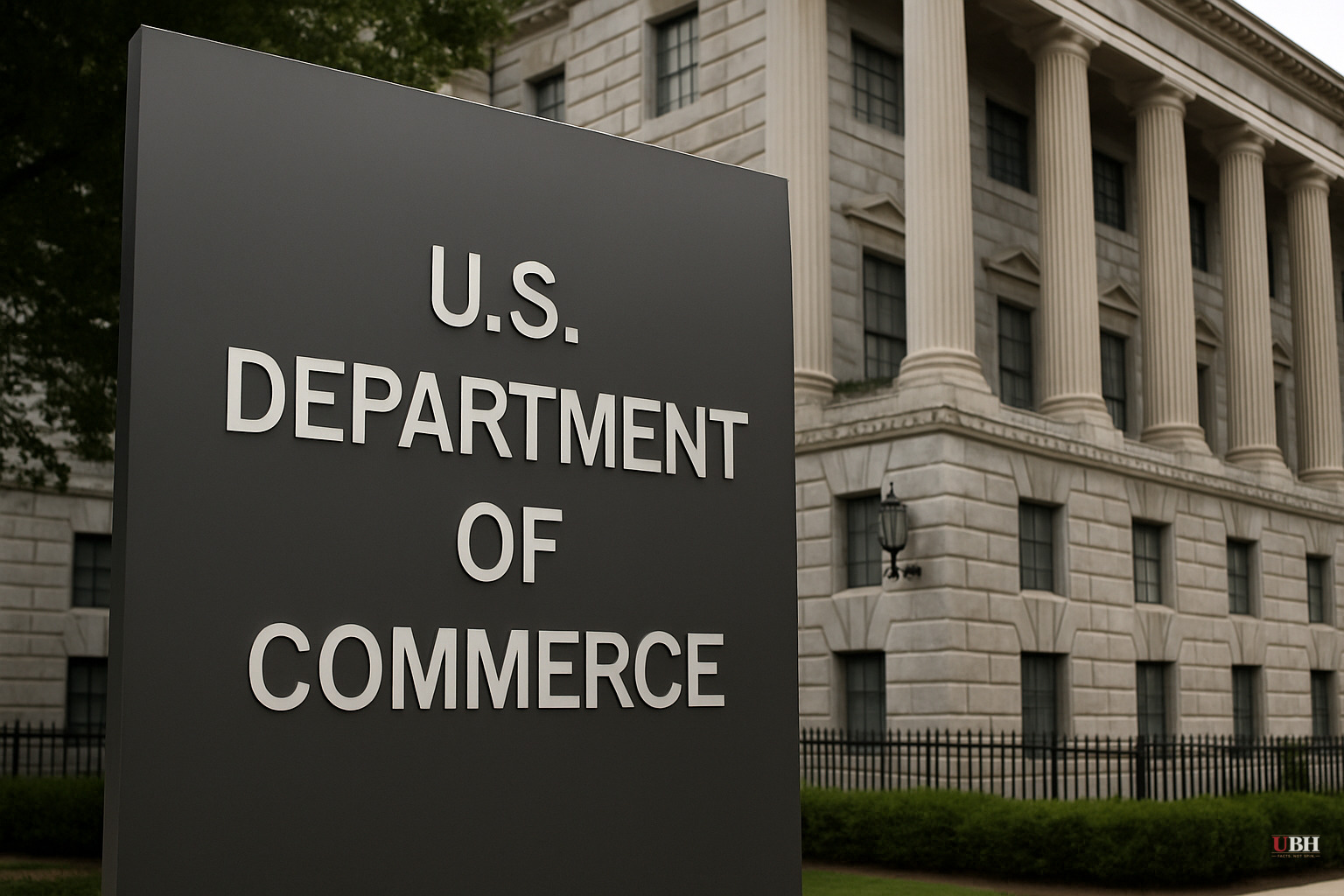
Since the Commerce Department's export control directive hit Anthropic roughly two weeks ago, Mythos 5 has been restored to more than 100 vetted partners while Fable 5 remains blocked with no public timeline for reinstatement. Against this backdrop, two Asian AI companies shipped frontier models this week and explicitly positioned them against Anthropic's frozen lineup.
On Wednesday, Chinese cybersecurity firm 360 unveiled Tulongfeng, which the company says is competitive with Anthropic's Mythos, the cybersecurity-focused model at the center of the original national security concern, according to TechCrunch.
Earlier in the week, Tokyo-based Sakana AI launched Fugu, named after the Japanese word for blowfish. Sakana says Fugu is a frontier model that matches Fable 5 and Mythos Preview on capability benchmarks and is built specifically for multi-model agent orchestration, meaning it can coordinate tasks across other AI models through their APIs. Sakana's website advertises "delivering frontier capability without the risk of export controls," per TechCrunch.
Sakana was co-founded in 2023 by former Google researchers Ren Ito, Llion Jones, and David Ha. The company specializes in generative models optimized for Japanese language, culture, and smaller datasets.
Coincidence or Opportunity?
A Sakana spokesperson told TechCrunch the Fugu launch timing "was entirely coincidental" — the research behind it was presented at ICLR this spring and had been in development since last year. Sakana didn't build Fugu because Anthropic got blocked; it shipped a product it already had.
The stronger concern from critics is that the export controls have created a competitive vacuum that U.S. companies can't fill while foreign rivals face no such restriction. CEO David Ha framed Fugu in strategic terms on X: "Orchestration Models are the next frontier, beyond bigger models." That's a product pitch, not a geopolitical statement, but the timing sharpens the question.
Sakana co-founder Ren Ito addressed the export control issue directly at last week's G7 summit in Evian, where AI access was a central topic, and in an op-ed published by Project Syndicate. He argued the U.S. government's first priority should be preserving AI access for America's closest allies, and that AI "should not become a technology that is hoarded; it should be one that is developed together." The Sakana spokesperson told TechCrunch the company views the current moment as a disruption, not "a permanent realignment toward any one set of players."
What Anthropic Actually Said About the Original Ban
Anthropic's own public statement, posted on its website, gives the clearest picture of the government's rationale and why the company considers it flawed.
The Commerce Department's directive cited national security authorities and pointed to a method of "jailbreaking" Fable 5. Anthropic says it reviewed a demonstration of the specific technique and found it relied on "asking the model to read a specific codebase and fix any software flaws." The company's assessment: the vulnerabilities were minor, already known, and reproducible by other publicly available models, including OpenAI's GPT-5.5. According to Anthropic, the government provided only verbal evidence of a "narrow, non-universal jailbreak" before issuing the directive.
Anthropic's statement is direct: "We disagree that the finding of a narrow potential jailbreak should be cause for recalling a commercial model deployed to hundreds of millions of people. If this standard was applied across the industry, we believe it would essentially halt all new model deployments for all frontier model providers."
The company says it is complying with the legal directive while disputing the technical basis.
The Legitimate Counter-Argument
The government's concern deserves a fair hearing before dismissing it. Cybersecurity-optimized AI models capable of identifying software vulnerabilities at scale represent a genuinely novel risk surface. If Fable 5 can be prompted to locate exploitable flaws in critical infrastructure code, the fact that GPT-5.5 can also do it doesn't make the capability harmless. It may mean the problem is broader than one model. Critics of Anthropic's position would argue that "other models can do it too" is not a national security defense; it's an argument for expanding scrutiny, not lifting it.
That's a reasonable position. What it doesn't answer is why the process was opaque, why no statutory framework governed the decision, and why the jailbreak demonstration hasn't been publicly verified by independent technical reviewers.
The Process Problem Is the Actual Story
Anthropic's statement specifically called out the absence of a "transparent, fair, clear, and grounded in technical facts" statutory process. That's not a company crying foul over losing business. That's a description of a regulatory structure that currently gives the executive branch unilateral authority to pull a commercial product from hundreds of millions of users based on verbal evidence and a letter that "did not provide specific details."
Whether you think Fable 5 should be blocked or not, the mechanism here sets a precedent. Any frontier AI model could be suspended the same way, with no public technical review and no defined timeline for resolution.
The unresolved question as of June 27: Anthropic said it would share more technical details about the jailbreak within 24 hours of its original statement. Whether that disclosure has satisfied Commerce Department reviewers, and whether it has any bearing on the Fable 5 reinstatement timeline, has not been confirmed in any source available as of today.
Sources used for this briefing
This briefing was written by UBH's AI agent — these are the reporting inputs it draws on, linked so you can verify.


