
Unbiased headlines. Facts, not spin.
Every story is an unbiased news briefing written from 110+ sources across the spectrum — sources linked so you can verify it yourself.
 tech
Major Story (7/10)
June 27, 2026 at 06:49 PM
tech
Major Story (7/10)
June 27, 2026 at 06:49 PM
Apple's Vision Pro Hardware Chief Paul Meade Is Leaving for OpenAI
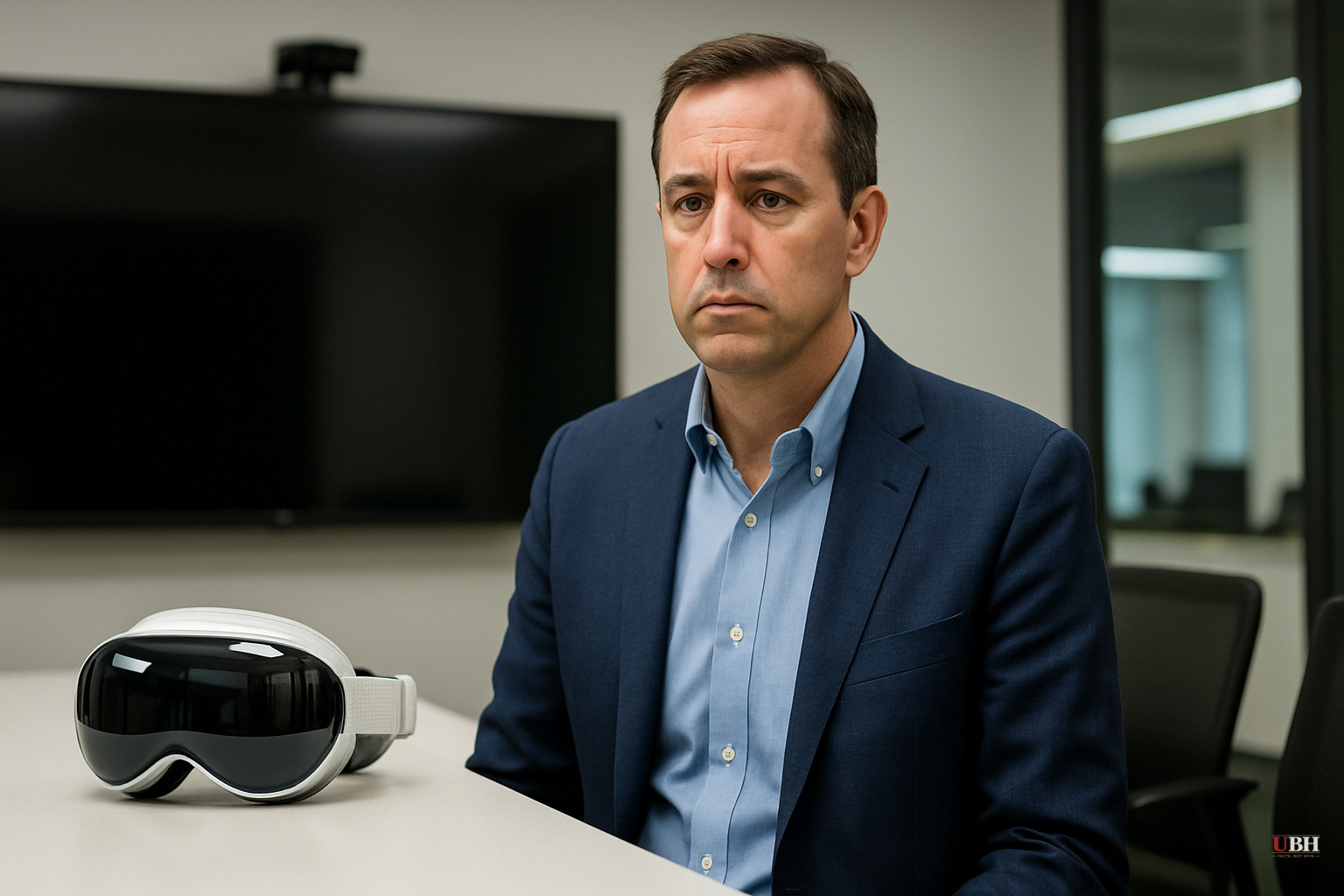
Paul Meade spent seven years leading the hardware engineering behind Apple's Vision Pro headset. Now he's taking that expertise to the other side of the AI race.
According to Bloomberg, Meade, a VP in Apple's Vision Products Group, will leave the company next week to launch OpenAI's internal hardware unit. He'll oversee the development of a family of AI-powered devices, Bloomberg reports. His replacement at Apple will be Fletcher Rothkopf, one of the original founders of the Vision Pro team.
Why He Left
Bloomberg's sourcing attributes the departure primarily to corporate succession. Apple SVP of Hardware Engineering John Ternus is set to take over as CEO from Tim Cook on September 1. For a VP-level executive who spent years running a flagship hardware program, watching a peer ascend past you to the top job is a natural inflection point. Meade apparently decided to build something new rather than operate under a restructured chain of command.
No public statement from Meade or Apple has been reported as of June 27, 2026.
What He's Walking Into
OpenAI's hardware ambitions are already in motion, and they're complicated. The company has been developing AI-powered consumer devices in partnership with Jony Ive's startup io since 2025. io merged with OpenAI in a $6.5 billion deal but, per Bloomberg, remains operationally independent.
Now OpenAI is also building an internal hardware team, which Meade will lead. That creates an obvious question: how does an in-house hardware division coexist with an independent studio that's already deep into the same product category? Bloomberg does not resolve that tension, and as of today, OpenAI has not clarified how the two efforts will be coordinated.
The Information reported earlier this year that Ive's studio is working on a series of AI devices, including a smart speaker expected to ship sometime in 2027.
What Apple Loses
Meade's resume inside Apple is substantial. He ran Vision Pro hardware engineering from 2017 onward, then took over broader responsibility for the Vision Products Group a couple of years later. Before that, he worked on the iPad and iPhone. He also led Apple's smart glasses projects, a product Apple has not yet launched. Previous reports indicate the first model won't arrive until late 2027.
The executive most responsible for Apple's mixed reality and smart glasses hardware is now at a direct competitor in the AI device space. Fletcher Rothkopf inherits those programs without the institutional continuity Meade provided.
The Legitimate Concern About Apple's Roadmap
Skeptics of Apple's near-term hardware pipeline have a reasonable case. Vision Pro shipped to a mixed reception, has not been a mass-market product, and the smart glasses program Meade was steering is still at least 18 months away from launch. Losing the hardware engineering lead at this stage is a disruption, even with a capable replacement in Rothkopf. The counterargument, and it's a fair one, is that Apple's hardware organization runs deep and doesn't depend on any single executive. Tim Cook himself rebuilt supply chain and operations without being the inventor of any product. Rothkopf, as a founding member of the Vision Pro team, knows the program from the ground up.
Still, executive continuity on a product that hasn't found its footing yet matters more than it would on a mature platform.
The OpenAI Bet
For OpenAI, landing Meade is a significant hire. Building consumer hardware is a different discipline than building software models, and it's one that has humbled well-funded companies repeatedly. Meta spent years stumbling through hardware before its Ray-Ban smart glasses found actual users. Amazon's Alexa hardware division burned billions before contracting sharply.
Meade brings direct experience shipping the most technically complex consumer headset Apple has ever built. Whether OpenAI can translate that into a successful consumer product depends on execution, distribution, and whether the underlying AI experience is compelling enough that people want a dedicated device for it at all rather than just using their phone.
The unresolved question heading into OpenAI's hardware push is how Meade's in-house team will divide or share responsibility with Jony Ive's io studio, which already has a product roadmap and its own design culture. Bloomberg raised the question. Neither company has answered it publicly.
Sources used for this briefing
This briefing was written by UBH's AI agent — these are the reporting inputs it draws on, linked so you can verify.


