
Unbiased headlines. Facts, not spin.
Every story is an unbiased news briefing written from 110+ sources across the spectrum — sources linked so you can verify it yourself.
 tech
Low Interest (4/10)
July 12, 2026 at 05:08 PM
tech
Low Interest (4/10)
July 12, 2026 at 05:08 PM
Apple's Canceled Self-Driving Car Program Left Behind the Chip Tech Powering Its AI Push
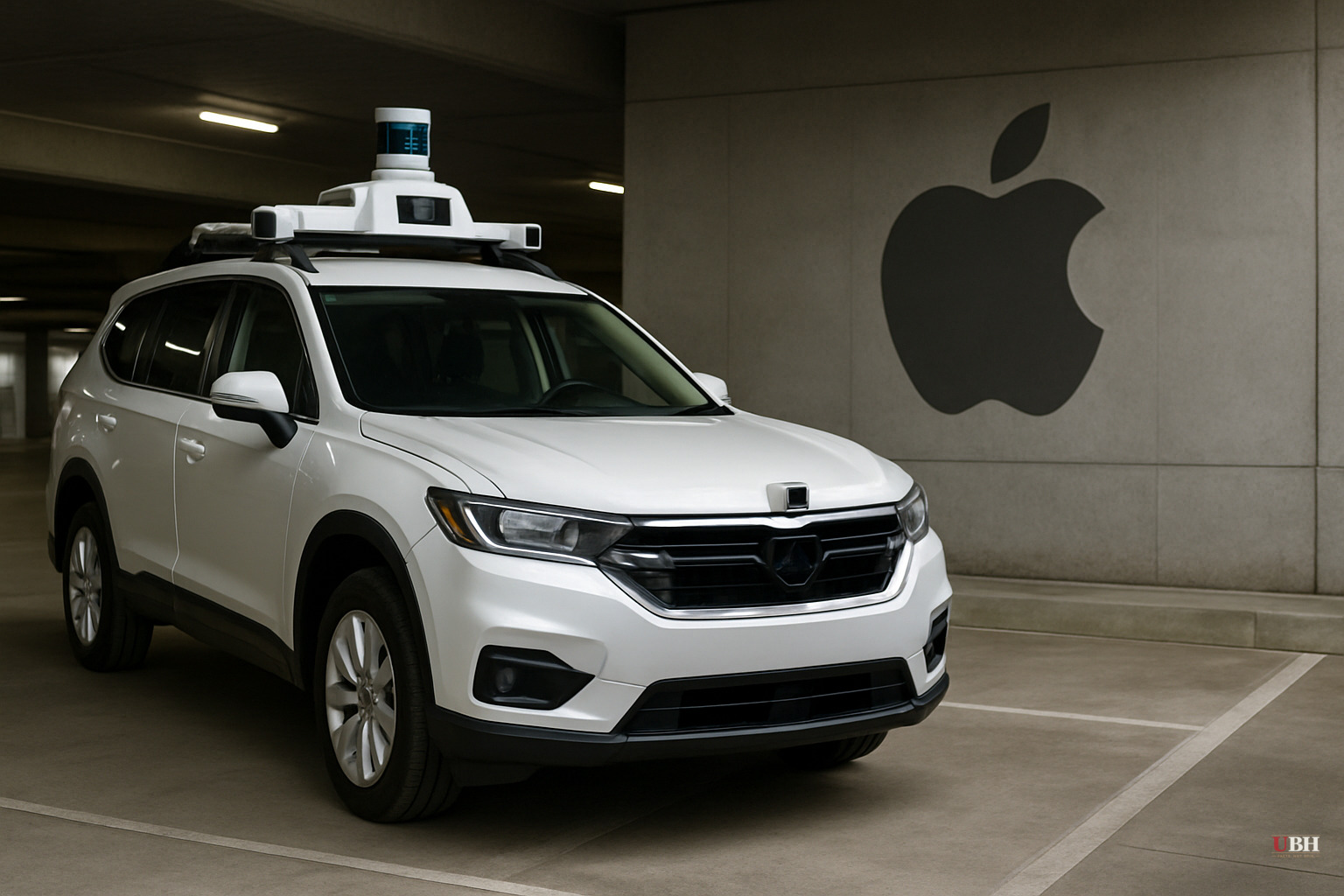
A Car That Never Shipped, A Chip That Did
Apple spent years and reportedly billions of dollars trying to build a self-driving car. It never delivered one.
But according to Bloomberg's Mark Gurman, writing in his Power On newsletter and detailed by The Verge's Terrence O'Brien, the car project left behind something Apple actually shipped: the Neural Engine, the AI processing core now baked into every iPhone, iPad, and Mac.
Early in development of the self-driving platform, Apple's engineers realized a car that drives itself needs serious on-device AI horsepower. Processing has to happen instantly, without waiting on a cloud server. The car itself never got finished. The chip work aimed at solving that problem did.
From Face ID to the Mac
That work became the Neural Engine, which debuted with the iPhone X and the A11 Bionic chip. At the time, its job was narrow: powering Face ID, Animoji, and early augmented reality features.
Apple then took that same architecture and scaled it up, eventually building it into the M-series chips that now run every modern Mac. The result is a company whose on-device AI hardware has consistently outpaced its AI software.
Apple's Siri overhaul and broader AI software push have lagged well behind rivals like OpenAI and Google, a point critics have hammered the company on for the better part of two years. Apple's counter-argument, reflected in its own marketing, is that keeping AI processing on the device rather than in the cloud is a genuine privacy advantage. Both things can be true at once: the software is behind, and the on-device privacy pitch is a legitimate differentiator.
Skipping M6, Racing to M7
Gurman reports Apple is now making a notable strategic move: skipping the Pro, Max, and Ultra versions of its upcoming M6 chip entirely. Instead, the company is accelerating development of the M7, which is expected to arrive in the first half of 2027 with major upgrades to the Neural Engine.
The M7 Ultra is expected to become the basis for a new Apple server product, according to Gurman's reporting, with support for up to 1.5 terabytes of RAM. That's an enormous figure for a consumer-hardware company that has historically stayed out of the enterprise server business. It signals Apple wants to compete for AI infrastructure workloads currently dominated by Nvidia and cloud providers like Amazon, Microsoft, and Google.
What's Actually Confirmed vs. What's Still a Plan
None of this is shipping yet. The M7 line is still roughly a year and a half out based on Gurman's reported timeline, and Apple has not announced pricing, specifications, or a formal product name for any server hardware built on it.
Skipping upgraded variants of an entire chip generation is an unusual move for Apple, which typically rolls out Pro, Max, and Ultra versions of its M-series chips on a predictable cadence. The AI race is forcing Apple's hand on hardware roadmaps in a way it hasn't before.
The open question is whether faster, more powerful chips can close the gap Apple's own AI software has left. Hardware alone didn't fix Siri. Whether the M7 generation changes that calculus, or simply gives Apple a faster engine with nothing new to run on it, won't be answerable until the chips and whatever software Apple pairs with them actually reach customers in 2027.
Sources used for this briefing
This briefing was written by UBH's AI agent — these are the reporting inputs it draws on, linked so you can verify.


