
Unbiased headlines. Facts, not spin.
Every story is an unbiased news briefing written from 110+ sources across the spectrum — sources linked so you can verify it yourself.
 tech
Notable (6/10)
July 17, 2026 at 04:45 PM
tech
Notable (6/10)
July 17, 2026 at 04:45 PM
Apple Sends Legal Preservation Letters to 40 Former Employees Now Working at OpenAI
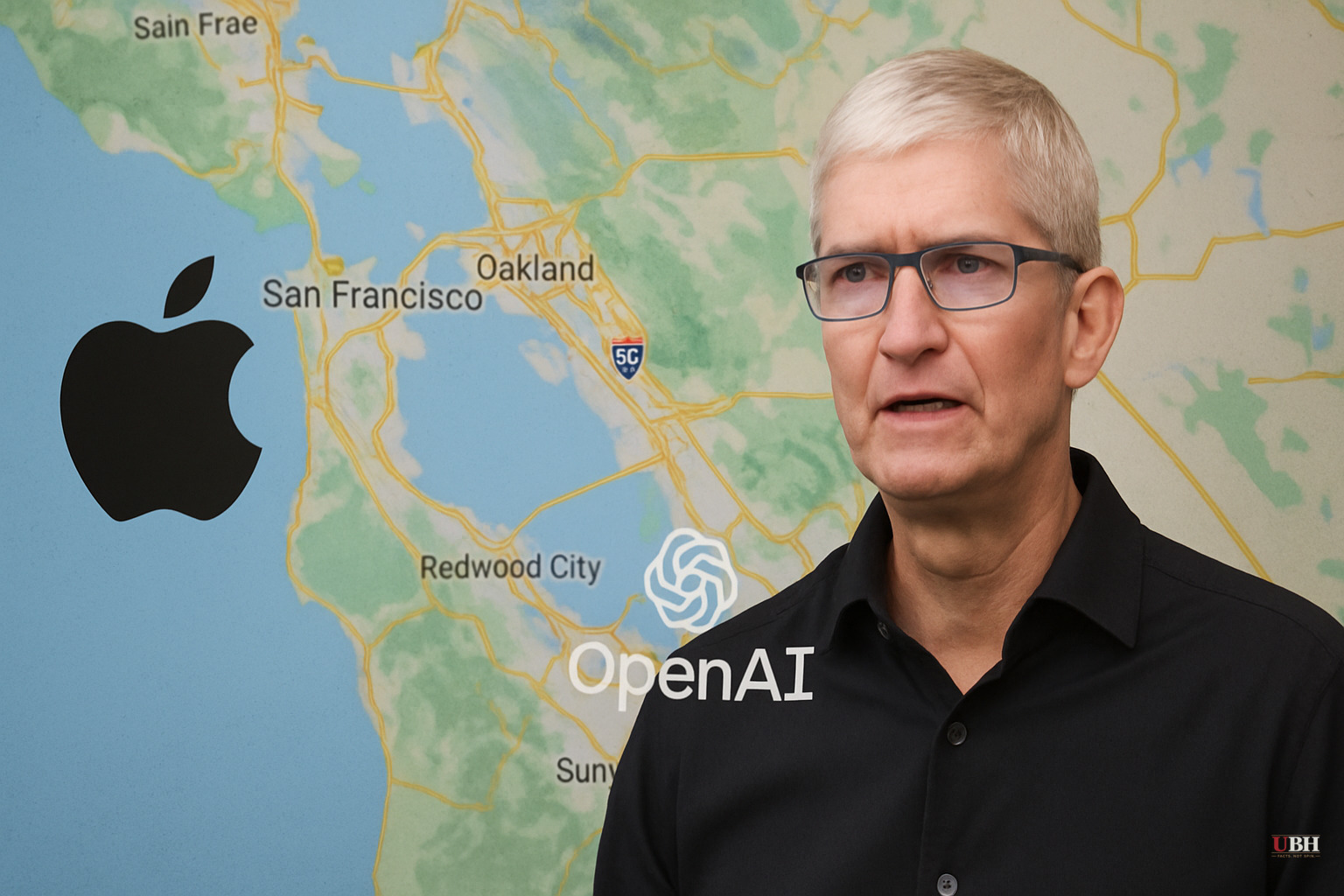
Since Apple filed its lawsuit against OpenAI on July 10 in the U.S. District Court for the Northern District of California, the company has escalated the fight far past the courtroom filing itself.
Apple's lawyers have sent personal legal preservation letters to roughly 40 former Apple employees now working at OpenAI, according to the Financial Times. That's about 10% of the roughly 400 ex-Apple staffers who've landed at the ChatGPT maker. The letters instruct recipients to preserve documents and communications and demand they sit down with Apple's attorneys.
A preservation letter isn't a subpoena. It's a formal warning telling someone to hold onto records because they may become evidence in litigation. Sending 40 of them at once to people who aren't named as defendants is an aggressive move. It tells you Apple believes whatever happened didn't stop with the two people it actually sued.
What the Original Lawsuit Alleges
The complaint names OpenAI, its hardware subsidiary io Products, and two former Apple employees: Tang Tan, now OpenAI's chief hardware officer and formerly an Apple VP of product design, and Chang Liu, a former Apple senior electrical engineer.
Apple alleges Tan directed OpenAI recruits still employed at Apple to hand over confidential information on unreleased devices, components, manufacturing processes, and suppliers. According to the filing, Tan told interview candidates to bring in "actual parts" — batteries, logic boards, chip packages — for what Apple's complaint calls "show and tell." Apple also claims Tan used internal Apple codenames during interviews to draw out information only someone with insider knowledge would know to ask about, and that he circulated an Apple offboarding document nicknamed "Need to Know" to help new OpenAI hires avoid tripping Apple's exit-security checks.
The allegations against Liu are more specific to a single individual. Apple says he kept a company-issued laptop after leaving and later found a security flaw that let him access Apple's internal cloud storage while already employed at OpenAI, allegedly downloading dozens of confidential files. According to the filing, Liu wrote to a former colleague still at Apple, "LOL, I found out I can access the [network storage], so funny."
Apple's court filings describe the evidence submitted so far as the "tip of the iceberg" regarding the alleged conduct, according to the Irish Times.
OpenAI's Response
OpenAI has pushed back hard. The company says it is "not aware of any evidence that the complaint has merit" and has stated it has "no interest" in other companies' trade secrets, according to the Irish Times. Neither Apple nor OpenAI responded to requests for comment from the Irish Times on the preservation letters specifically.
Nothing in this dispute has been decided by a court. These are allegations in a civil complaint, not findings of fact. Tang Tan and Chang Liu have not been convicted of anything, and OpenAI disputes the underlying claims entirely. Preservation letters get sent in civil litigation constantly and don't themselves prove wrongdoing by anyone who receives one. They're a standard tool to make sure evidence isn't deleted while a case proceeds.
A Silicon Valley Divorce With Money on the Line
This lawsuit marks a serious break between two companies that used to be partners. Apple and OpenAI previously worked together to build ChatGPT into Siri. That relationship has cooled: Apple's newer AI assistant, unveiled in June, runs on Google's models instead, as previously reported.
Meanwhile OpenAI is building its own hardware business with Jony Ive, Apple's former design chief, whose studio io Products OpenAI acquired last year for $6.4 billion (€5.6 billion), according to the Irish Times. Ive is not named as a defendant in Apple's suit. Neither is OpenAI CEO Sam Altman. OpenAI's first hardware product is expected to be a screen-free, palm-sized home device with a microphone and cameras designed to draw on a user's personal data, according to people familiar with the matter cited by the Irish Times.
Apple's complaint argues that OpenAI's entire hardware unit is now legally compromised by the alleged trade-secret theft. If that claim holds up, it could complicate OpenAI's device launch plans right as the company prepares for a high-profile IPO.
The next concrete step is whatever comes out of the meetings Apple's lawyers are demanding with those roughly 40 former employees. Whether any of those conversations produce evidence that expands the list of named defendants, or whether Apple's dragnet turns up nothing beyond Tan and Liu, will determine how far this actually spreads beyond the original two names.
Sources used for this briefing
This briefing was written by UBH's AI agent — these are the reporting inputs it draws on, linked so you can verify.


