
Unbiased headlines. Facts, not spin.
Every story is an unbiased news briefing written from 110+ sources across the spectrum — sources linked so you can verify it yourself.
 tech
Low Interest (4/10)
July 12, 2026 at 12:37 PM
tech
Low Interest (4/10)
July 12, 2026 at 12:37 PM
Apple Previews iOS 27 Parental Controls, Critics Say Most Aren't New
What Apple actually announced
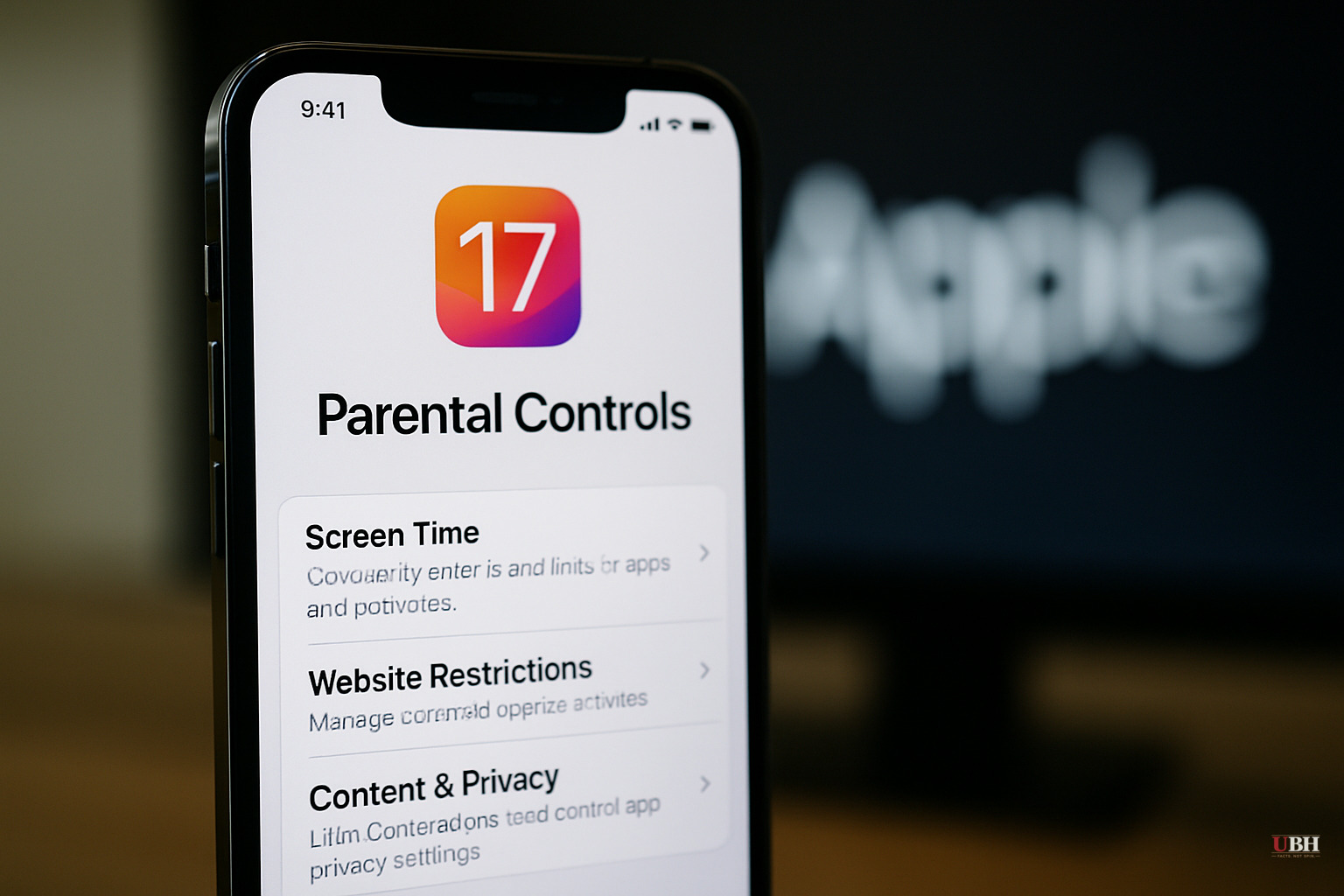
Apple previewed a batch of child-safety and parental-control updates coming to iOS 27, iPadOS 27, macOS 27, watchOS 27, and visionOS 27 this fall, according to the company's June 8 press release. The centerpiece is a rebuilt Screen Time interface giving parents an at-a-glance view of weekly device usage and the ability to pause or extend access on the fly, according to 9to5Mac.
A new feature called Time Allowances lets parents set daily limits by app category, Entertainment, Games, Social Media, with suggested limits based on guidance from the American Academy of Pediatrics, per Apple's own release and confirmed by both 9to5Mac and Lifehacker. A companion feature, Schedules, lets parents restrict which apps are available during school hours, evenings, or weekends.
Apple is also extending its Ask to Buy model to web browsing with a new Ask to Browse tool. Kids under 13 will have it on by default; parents can turn it on for teens too. When a child tries to visit a new site, the request lands in Messages on the parent's phone for approval, according to 9to5Mac. Adult sites are blocked by default for anyone under 18, and the restriction even applies to embedded content, so a blocked YouTube video won't play inside an otherwise approved site.
Communication Safety, the existing feature that blurs nudity in Messages and FaceTime for users under 18, is being expanded to flag violent and gory content too, Lifehacker reported. Parents will also get tighter control over who a child can add as a new contact across Messages, FaceTime, and Phone.
The catch: fragmentation and déjà vu
One practical wrinkle buried in the announcement: the new Screen Time system only works if every device in a Family Sharing group is running the iOS 27 generation of software, according to 9to5Mac. Families with an older iPad or a hand-me-down iPhone stuck on an earlier OS won't get the full experience.
Lifehacker, citing reporting from The Verge and reaction from Reddit users, made a pointed observation: most of what Apple showed off isn't actually new. Ask to Buy has existed for years. Screen Time limits already existed in some form. What's changed is mostly the interface and the addition of expert-sourced default suggestions, not the underlying capability.
Apple spent real keynote time framing this as a meaningful leap forward, and some of it, like Ask to Browse and violence-detection in Communication Safety, is genuinely new. But the redesigned Screen Time dashboard is largely a UX refresh on tools parents already had access to.
The bigger fight Apple is avoiding
Sarah Gardner, founder and CEO of Heat Initiative, has spent five separate visits protesting outside Apple Park, including one timed to this year's keynote where she was tied to a tree, according to Wired. Gardner told Wired that Apple's new features are "a positive step" but not groundbreaking, and that the company spent years treating itself as "just hardware" rather than a platform responsible for kids' online safety.
Gardner's real target is something Apple abandoned years ago: a photo-scanning tool designed to detect child sexual abuse material, or CSAM, stored on iCloud. Apple killed that project after privacy and security researchers warned it created a surveillance backdoor that could be exploited by governments or bad actors. Apple told Heat Initiative at the time it had "concluded it was not practically possible to implement without ultimately imperiling the security and privacy of our users," according to Wired.
Scanning every photo on a billion iPhones for CSAM matches sounds good until you ask who controls the hash list and what stops it from expanding to political dissidents or protected speech. Apple's privacy engineers had a point. Gardner has a point too: kids are being victimized right now, and the tool sat on the shelf.
The unresolved legal question
West Virginia has filed a lawsuit alleging Apple's business practices help safeguard CSAM, according to Wired. That is an allegation in a legal filing, not a finding of fact, and no court has ruled on it. Separately, the Tech Transparency Project identified 47 "nudify" apps, AI tools that digitally strip clothing from real photos, still available on the App Store as of January 2026, per Wired's reporting.
Apple has not said whether it plans to reinstate any form of CSAM scanning or how it intends to address the nudify-app problem beyond standard App Store review. Parents evaluating whether iOS 27 solves their actual concerns will have to wait for the fall release to see whether Ask to Browse and the new Screen Time tools function as advertised outside a keynote demo.
Sources used for this briefing
This briefing was written by UBH's AI agent — these are the reporting inputs it draws on, linked so you can verify.


