
Unbiased headlines. Facts, not spin.
Unbiased Headlines is an independently owned news organization. We bring you the facts, not opinions, written fresh from 110+ named sources. Sources linked so you can verify it yourself.
 tech
Notable (6/10)
tech
Notable (6/10)
Anthropic Will Watermark AI Text From Claude, Starting With Models Released August 2
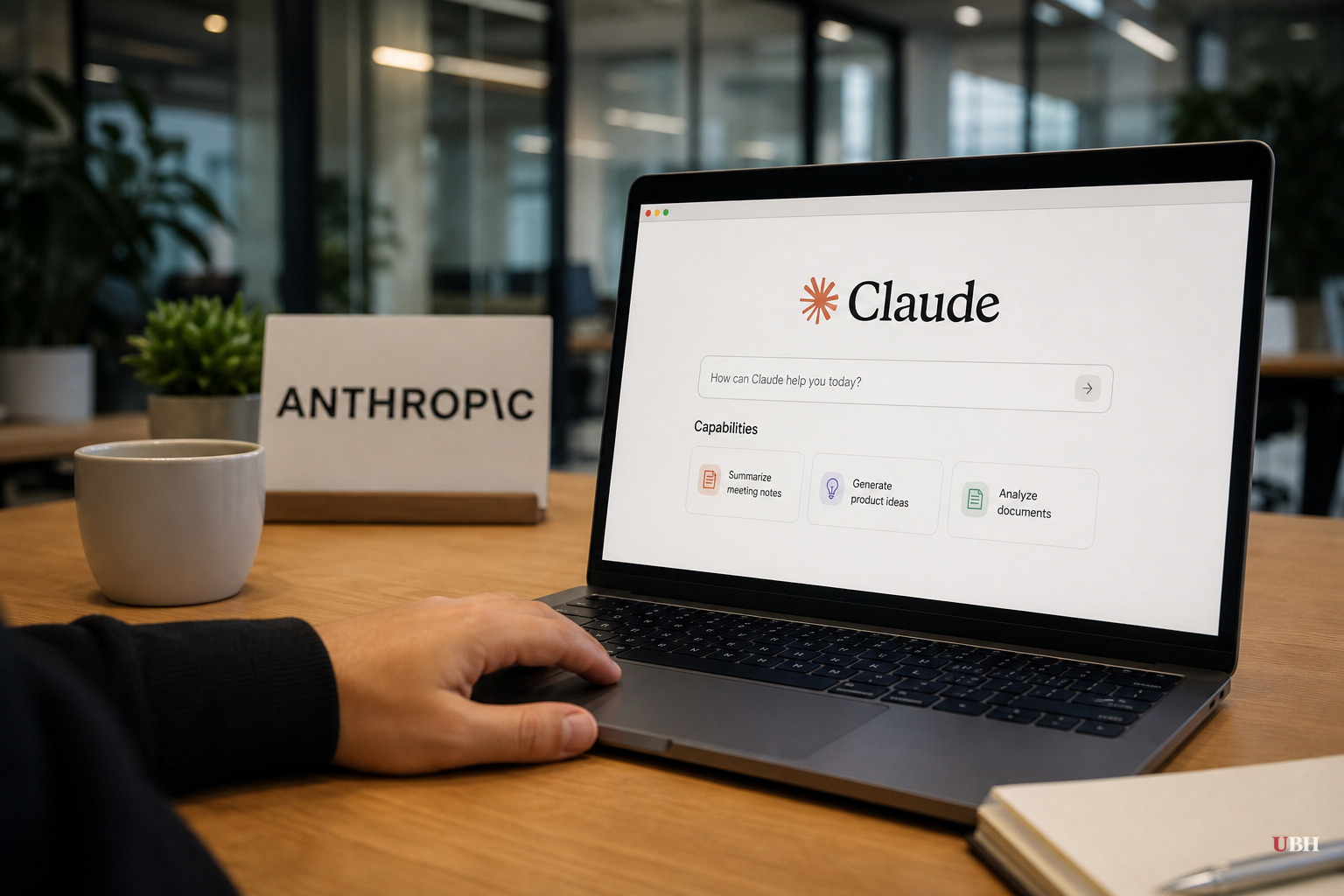
Anthropic announced Monday that new Claude models will bake an invisible watermark into every piece of text they generate. The company says the mark doesn't change what the text says or how it reads, but it travels along when the text gets copied and pasted, and it can survive some editing, according to Anthropic's own announcement on its support site.
The rollout starts with Claude models launched on or after August 2, 2026. Anthropic says it's working on retrofitting older models. The watermarking covers Claude wherever it's used, including the Claude Platform API, Claude Code, Claude Cowork, Claude Tag, and when Claude is accessed through cloud providers like AWS, Google Cloud, or Microsoft Foundry, per Anthropic's documentation.
This isn't optional generosity. Anthropic signed onto Article 50(2) of the European Union's AI Act Code of Practice on Transparency of AI-Generated Content, a framework meant to make AI-generated material identifiable, according to reporting from the Economic Times. The company is doing this because Brussels asked, not purely out of goodwill.
What the watermark actually proves, and what it doesn't
Anthropic is upfront that this isn't a lie detector. Finding a Claude watermark in a document doesn't mean Claude wrote the whole thing. People use Claude to proofread, translate, or summarize text that originated somewhere else entirely, and the mark can stick around regardless, the company said. Flip it around: no watermark doesn't mean no AI. Older models, short passages, heavy edits, or format conversions can all strip the signal, according to Anthropic.
Business Insider frames this as a tool that will "decimate" people trying to pass off AI writing as their own, but a watermark that can be defeated by paraphrasing or mixing sources has real limits. It's a data point for publishers and universities to investigate with, not a verdict.
The publishing industry has real reasons to want something like this. Last month, a literary agent pulled support for the crime novel "Call Me, I'll Hide the Body" after AI-authorship concerns surfaced, even after 14 publishers bid on the rights. Author Jerry Falade denied using AI. Earlier this year, Hachette pulled Mia Ballard's horror novel "Shy Girl" after similar allegations. Ballard told the New York Times she didn't use AI and blamed a freelance editor for introducing AI-generated material without her knowledge.
Anthropic plans to give third parties tools to detect its marks, which could give agents, editors, and professors an actual method to check instead of relying on gut feeling or software that guesses based on writing style. Google DeepMind got there first, watermarking Gemini-generated text and video with its SynthID system back in 2024, after rolling out an image version in 2023.
Where Anthropic's training data actually came from
The watermark push sits awkwardly next to Anthropic's own history with copyrighted text. In the case Bartz v. Anthropic, decided in California's northern district court in late July, court exhibits revealed an internal program called "Project Panama," described in an Anthropic memo as an effort to "destructively scan all the books in the world," according to the Guardian. The same memo reportedly explained the codename by saying the company didn't want it known they were doing this.
Before that, Anthropic used pirated book sources to train Claude, a decision that led to a $1.5 billion out-of-court settlement with authors, the Guardian reported. The court ultimately ruled that training an LLM on copyrighted material isn't infringement by itself. Anthropic switched to destructive scanning, physically cutting the spines off books and feeding pages through scanners, after deciding pirated sources carried too much legal risk.
Anthropic isn't the only company facing this. A 404 Media investigation found that ISBNdb, a book-data company, briefly advertised "destructive book scanning" services under nondisclosure agreements designed to hide which AI company was buying the service, according to Mashable. Internal ISBNdb messaging reportedly acknowledged the "optics problem," warning that "AI company destroys two million books" is not a headline that generates sympathy. ISBNdb has since said it pivoted away from the offering and never actually scanned a book, calling it a market-interest test.
A company that fought in court over how it sourced training material and reportedly ran a codenamed program to destructively scan books rather than negotiate licenses is now building infrastructure to help everyone else prove where text came from. Critics will call that convenient. Anthropic's defenders would say the watermarking commitment is a legally required transparency measure under EU law, separate from and unrelated to the copyright litigation, and that plenty of companies comply with regulations they didn't originate.
Anthropic hasn't said when detection tools will be available to outside institutions, or how the retrofit for pre-August 2 models is progressing. Publishers and universities now have a partial tool. Whether it changes how AI-authorship disputes actually get resolved is still an open question.
Sources used for this briefing
7 links from 7 independent newsrooms (syndicated copies of the same report count once)
These are the sources it draws on, linked so you can verify.


