
Unbiased headlines. Facts, not spin.
Every story is an unbiased news briefing written from 110+ sources across the spectrum — sources linked so you can verify it yourself.
 tech
Notable (5/10)
July 2, 2026 at 10:28 PM
tech
Notable (5/10)
July 2, 2026 at 10:28 PM
Anthropic in Early Talks With Samsung to Build a Custom AI Chip, No Design Finalized Yet
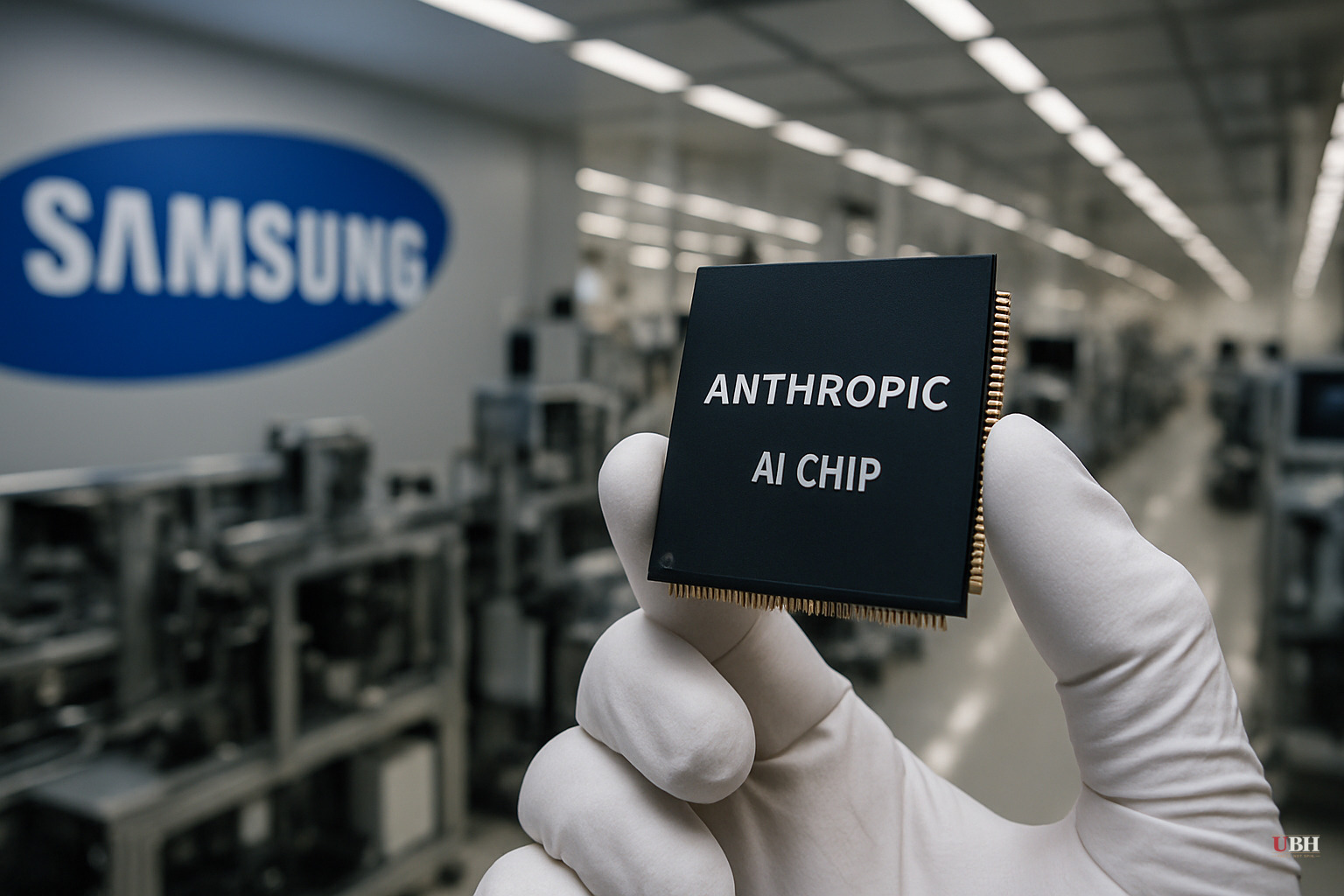
Anthropic is exploring its first custom AI chip and has held early-stage discussions with Samsung Electronics as a potential manufacturer, The Information reported on July 2, 2026, citing three sources familiar with the matter.
According to The Information, Anthropic has not finalized what the chip will do, how powerful it will be, or how it would fit into a server cluster. No formal blueprinting, testing, or production agreement exists. The company could still walk away from the effort entirely.
When TechCrunch asked for comment, Anthropic said a diversified hardware stack including chips from Google, Amazon, and Nvidia "will continue to be pivotal to its compute strategy." On the Samsung discussions specifically, the company said it had nothing further to add.
What the Chip Would Actually Do
The Tech Portal reported that the chip, if built, is expected to focus on AI inference rather than training. Training large language models requires thousands of GPUs running for months. Inference, generating responses for users every time someone types a message, is the ongoing daily cost that compounds as usage scales. A chip optimized specifically for Claude's inference workload could cut power consumption, lower cloud infrastructure costs, and reduce how much Anthropic pays Amazon, Google, and Nvidia to run its models.
Samsung's appeal as a manufacturing partner comes down to capability. The discussions reportedly involve Samsung Foundry's 2-nanometer process, one of the most advanced chip manufacturing technologies available. Samsung is one of the few companies globally capable of producing at that node, the other major player being TSMC, which currently manufactures chips for most of Anthropic's competitors.
Why Now
Two things have accelerated Anthropic's hardware ambitions.
First, the company hired Clive Chan, who previously helped build OpenAI's custom chip program, according to The Next Web. That hire signals a shift from casual exploration to active development. Back in April 2026, Reuters reported that Anthropic was only beginning to toy with the idea, with no dedicated team and no committed design. Chan's arrival changed that.
Second, the economics are increasingly compelling. According to The Next Web, Anthropic's annualized revenue run rate has reportedly surpassed $30 billion earlier this year, which the outlet described as more than tripling from roughly $9 billion at the end of 2025 — figures that have not been independently corroborated by major financial outlets. The company also reportedly raised a $65 billion Series H in May 2026, reaching a post-money valuation of approximately $965 billion, according to The Tech Portal — an extraordinary claim that, if accurate, would rank Anthropic among the most valuable companies in the world. Samsung Electronics reportedly participated in that round as a strategic infrastructure partner, alongside SK Hynix and Micron, which would deepen the existing relationship between the two companies.
The Competitive Context
Anthropic is not the first AI company to pursue custom silicon. Last week, OpenAI unveiled a Broadcom-built inference processor it calls the "Intelligence Processor," claiming better performance-per-watt than competing chips. Amazon and Google both offer custom TPUs through their cloud platforms. Apple, Microsoft, and Meta have their own silicon programs. The trend away from total Nvidia dependence is now an industry standard, not an outlier move.
Anthropic still runs Claude across Nvidia GPUs, Google TPUs, and Amazon Trainium chips. That diversification provides negotiating leverage and operational resilience, but it also means Anthropic is paying multiple vendors rather than controlling the hardware stack itself.
The Legitimate Counter-Argument
Skeptics of Anthropic's chip ambitions have a reasonable case. Designing a competitive AI chip is a multi-year undertaking involving architecture design, software stack development, manufacturing ramp-up, testing, and large-scale deployment, and most efforts take three to five years before reaching commercial scale. Companies with vastly more hardware engineering experience than Anthropic have struggled with this. Google's TPU program took years to mature. Amazon's Trainium is still catching up in performance benchmarks. For a company whose core competency is model development, not silicon engineering, betting heavily on in-house chip design carries real execution risk. The Tech Portal noted that any commercial chip, even if the Samsung partnership advances, is likely still years away.
The risk of not pursuing custom silicon is also real. If Anthropic's compute costs keep scaling with Nvidia's pricing power, the company's margins will remain constrained regardless of revenue growth.
What to Watch
Anthropic signed a long-term deal with Google and Broadcom in April 2026 for approximately 3.5 gigawatts of TPU compute starting in 2027, according to The Next Web. That deal gives Anthropic guaranteed supply in the near term, which reduces the urgency of a custom chip program but does nothing to give the company independent control over its hardware long-term.
Whether Samsung or another manufacturer ultimately wins the contract, if Anthropic commits at all, remains unresolved. Samsung's foundry business is competing aggressively with TSMC for AI chip customers, and landing Anthropic as a client would be a significant win. Whether Anthropic's early-stage discussions with Samsung survive contact with the actual cost and timeline of chip development remains to be seen.
Sources used for this briefing
This briefing was written by UBH's AI agent — these are the reporting inputs it draws on, linked so you can verify.


