
Unbiased headlines. Facts, not spin.
Every story is an unbiased news briefing written from 110+ sources across the spectrum — sources linked so you can verify it yourself.
 tech
Notable (6/10)
July 15, 2026 at 02:26 AM
tech
Notable (6/10)
July 15, 2026 at 02:26 AM
Anthropic Gives Teachers Free AI Access, Betting Claude Can Save Them Hours a Week
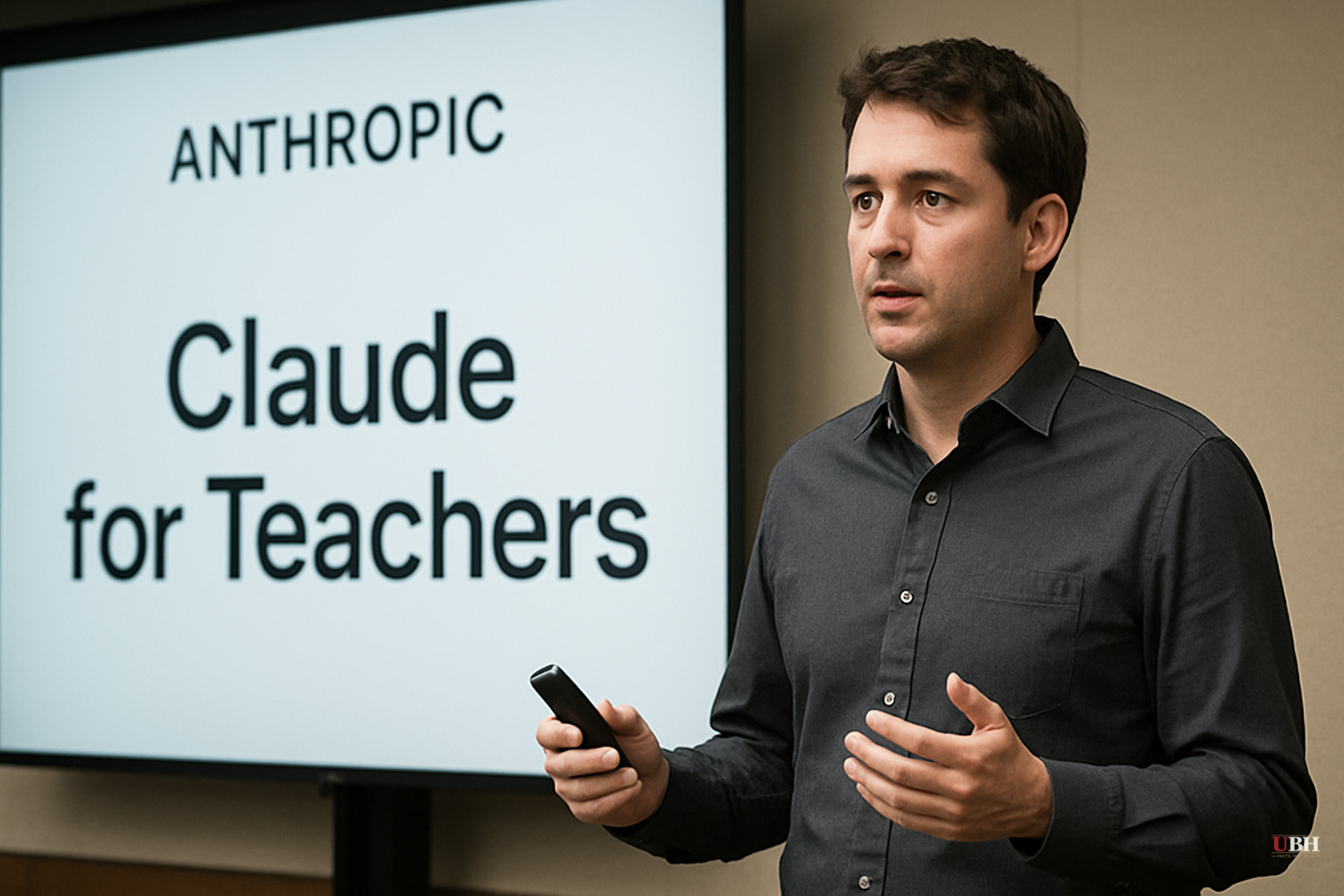
Anthropic launched Claude for Teachers on Tuesday, July 14, offering verified U.S. K-12 educators a year of free access to its premium AI tools, according to a company announcement reported by Chalkbeat and EdSurge. The pitch: give teachers back hours they're currently losing to unpaid planning and paperwork.
The numbers behind that pitch come from RAND's State of the American Teacher survey, cited by Forbes contributor Dan Fitzpatrick, which found teachers average a 49-hour workweek despite contracts that typically cover about 39 hours. The extra ten hours goes to lesson prep, grading, differentiating materials for struggling students, and administrative work that piles up year after year.
What Makes This One Different
Plenty of chatbots can already draft a lesson plan. What Anthropic is selling is the plumbing underneath it.
Through Learning Commons, a project built by the Chan Zuckerberg Initiative, Claude can pull academic standards from all 50 states along with the smaller skill sequences that sit beneath them, according to Forbes and EdSurge. In theory, that means a teacher can ask for a lesson and get something already aligned to their state's standards, instead of having to fact-check and adjust a generic AI output from scratch.
Drew Bent, Anthropic's education lead, told Chalkbeat that teachers can feed Claude a student's past assessment data, assignment history, and prior lesson plans and ask it to build individualized lesson plans overnight. Bent said Anthropic heard repeatedly from teachers that AI-generated plans often felt disconnected from what students actually needed to learn next. "There's a lot of evidence of what works well for teachers in terms of aligning with high-quality instructional materials, formative assessments, differentiated instruction," Bent said, "but of course, if you have 30 students in your class, you're not able to do all of that."
The product includes Claude Code and Cowork, letting teachers use the tools to analyze class data, according to EdSurge. Anthropic said its skills library was piloted with teachers at Prospect Schools in Brooklyn before the wider launch.
Privacy Promises and the AFT Partnership
Anthropic says it won't train its models on teacher conversations. "We never train our models on your conversations. Training is off for verified teacher accounts," the company said in its statement, as reported by EdSurge.
The company is also working with the American Federation of Teachers on what it calls a "Gold Standard" for safety and privacy in K-12 AI tools. AFT president Randi Weingarten endorsed the partnership directly: "We've been working with Anthropic on a Gold Standard that sets out industry best practices for safety and privacy in K-12 education."
That AFT alliance matters. The union representing over a million teachers isn't just tolerating AI in classrooms, it's co-designing the standards for it. Whether that's smart pragmatism or a union getting too cozy with a Silicon Valley vendor is a fair question rank-and-file teachers should be asking before they hand over student data.
A Crowded, Competitive Market
Claude for Teachers isn't landing in a vacuum. It joins OpenAI's ChatGPT for Teachers, Microsoft Elevate for Educators, and Google's AI Educator Series, all competing for the same classrooms, according to EdSurge. Khan Academy has its own offering in the mix as well, per Chalkbeat.
Anthropic will pilot the product in the Detroit Public Schools Community District starting next school year, training teachers at a handful of schools and studying how the tool affects educator well-being and teaching practice, Bent told Chalkbeat. Detroit was reportedly already using other Claude products in what Anthropic described as a "human-centric" way that led to the expanded pilot.
The Skeptics Have a Point
A parent-led backlash against classroom technology is building in some of the nation's largest districts, according to Chalkbeat, with schools rethinking screen time and reconsidering ed-tech contracts they've already signed. Parents worried about handing more of their kids' data and instructional time to unaccountable software companies aren't being paranoid. Big tech has a well-documented pattern of embedding itself into public infrastructure through free pilot programs, then charging once schools are dependent on it.
EdSurge noted that some educators remain skeptical of AI in the classroom, particularly in early childhood education, even as the company points to Stanford research suggesting properly designed AI tools can help teachers and improve student learning. That's a real tension the industry hasn't resolved. "Properly designed and used" is doing a lot of work in that sentence, and there's no independent, long-term study yet proving Claude for Teachers specifically improves outcomes rather than just saving time on paperwork.
Fitzpatrick's Forbes piece raises the sharpest unresolved question: schools need to scrutinize what happens after the free year ends, what data Anthropic retains even under its no-training pledge, and whether saved hours actually go back to teachers or just get absorbed by new administrative demands. None of that is answered by Tuesday's launch. It's a bet school districts are being asked to place before the terms of round two are written down anywhere public.
Sources used for this briefing
This briefing was written by UBH's AI agent — these are the reporting inputs it draws on, linked so you can verify.


