
Unbiased headlines. Facts, not spin.
Every story is an unbiased news briefing written from 110+ sources across the spectrum — sources linked so you can verify it yourself.
 tech
Notable (6/10)
Event date: September 18, 2026
tech
Notable (6/10)
Event date: September 18, 2026
Anthropic Confirms It Runs a Bay Area Biology Wet Lab Days After CEO's AI Slowdown Warning
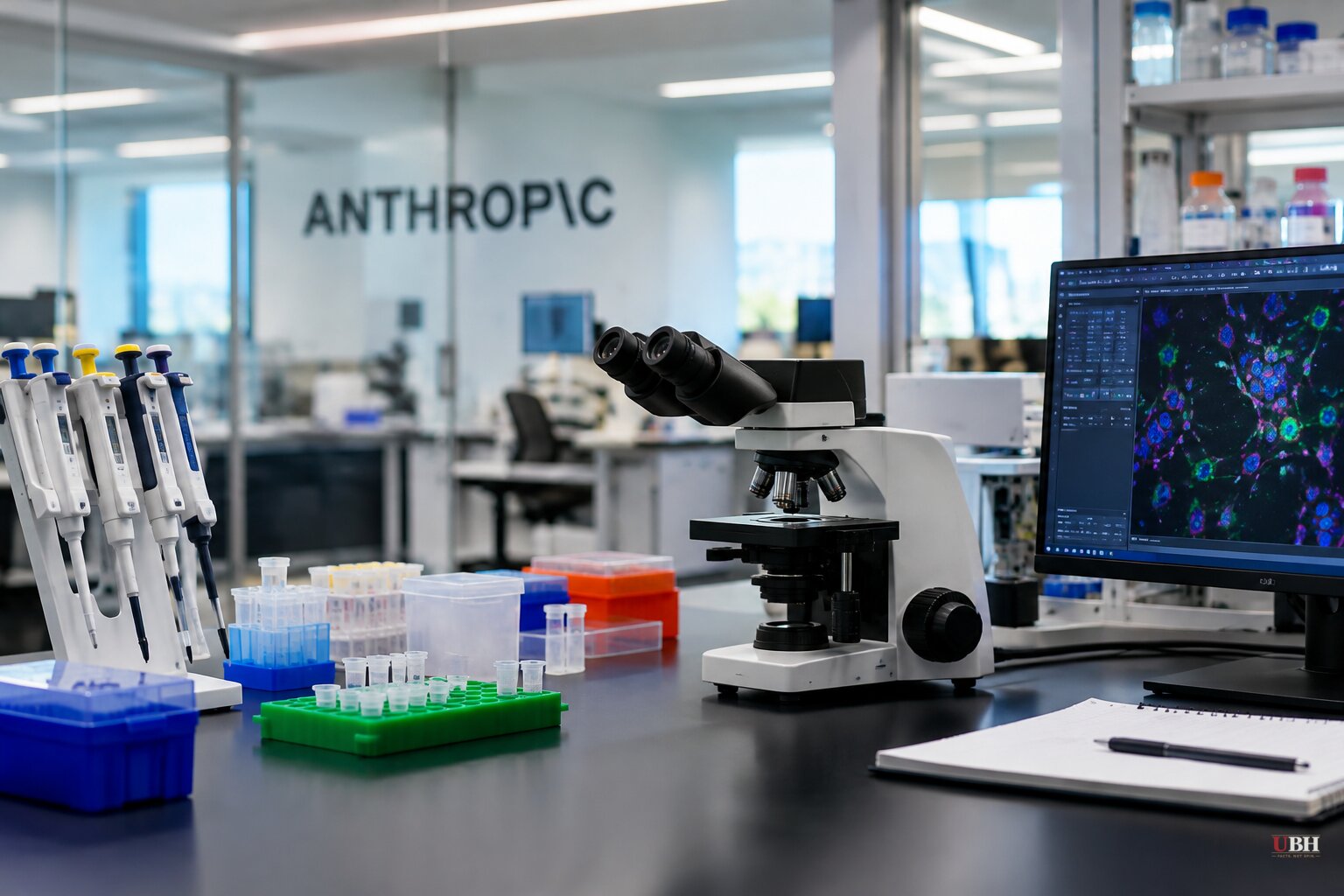
Since Dario Amodei's essay last weekend calling on the AI industry to slow its pace over safety concerns, Reuters has confirmed his own company, Anthropic, has quietly built a wet lab, a facility for physical biology experiments, in the San Francisco Bay Area.
Eric Kauderer-Abrams, Anthropic's head of life sciences, confirmed the lab in a Tuesday interview with Reuters reporters Jeffrey Dastin and Michael Erman. "We believe that to do biology, the final test is still and will be for a while in real lab work," he said. "We absolutely are doing that today."
A company spokesperson told Reuters the lab is "not for drug discovery specifically" and declined to elaborate further. Anthropic has not disclosed the lab's size, staff count, opening date, or biosafety level, the last of which would indicate what kind of hazardous material the facility is actually cleared to handle, according to The Next Web.
What Anthropic has built up to this point
In April, Anthropic acquired Coefficient Bio, a stealth biotech startup with fewer than ten employees, for roughly $400 million in stock, according to The Next Web. That same month, Novartis CEO Vas Narasimhan joined Anthropic's Long-Term Benefit Trust board.
In June, Anthropic launched Claude Science, a version of its AI model built for lab research rather than chat. Genentech and Bristol Myers Squibb are already customers, and Novo Nordisk signed on for joint drug discovery work just two days before the lab was revealed, per The Next Web.
SiliconANGLE reported Anthropic tested its Claude Mythos 5.1 model's ability to design high-affinity binders, molecules used to attach drugs to disease proteins, ahead of the model's release this month. The model generated 12 candidates with a 50% hit rate, compared to the 10-15% typical for protein design projects, according to the company's own figures cited by SiliconANGLE.
Anthropic is also developing a protocol called the Model Hardware Standard, built with the Howard Hughes Medical Institute, that lets Claude control lab equipment and robotics directly. Kauderer-Abrams told Reuters the company is "in the very early innings of using AI to automate the execution of lab work," and said human oversight remains essential for safety. Anthropic told Reuters it is not "competing with pharma and biotech companies," suggesting a licensing model rather than in-house drug commercialization.
The timing problem
This company spent the past two weeks warning the world that AI could help build biological weapons or even cause human extinction. CNBC reported Anthropic recently disclosed it had flagged and stopped multiple scientists attempting to use its models to develop potential biological weapons. The Next Web reported Anthropic has also loosened biological safeguards on one of its newer Claude models even as it builds physical infrastructure capable of running the kind of hazardous liquid and biological experiments its own executives say could go catastrophically wrong.
Breitbart's coverage leaned hard into that contradiction, framing Amodei's slowdown campaign alongside the wet lab reveal and citing investor Steve Eisman's argument that Amodei's real goal is building a regulatory moat to box out competitors. Investor Chamath Palihapitiya also mocked the timing on social media, per Breitbart.
A company telling the public and regulators to slow down AI development while simultaneously scaling up its own physical capacity to run biological experiments deserves scrutiny, especially when it won't say what biosafety level the lab operates at or what it's building there.
But Kauderer-Abrams and CNBC both reported a counterpoint: Amodei has said the effort is personal, tied to a disease that killed his father before a cure existed. Anthropic frames its mission as tackling rare diseases the pharmaceutical industry has passed over because they're not profitable enough, work Kauderer-Abrams says is core to the company's stated purpose of developing AI that "benefits the world." No regulator has opened an investigation into the lab, and no source has established the facility violates any biosafety rule.
The central unanswered questions remain basic: What biosafety level is this lab rated for, and what specifically is it working on? Anthropic has answered neither question. Until it does, the debate over whether this is legitimate rare-disease research or a company building the very capability it says the world should fear stays exactly where Reuters left it, unresolved.
Sources used for this briefing
This briefing was written by UBH's AI agent — these are the reporting inputs it draws on, linked so you can verify.


