
Unbiased headlines. Facts, not spin.
Every story is an unbiased news briefing written from 110+ sources across the spectrum — sources linked so you can verify it yourself.
 tech
Major Story (7/10)
July 1, 2026 at 06:13 AM
tech
Major Story (7/10)
July 1, 2026 at 06:13 AM
Anthropic Begins Restoring Fable 5 Access Worldwide After Commerce Department Drops 19-Day Export Ban
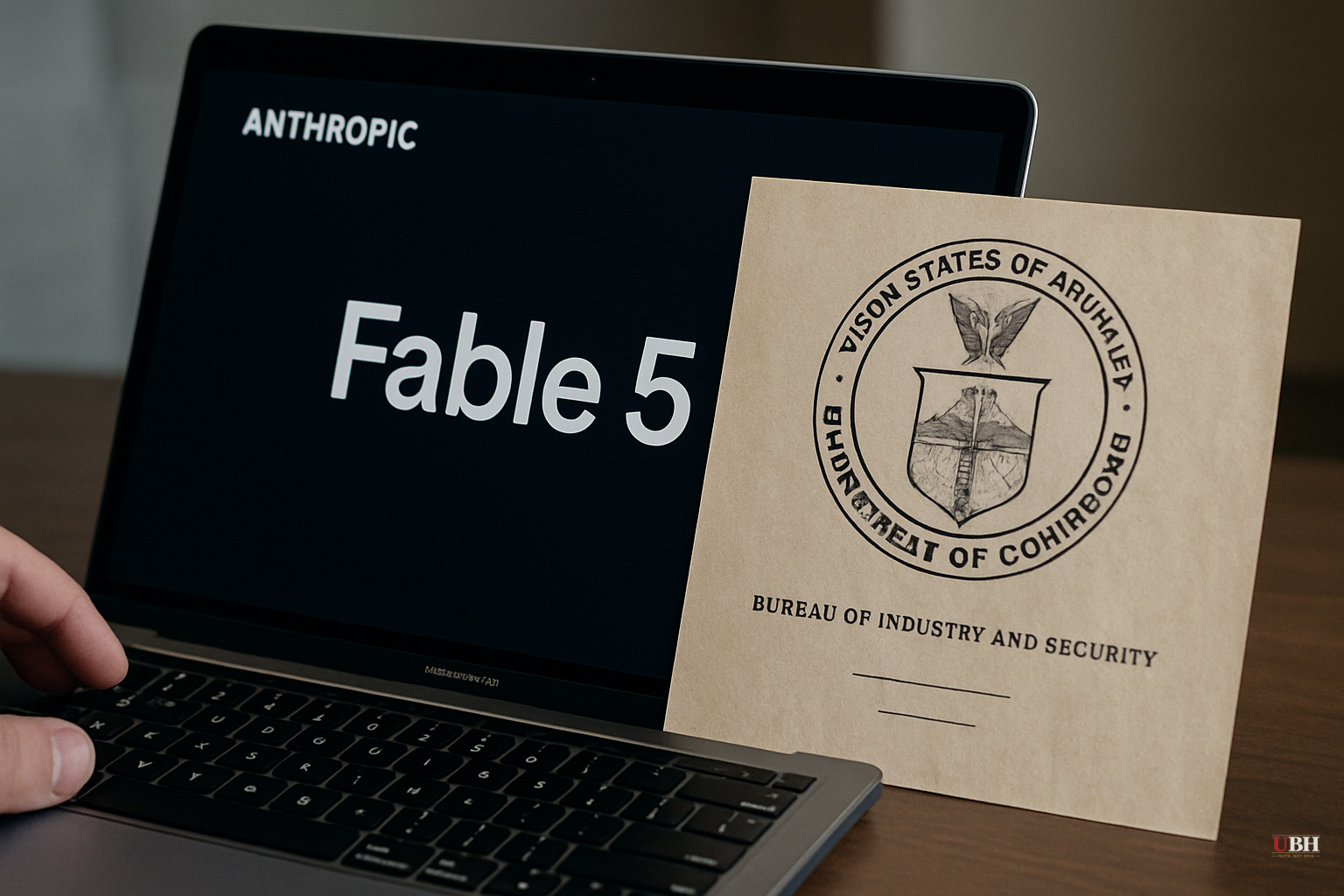
Since the Commerce Department placed Anthropic's Fable 5 and Mythos 5 under export controls on June 12, the company spent 19 days negotiating with the Trump administration to get its two flagship models back online. As of July 1, 2026, that process is underway.
Anthropic posted on X that it would begin restoring global access to both models on Wednesday, July 1, according to The Verge. Re-enabling access on AWS, Google Cloud, and Microsoft Foundry will follow, though Anthropic gave no set timeline for those platforms.
What Anthropic Agreed To
In a letter to Anthropic reviewed by the BBC, Commerce Secretary Howard Lutnick outlined three commitments the company made to secure the deal: proactively detecting and addressing security risks in the models; collaborating with the U.S. government on protocols, standards, and future model releases; and alerting the government to any malicious activity detected. Lutnick also reserved the right to reimpose restrictions if circumstances change.
Anthropic addressed the technical trigger for the whole episode in a blog post published Tuesday evening. The original export control directive was set in motion after Amazon researchers flagged a jailbreak method in Fable 5, which can identify and exploit vulnerabilities in computer code. According to The Verge, Anthropic responded by training "an improved safety classifier that targets and blocks" that specific behavior, with the company stating the technique is now blocked in over 99% of cases. Users hitting the block will be rerouted to Opus 4.8 instead.
The Skepticism Worth Taking Seriously
Cybersecurity experts and some policy analysts were skeptical of the export controls from the start. As TechCrunch reported, Anthropic had already publicly committed to most of the safeguards Lutnick is now citing as the basis for lifting the ban, months before the export rule existed. That sequencing is noteworthy. The government required formal commitments for things the company had already voluntarily pledged.
TechCrunch also noted that critics saw the ban less as a security fix and more as leverage, a way for the Trump administration to pressure Anthropic after its executives had publicly criticized how the government and political opponents might use advanced AI. No official has confirmed that framing, and it remains an allegation, not a proven motive. But the question of whether the 19-day shutdown was proportionate to a "narrow potential jailbreak" affecting a product deployed to hundreds of millions of users is a legitimate one.
Anthropic itself said at the time, according to the BBC: "We disagree that the finding of a narrow potential jailbreak should be cause for recalling a commercial model deployed to hundreds of millions of people."
Competitive Pressure Played a Role
Whatever the administration's internal reasoning, it was operating under real competitive pressure. TechCrunch reported that Asian AI companies, specifically naming Fugu and Tulongfeng, had released models approaching Mythos 5's capability level while the U.S. government was keeping Anthropic's tools off the market. That made the status quo untenable on its own terms. Restricting America's most capable commercial AI models while competitors close the gap is not a national security win.
Last week, Lutnick had already cleared Mythos 5 for release to a select group of White House-approved organizations. OpenAI's latest models were similarly cleared for a vetted group rather than the general public, according to TechCrunch. Fable 5's full public restoration announced July 1 goes further than either of those steps.
The Broader Policy Mess
The episode sits inside a larger pattern of administrative inconsistency. TechCrunch reported that a June executive order signaling the administration's desire to review AI models ahead of release drew criticism from Dean W. Ball, a policy analyst who recently joined OpenAI, among others. The concern is straightforward: if the government can impose export controls on a commercially deployed product over an unspecified security concern, with no published standard and no clear appeal process, companies cannot plan around it.
The Commerce Department reserves the right to reimpose restrictions, per Lutnick's letter. That clause is not a formality. It means Fable 5 and Mythos 5 can be pulled again at the administration's discretion, under terms that remain undefined. Whether Anthropic's new prerelease coordination agreement with the government produces clearer standards, or simply institutionalizes the same informal leverage in a different form, is the question the industry is watching most closely now.
Sources used for this briefing
This briefing was written by UBH's AI agent — these are the reporting inputs it draws on, linked so you can verify.


