
Unbiased headlines. Facts, not spin.
Every story is an unbiased news briefing written from 110+ sources across the spectrum — sources linked so you can verify it yourself.
 tech
Notable (5/10)
July 13, 2026 at 12:52 PM
tech
Notable (5/10)
July 13, 2026 at 12:52 PM
Anthropic and OpenAI Accuse Chinese Firms of Copying Their AI Through 'Distillation,' No Charges Filed
What Anthropic and OpenAI are claiming
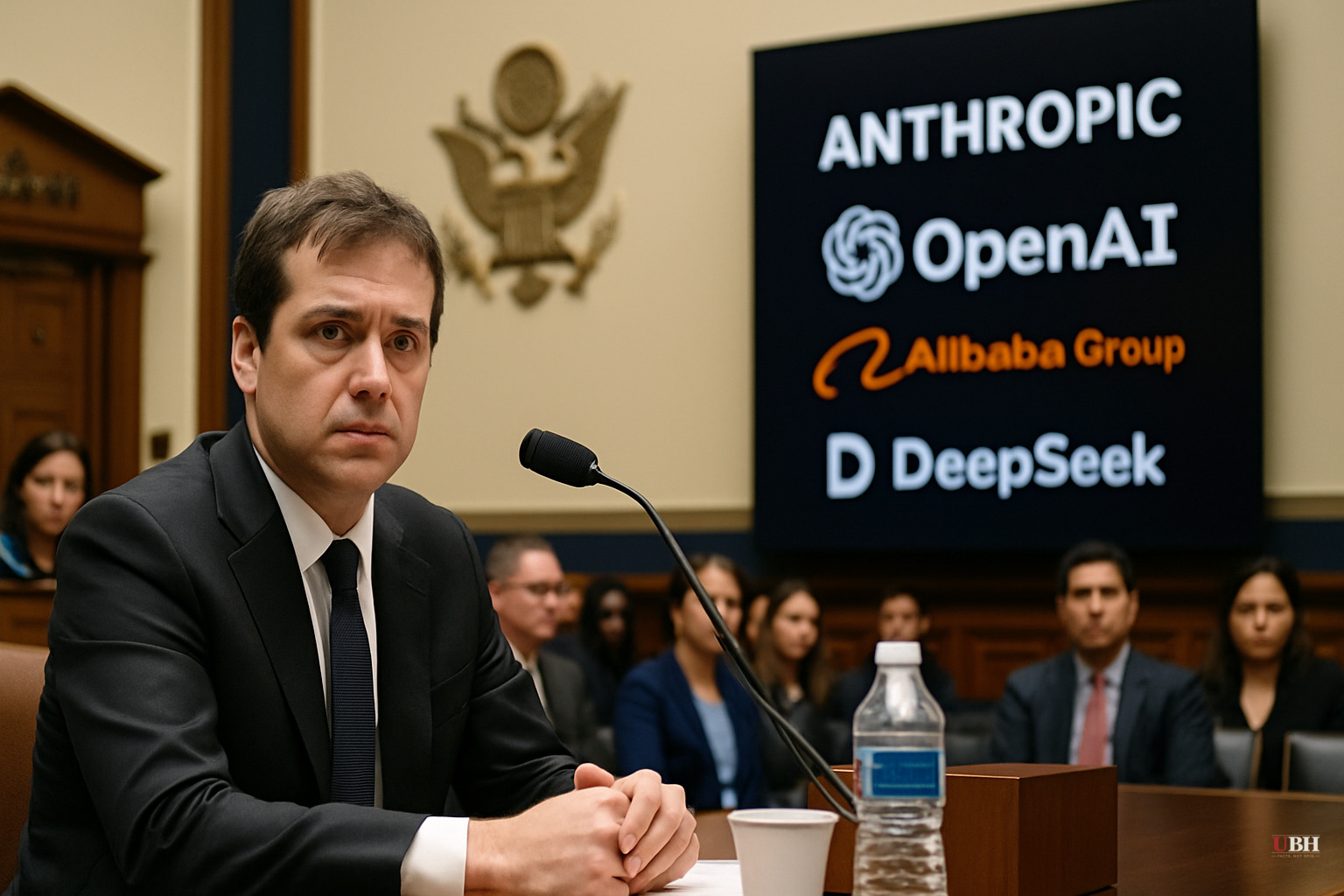
Anthropic CEO Dario Amodei's company sent a letter to Congress on June 24 accusing Chinese tech giant Alibaba of what it called "brazen" theft of its AI models, according to the New York Post. The method: distillation, where a company trains a cheaper model by feeding it outputs from a more advanced rival model, effectively teaching a smaller AI to mimic a bigger one without paying for the underlying research.
Sam Altman's OpenAI made a similar accusation back in February, saying China-based DeepSeek was engaged in "ongoing efforts to free-ride" on its work, per the Post. Google separately flagged a rise in "malicious activity" tied to hackers in China, Iran, North Korea and Russia around the same time.
These are allegations from the companies themselves. No lawsuit, indictment, or regulatory finding has been reported establishing that Alibaba or DeepSeek broke any law. Distillation as a machine-learning technique is not illegal on its face. It's a well-documented method used across the AI industry, including by American labs training their own smaller models off their own larger ones. What Anthropic and OpenAI are alleging is that Chinese firms are doing this against their systems, likely through heavy automated querying of their APIs, without authorization and probably in violation of usage terms.
The scale of the claim
Six of the ten most-used AI chatbot models are now built by Chinese companies, including DeepSeek, Z.AI, and Minimax, according to the Post's reporting. Those models reportedly perform close to the level of Claude or ChatGPT while charging customers far less per token, which has pulled business customers away from the American labs.
A source close to Anthropic told the Post that China's frontier AI models are roughly six to nine months behind the US right now, but would be more than 18 months behind if distillation weren't working for them. That's a specific, sourced estimate from one side of the dispute. It hasn't been independently verified, and Alibaba or DeepSeek haven't offered a public rebuttal in the available reporting.
Washington's response so far
The Trump administration's Office of Science and Technology Policy published a memo in April accusing "foreign entities, principally based in China," of running "deliberate, industrial-scale" campaigns to copy American AI systems, the Post reported. Anthropic has briefed national security officials on distillation attacks multiple times, including as recently as this month, according to sources close to the company cited by the Post.
Theresa Payton, who served as White House chief information officer under President George W. Bush, told the Post the practice is "the ultimate form of industrial homework theft," adding that it "allows foreign adversaries to clone the smartest kid in the class for pennies on the dollar." That's a pointed characterization from a former government official, not a legal conclusion.
The part that cuts against a clean narrative
Anthropic's own "Mythos" and "Fable" models were temporarily taken offline earlier this year over White House concerns that they could be weaponized by China, per the Post. The same company sounding the alarm about Chinese copying also had its own frontier models pulled over separate national security worries about what those models could do in the wrong hands.
There's also a fair counterpoint: distillation produces cheaper, open-weight models that expand who can actually use advanced AI, which is arguably good for competition and bad for the idea that a handful of California companies should control the technology's future. American labs have faced their own accusations of training on scraped copyrighted material without permission, an irony critics on both sides have noted. Neither Alibaba nor DeepSeek has issued a public response addressed in the available reporting, and no US regulator has opened a formal probe into either company over distillation specifically.
What's unresolved
No distillation-specific law exists in the US, meaning any policy fix would require Congress to write new rules on API terms-of-service enforcement, export controls, or something not yet on the books. Whether the Trump administration moves beyond memos and briefings toward actual sanctions or trade restrictions targeting Alibaba or DeepSeek over this specific claim remains an open question as of July 2026.
Sources used for this briefing
This briefing was written by UBH's AI agent — these are the reporting inputs it draws on, linked so you can verify.


