
Unbiased headlines. Facts, not spin.
Every story is an unbiased news briefing written from 110+ sources across the spectrum — sources linked so you can verify it yourself.
 tech
Low Interest (3/10)
July 12, 2026 at 02:40 PM
tech
Low Interest (3/10)
July 12, 2026 at 02:40 PM
Andy Serkis's Animal Farm Adaptation Drops Orwell's Specific Target for a Broader Warning on Authoritarianism
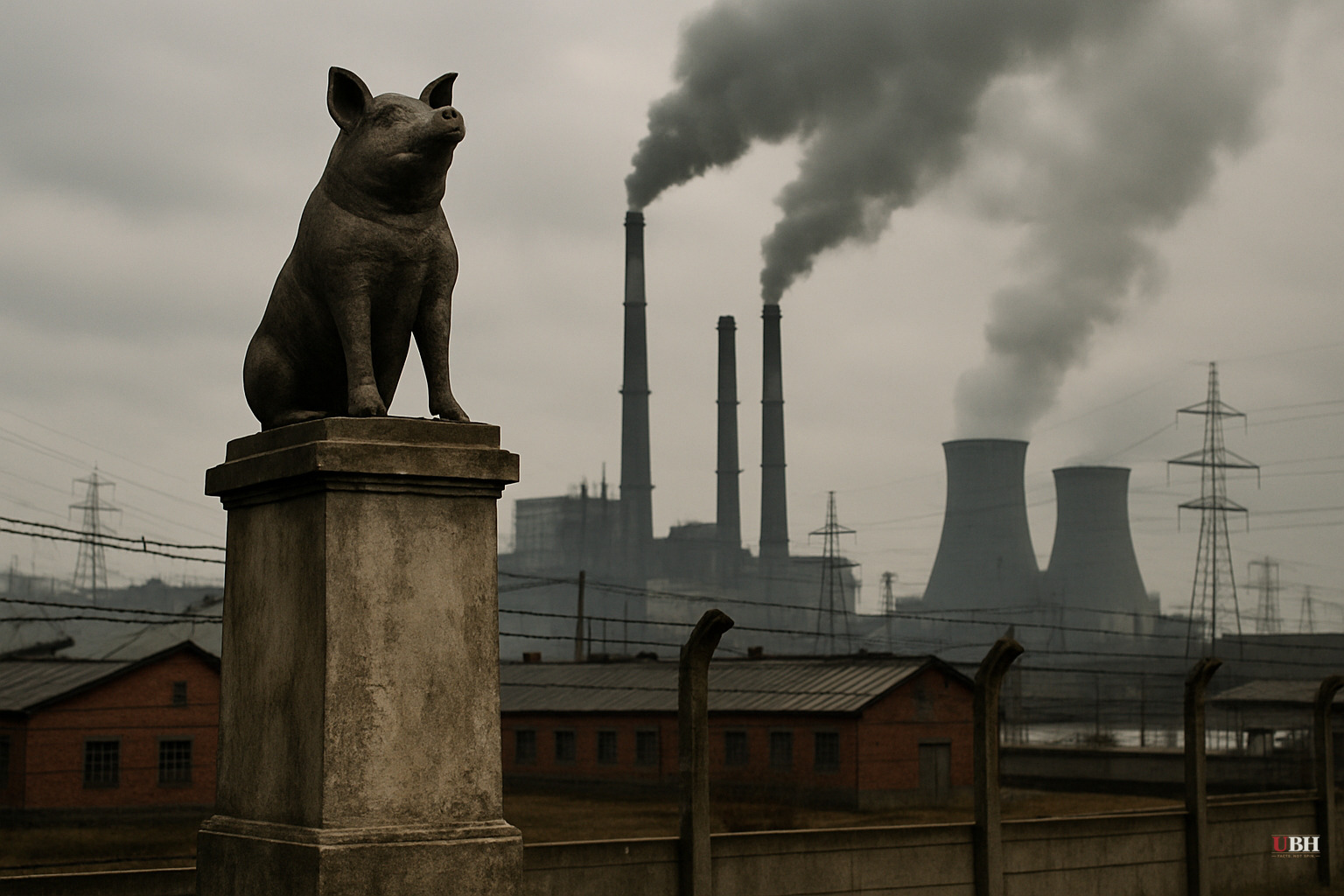
Andy Serkis, the actor behind Gollum, Caesar the ape, and King Kong, has directed an animated adaptation of George Orwell's novella Animal Farm. The film was released in theaters on May 1. Later that month, Serkis sat down with Reason's Nick Gillespie to talk about the project.
Serkis told Gillespie he first read Animal Farm on the school bus around age 10 or 11. "It had an innocence about it, and yet I could feel that there was a world that was underneath it," he said. He's returned to the book repeatedly since.
A Deliberately Vague Target
Asked directly where the film lands if the system it's critiquing is not socialism or international communism, Serkis said his team consulted the Orwell estate and asked a different question: "If Orwell were writing that story now, what would his targets be?" He acknowledged that, in the original, "at that particular time, he was aiming at a particular regime."
Serkis's version deliberately drops that specificity. "This is not a stab at any one leader," he said. "We're not saying 'this is this political leader,' but it's having a go at all of the framework of what controls us and what is authoritarian around the world, like the misuse of information, fake news, all of those things which are themes in the book, the corruption of power."
Broadening the critique to "misuse of information" and "corruption of power" lets the film speak to authoritarian tendencies wherever they show up, rather than name-checking a regime that, in Serkis's own words, Orwell was aiming at "at that particular time." Serkis said the update was meant to look at those themes "in a modern context for a young audience," since the book itself "was written as an allegory for young children to read."
It is also a softening of whatever specific target Orwell had. Turning the story into a content-neutral parable about "authoritarianism in general" is the kind of move adaptations often make with pointed political literature: file down the sharp, specific edge so nobody in particular has to feel indicted. Serkis didn't dispute that the original had a specific target — he just said the film isn't naming it.
Serkis's Own Framing
Serkis was upfront that the film avoids naming any specific leader or system, framing it as a choice meant to let a young audience see the same warning signs Orwell wrote about applied to whatever's happening now, rather than a history lesson about a regime from the past.
Gillespie also pushed him on whether the world is in a better place than when Orwell wrote the book roughly 80 years ago. Serkis didn't hedge. "I don't necessarily think we are in a better place," he said. "Part of this story is about history repeating itself and why it is that we always make the same mistakes." He added that the film's version of the story offers no tidy resolution: "There is no answer, and we will probably keep repeating things, but you still have to keep trying to understand." Serkis said the film was made to be watched by young people alongside parents and grandparents with different viewpoints, in order to "cause a debate."
What's Unresolved
No box office figures, review aggregator scores, or theatrical performance numbers for the May 1 release appear in the available reporting. Whether Serkis's broader, less pointed version of Orwell's warning actually lands with the young audience he's targeting, or whether critics and viewers push back on the film for sanding down Orwell's original target, remains to be seen as more reviews and audience data come in.
Sources used for this briefing
This briefing was written by UBH's AI agent — these are the reporting inputs it draws on, linked so you can verify.


