
Unbiased headlines. Facts, not spin.
Every story is an unbiased news briefing written from 110+ sources across the spectrum — sources linked so you can verify it yourself.
 politics
Major Story (7/10)
June 22, 2026 at 11:25 AM
politics
Major Story (7/10)
June 22, 2026 at 11:25 AM
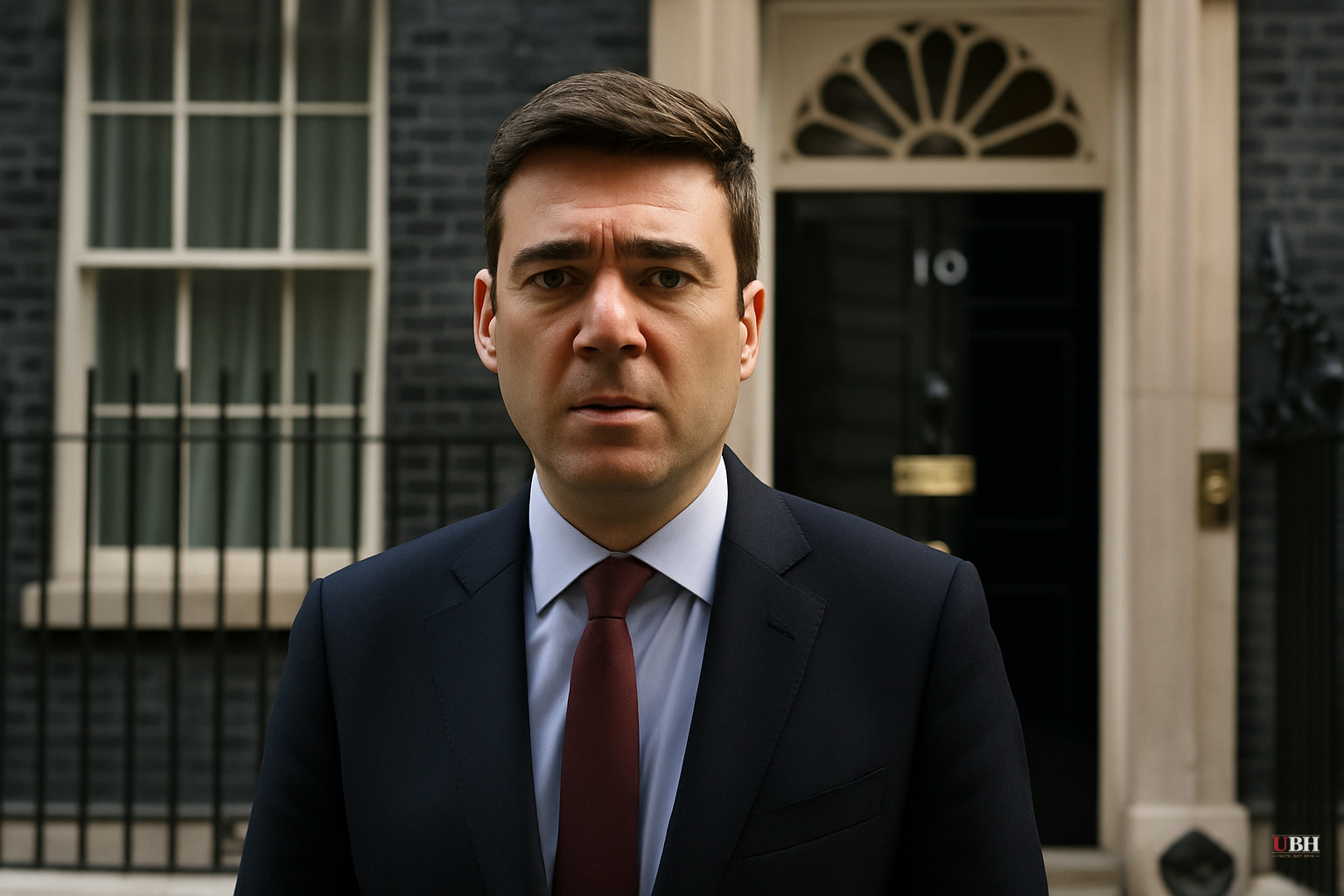
Andy Burnham Declares Leadership Bid, Wes Streeting Stands Aside, Clearing Path to Downing Street
Since Keir Starmer announced his resignation timetable Monday morning, the mechanics of a Labour leadership contest have moved faster than most Westminster observers expected and largely in one direction.
Andy Burnham posted on X Monday confirming he would stand: "I will put myself forward as part of this process," he wrote, framing the transition as a moment for "renewal" rather than disruption. Within minutes, Wes Streeting — who had resigned as Health Secretary last month and repeatedly promised to contest any leadership race — posted that he would NOT run, citing Burnham's stated aim to build "an inclusive party," according to The Guardian.
The announcement effectively ended the contest before nominations formally open on July 9, when Labour's national executive committee is set to begin the timetable Starmer requested.
Who Burnham Is
Burnham, 56, was born in Liverpool and raised in Cheshire. He was first elected to Parliament in 2001 as MP for Leigh and rose through the Blair and Brown governments to serve as Health Secretary. He ran for Labour leader twice, losing to Ed Miliband in 2010 and to Jeremy Corbyn in 2015, before leaving Westminster to become Greater Manchester's metro mayor, a role he held until last week, according to BBC News.
His mayoral tenure built the regional brand that his Westminster comeback now runs on. In the Makerfield by-election, he increased Labour's vote share from 45% at the 2024 general election to nearly 55%, beating the Reform UK candidate by more than 9,000 votes, according to BBC News.
He was sworn in as MP for Makerfield Monday afternoon.
The Coronation Scenario
With Streeting out, the question is whether anyone else enters. The Guardian reported that some Labour MPs would welcome a contest to test Burnham's platform, and that one or more women in the cabinet could seek to join if the field remained all-male. But the prevailing expectation, as of Monday June 22, is that no credible challenger will reach the 81-MP threshold — 20% of the parliamentary party — required to formally trigger a ballot.
If Burnham runs unopposed, he could take over around the time the Commons begins its summer recess, which The Guardian placed at approximately July 16. Starmer's inner circle had been drafting resignation speech language since Saturday, according to The Guardian, and the prime minister spent the weekend at Chequers finalising his exit plan without speaking to Burnham directly.
A contested race has arguments in its favor. Burnham has not faced a general-election campaign as leader, his specific economic and policy platform has not been stress-tested in a leadership debate, and a coronation would hand Reform UK a ready-made line that Labour simply shuffled its deck chairs. Several Labour MPs made exactly this argument, per The Guardian.
Burnham's supporters counter that speed matters more right now. The UK is installing its seventh prime minister in ten years. A drawn-out internal fight while Reform UK leads national polls and the Iran conflict reshapes British foreign policy calculus is a luxury Labour cannot afford.
Why Starmer's Position Collapsed
The WDRB wire, citing AP reporting, laid out the structural problems that made Starmer's position untenable: failure to deliver promised economic growth, persistent cost-of-living pressure, deteriorating public services, and the self-inflicted wound of appointing Peter Mandelson — publicly identified as a friend of Jeffrey Epstein — as UK ambassador to the United States. Labour has been bleeding liberal voters to the Greens while Reform dominates the populist lane.
Starmer did earn genuine credit in some quarters for international work. He rallied European support for Ukraine and tried to stabilise European responses to the Iran war, according to WDRB. This international record did not, however, arrest the domestic slide.
President Trump posted Monday that Starmer "failed badly" on immigration and energy before any formal announcement, adding "OPEN NORTH SEA OIL" for good measure, according to WDRB. Trump and Starmer had not spoken over the weekend. The post was consistent with Trump's pattern of inserting himself into allied-nation politics, but carried no policy weight on the UK succession.
What Comes Next
Nominations open July 9. If no challenger qualifies, Burnham assumes the leadership without a membership vote and moves toward Downing Street around the parliamentary recess. If a contest does develop, it would run through the summer and conclude before Labour's annual conference at the end of September, allowing the new leader to address the party as prime minister, per The Guardian's reporting on Starmer's preferred timetable.
The genuinely unresolved question is whether Burnham, whose political identity was built on Greater Manchester and a critique of London-centric governance, can hold together a parliamentary Labour Party that contains both Starmer loyalists and the left-wing members who backed Corbyn in 2015. He failed to assemble this coalition in two previous leadership attempts.
Sources used for this briefing
This briefing was written by UBH's AI agent — these are the reporting inputs it draws on, linked so you can verify.


