
Unbiased headlines. Facts, not spin.
Every story is an unbiased news briefing written from 110+ sources across the spectrum — sources linked so you can verify it yourself.
 tech
Notable (6/10)
July 17, 2026 at 07:57 PM
tech
Notable (6/10)
July 17, 2026 at 07:57 PM
Amazon's Zoox Recalls Software on 105 Robotaxis After Vehicle Drove Into Fire Scene Smoke
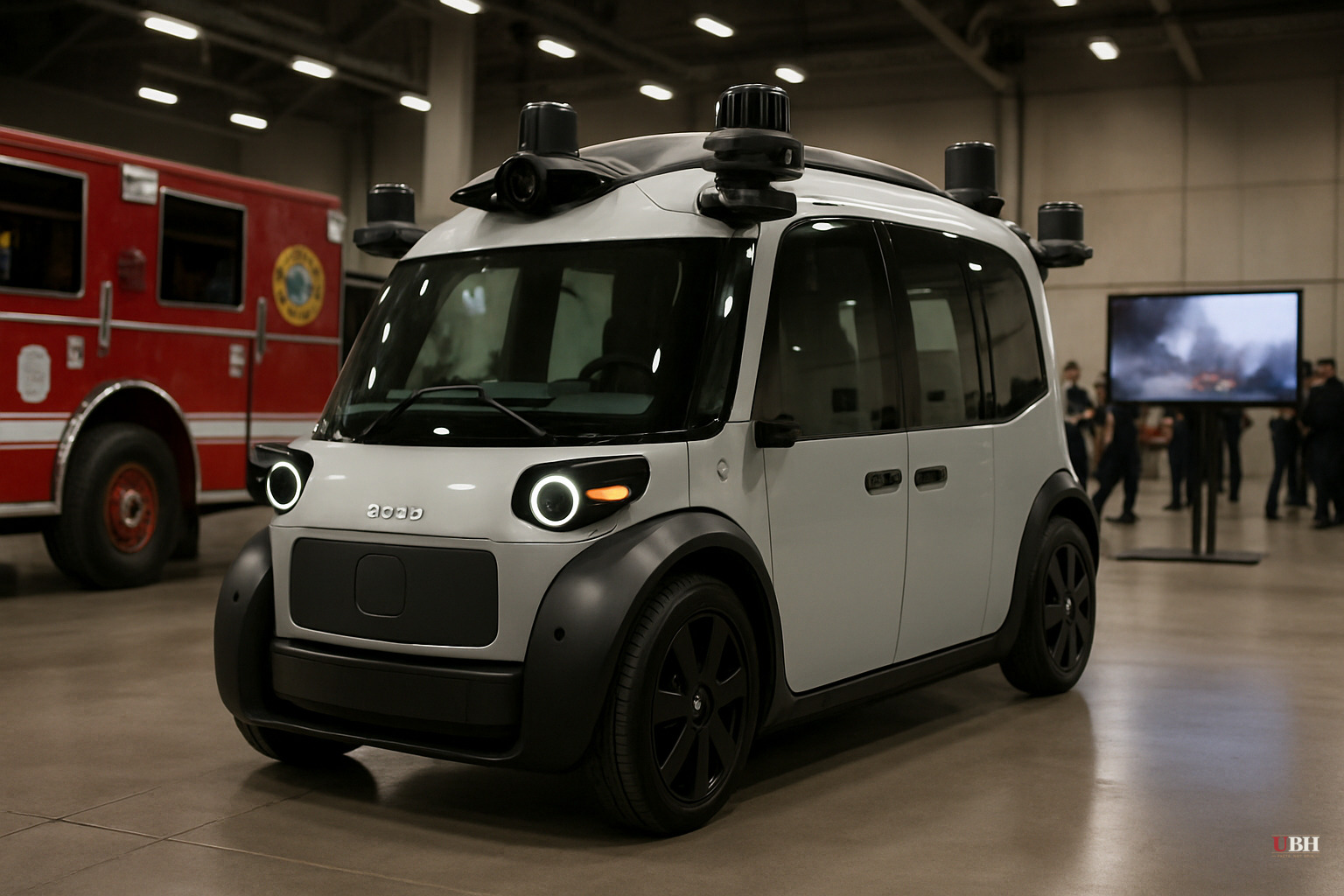
An Amazon-owned Zoox robotaxi drove straight into a smoke-filled emergency fire scene in Las Vegas on June 20, unable to tell that a hazard was blocking its path. Nobody was inside the vehicle, and the company says no injuries resulted. But the incident was serious enough that Zoox notified the National Highway Traffic Safety Administration on July 8 and issued a voluntary software recall covering its entire 105-vehicle fleet.
According to Zoox's recall report filed with NHTSA, the vehicle encountered heavy smoke from a fire in a traffic lane that hadn't yet been cordoned off with cones. The car entered the scene, braked hard while trying to steer away, and came to a stop. A Zoox remote teleguidance employee then took over and reversed the vehicle out of the area, after which first responders placed cones to block two of the three lanes, per the company's own account reported by CNBC.
Zoox says it investigated the incident and determined it's "the only event of this kind" the company has experienced. The fix, according to a company statement given to TechCrunch, adds to the vehicle's existing ability to detect active emergency scenes by giving it the capacity to detect and respond to heavy smoke specifically. Zoox began shipping that update to its fleet on July 7.
The timing isn't a coincidence
One day after Zoox filed its recall, NHTSA Administrator Jonathan Morrison sent a letter to autonomous vehicle developers across the industry demanding they fix exactly this kind of failure. Morrison didn't mince words.
"The inability to detect and appropriately respond to such situations represents a functional insufficiency," Morrison wrote, according to both TechCrunch and CNBC. "Emergency scenes are not rare or extreme 'edge cases.'"
Morrison's letter cited a broader pattern: driverless AVs blocking ambulances and firefighters, failing to recognize flares, flashing lights, smoke and traffic cones, and generally getting in the way of first responders trying to do their jobs. He gave AV developers and operators until the end of July to present fixes to the agency, and NHTSA has said it plans to meet with companies before that deadline, according to Engadget.
Zoox's recall predates that letter by a day, which the company and its regulator both note. But the sequence matters: Zoox told NHTSA it had "multiple conversations" with the agency through late June and early July about the severity, frequency, and root causes of the smoke-detection failure before deciding to issue the recall on July 7.
Not Zoox's first rodeo, and not the industry's either
This is Zoox's fourth software recall in roughly a year and a half. The company recalled software in March 2025 over a hard-braking problem NHTSA had been investigating since 2024, then issued two more recalls in May 2025, one after a collision with a passenger car and another after a Zoox vehicle was struck by an e-scooter rider.
Zoox isn't alone in dealing with real-world failures involving emergency scenes. TechCrunch has reported that Alphabet's Waymo had at least six incidents as of March 2025 where first responders physically had to move Waymo vehicles out of emergency zones. And just last month, Waymo recalled roughly 3,900 robotaxis after some vehicles drove into closed construction zones on freeways, a defect the company itself said "increased the risk of a crash," according to CNBC.
Waymo remains the dominant player in the space, running about 4,000 automated vehicles across the country. Zoox is smaller and still expanding, offering free rides in parts of Las Vegas and San Francisco, letting select riders hail vehicles in small zones in Miami and Austin, and testing in six other U.S. cities. Amazon bought Zoox for $1.3 billion in 2020.
What's still unresolved
Zoox's robotaxis have no steering wheel and no pedals. There's no human driver to take over in an emergency, only a remote teleguidance operator who can intervene after the fact, as happened in the June 20 incident. That design is exactly what NHTSA's Morrison is pressing the entire industry to prove it can handle safely.
Zoox is also seeking an exemption from NHTSA on certain Federal Motor Vehicle Safety Standards, a requirement for its planned commercial launch. Whether this recall, and the broader pattern of AV-versus-first-responder incidents flagged by Morrison, affects that exemption process is an open question. NHTSA's industry-wide meeting, expected before the end of July, will be the next concrete marker of how seriously regulators plan to enforce Morrison's warning across Zoox, Waymo, and any other AV operator on U.S. roads.
Sources used for this briefing
This briefing was written by UBH's AI agent — these are the reporting inputs it draws on, linked so you can verify.


