
Unbiased headlines. Facts, not spin.
Every story is an unbiased news briefing written from 110+ sources across the spectrum — sources linked so you can verify it yourself.
 tech
Notable (6/10)
July 2, 2026 at 12:53 PM
tech
Notable (6/10)
July 2, 2026 at 12:53 PM
Amazon Leo Reaches 396 Satellites, Enough for Initial Service. Years Behind Starlink.
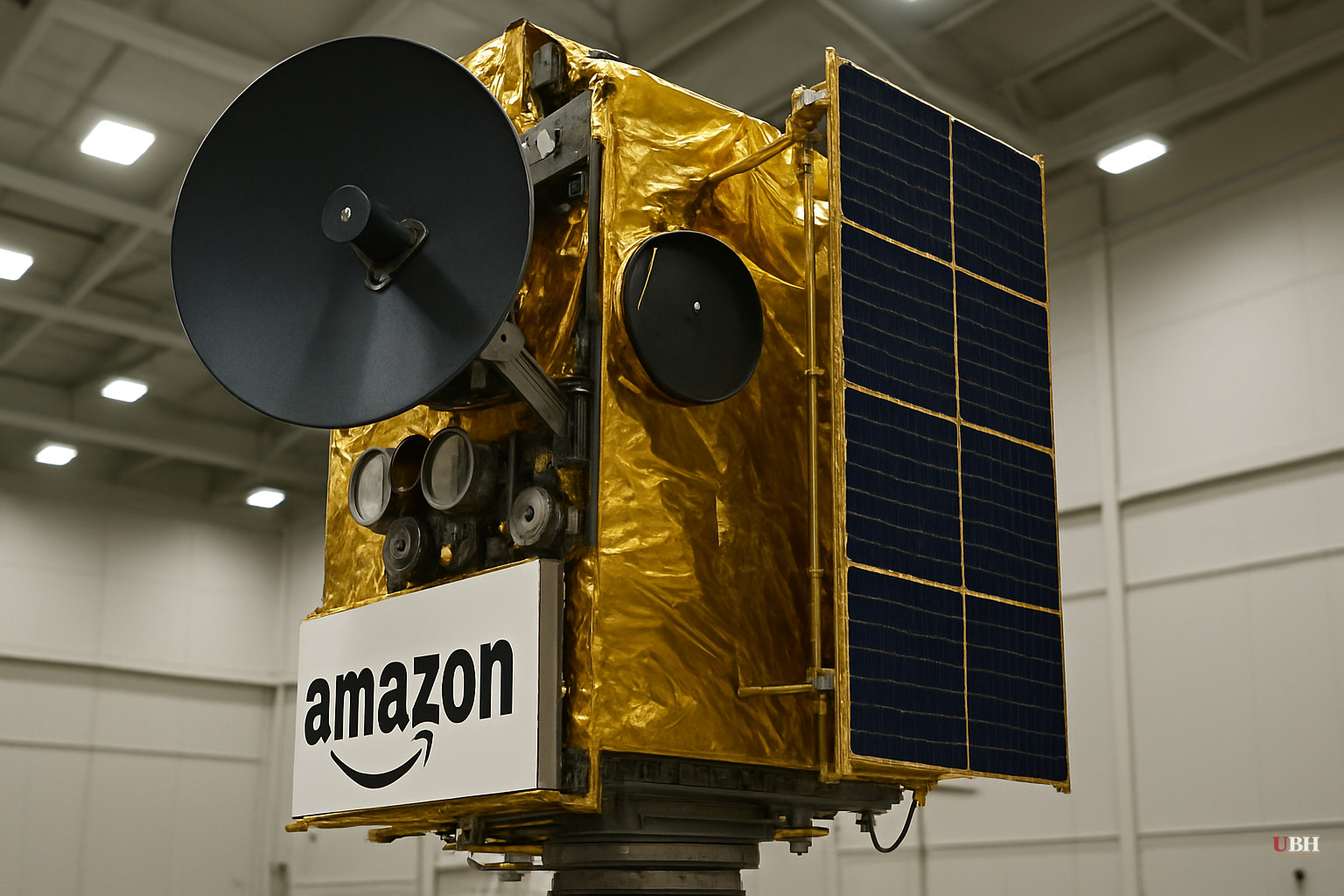
396 Satellites. A Start, Not a Finish.
Amazon confirmed Wednesday night that its Leo satellite internet constellation has reached 396 satellites in low-Earth orbit. According to Chris Weber, Vice President of business and product for Amazon Leo, that number is "enough to support continuous service across initial latitudes."
That's the threshold Amazon needed to hit its publicly stated goal of commercial availability by mid-2026. It hit it — barely.
What That Actually Means for Early Users
For context, SpaceX launched its "Better than nothing beta" in 2020 with nearly 900 satellites, and even then, early Starlink users in the northern United States and Canada reported frequent service interruptions, high sensitivity to tree cover and obstructions, download speeds between 50Mbps and 150Mbps, and latency between 20ms and 40ms.
Amazon Leo is starting at less than half that initial Starlink satellite count. Customers who sign up early should expect worse reliability than what Starlink offered in its own rough beta period six years ago.
As of July 2, 2026, SpaceX operates over 10,000 Starlink satellites, covering more than 160 countries across land, sea, and air. Median download speeds have climbed to around 200Mbps, uploads run 10Mbps to 40Mbps, and latency holds around 25ms, according to The Verge. Amazon is nowhere near those numbers yet, and won't be for years.
The Blue Origin Problem
Amazon's full constellation plan calls for 3,232 Leo satellites. Getting there requires a reliable, high-cadence launch operation, and that's where Jeff Bezos' other aerospace venture has created real friction.
Blue Origin's reusable New Glenn rocket has struggled to reach regular operation. That delay has directly slowed Leo's satellite deployment timeline. Amazon is working with other launch providers to compensate, but the dependence on New Glenn represents a structural vulnerability that SpaceX, which built Starlink on its own Falcon 9 rockets, never had to manage.
The Strongest Case for Leo
Competition advocates get one thing right. Starlink today operates with virtually no serious rivals in the consumer satellite broadband market. That monopoly position removes pricing pressure and slows service-tier innovation. Amazon entering the market, even in rough early form, creates a second option for rural users, maritime operators, and underserved regions who currently have no alternative to SpaceX.
Federal broadband subsidy programs have poured billions into expanding rural internet access. A viable Leo competitor could ultimately stretch those dollars further and give government purchasers negotiating leverage they currently lack. That's a legitimate public interest argument for rooting for Leo's success, even if the product isn't competitive today.
The counterpoint is equally straightforward: a product that isn't ready isn't competition. Starlink's six-year head start, 10,000-satellite constellation, and established supply chain represent an advantage that 396 satellites and a struggling launch vehicle cannot close quickly. Cheerleading Amazon's milestone doesn't change the math.
Where Amazon Goes From Here
More satellite launches are scheduled, and Amazon has said performance, capacity, and global coverage will improve as the constellation grows. Starlink's trajectory looked similar. The 2020 beta was rough, and the 2022 service was dramatically better.
The unresolved question is pace. Starlink's expansion was fueled by SpaceX's own launch cadence, which became one of the highest in the industry. Amazon does not have that asset locked down. Blue Origin's New Glenn reliability record in regular commercial operation will be a decisive variable in how fast Leo can close the gap.
Amazon has not publicly announced pricing for Leo's commercial service tiers as of today, July 2, 2026. That number, when it arrives, will determine whether the product is a Starlink alternative or simply a Starlink backup for people with no other option.
Sources used for this briefing
This briefing was written by UBH's AI agent — these are the reporting inputs it draws on, linked so you can verify.


