
Unbiased headlines. Facts, not spin.
Unbiased Headlines is an independently owned news organization. We bring you the facts, not opinions, written fresh from 110+ named sources. Sources linked so you can verify it yourself.
 politics
Notable (5/10)
Alabama Rep. Patrick Sellers faces four federal wire fraud counts over alleged $240,000 in COVID relief money
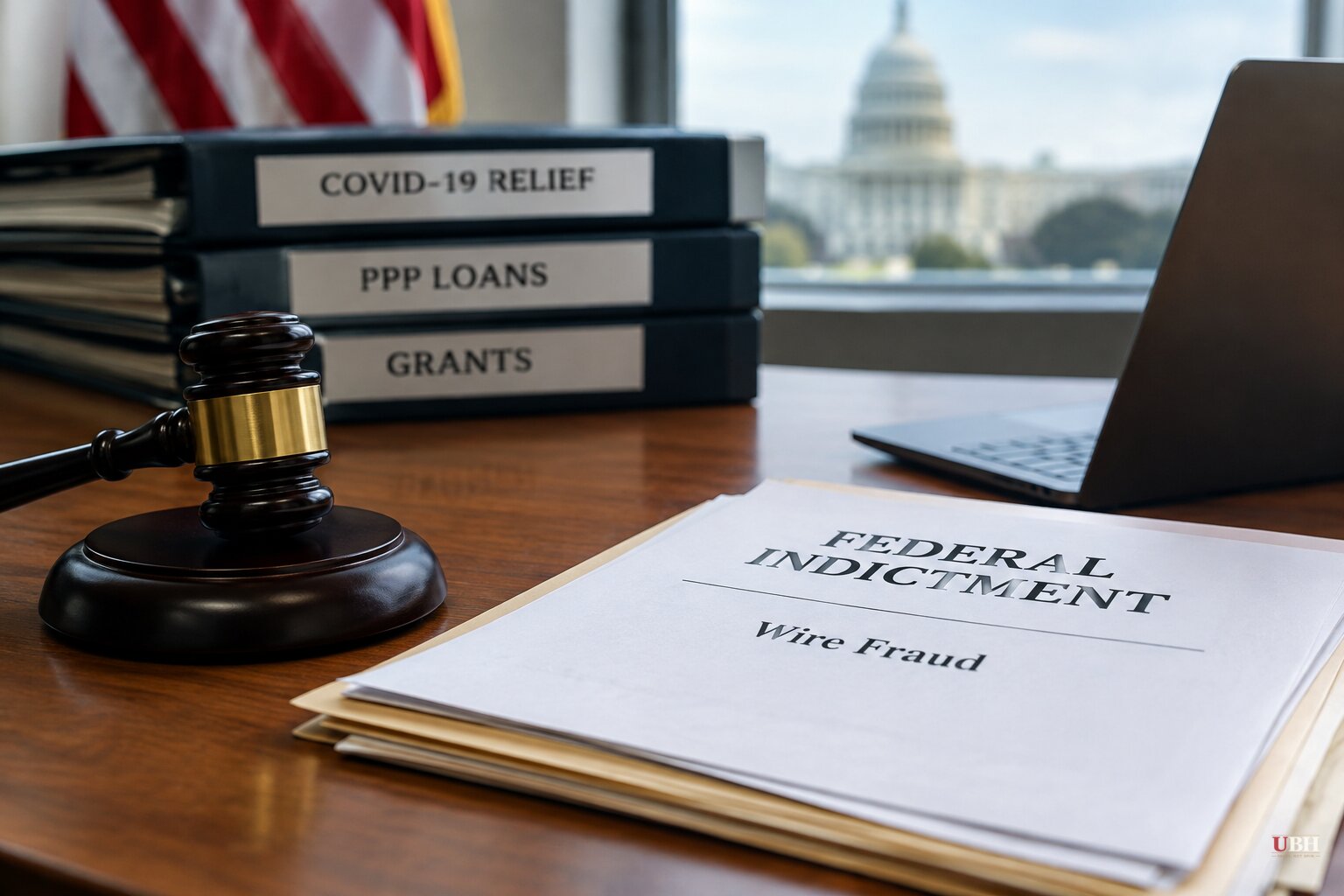
A federal grand jury in Alabama has indicted a sitting state lawmaker on charges that he fraudulently collected more than $240,000 in COVID-19 relief money.
Rep. Patrick Lorn Sellers, 53, D-Pleasant Grove, faces four counts of wire fraud. The indictment was filed Nov. 17. U.S. Attorney Phil Williams announced it at a Birmingham press conference on Thursday, Nov. 19, and Sellers surrendered to federal authorities that morning.
Sellers is a Birmingham-area pastor who has held Alabama House District 57 since November 2022. He won a second term earlier this month.
An indictment is an accusation, not a finding. Sellers is presumed innocent. He has not publicly addressed the charges, and it is not clear whether he has retained a lawyer.
What prosecutors allege
According to the indictment, Sellers solicited and obtained eight grants and loans between July 2020 and May 2021. Williams said the money came from the federal government, the State of Alabama, an Alabama nonprofit that was giving out pandemic grants, and an Arizona-based financial institution.
Seven of the eight were relief aimed at two nonprofits Sellers controlled. One was the Alabama State Missionary Baptist Convention's 501(c)(3), where he served as chief of staff to the convention's president. The other was Project Zion Inc.
The eighth was a Paycheck Protection Program loan for a business called Sellers Lawn Care. Prosecutors described it as a fictitious business entity.
The indictment puts the take at roughly $105,000 through the convention nonprofit, $114,900 through Project Zion and $20,415 through the PPP loan. That adds up to just over $240,000.
The paperwork
Williams said the PPP application claimed Sellers Lawn Care had $98,000 in gross income the previous year. The IRS has no record of any filing for the business, he said. The Schedule C attached to the application is one the agency says it never received.
The program required a photo of the applicant. Williams said the selfie on the application was of Sellers, and he showed it at the briefing.
Prosecutors also say Sellers lied about staffing. Applications claimed the nonprofits employed as many as 10 people. According to prosecutors, they had no employees.
The convention's money
The allegations about the Baptist convention are the most pointed. Williams said the convention's leadership never knew Sellers applied for relief in its name. He said the convention's bank account was switched into Sellers' name.
Williams read from a January 2024 email the convention's president sent to the Small Business Administration. "As chief executive officer of the convention, I was not aware of, nor did I approve the application for an economic injury disaster loan," the email said.
Officials also say that after Sellers obtained the money, the convention's actual leaders were denied funding when they tried to apply for relief themselves. Federal investigators allege he began exercising unauthorized control over the convention's accounts in 2019.
Prosecutors say the money went to personal credit card bills, mortgage payments, a car loan, a home equity line of credit, water bills and his daughters' college tuition. "Representative Sellers took those funds that he had fraudulently obtained, and he used them for his own personal benefit," Williams said.
Penalties and what comes next
Each wire fraud count carries a maximum of 20 years in federal prison, so the theoretical ceiling is 80 years. Any actual sentence would be set by a judge under federal guidelines. The charges also come with demands that he forfeit the money.
The alleged conduct predates Sellers' time in the Legislature. It ran from July 2020 to May 2021, and he took office 18 months after it ended.
Williams said the investigation took about six months and began with a tip. "This is certainly not all the evidence. This is a very robust indictment, and certainly would be a robust trial," he said.
Grady Fisher, assistant special agent in charge of FBI Birmingham, said public officials, community leaders and private citizens are all expected to comply with the law. Assistant U.S. Attorney Brett Janich said the office has "a mandate to aggressively pursue corrupt public officials, no matter what position they hold or what power they wield."
Williams declined to discuss the full scope of the investigation or whether additional indictments are forthcoming. Whether Sellers will keep his seat or resign while the case proceeds has not been addressed by him or by prosecutors. Court dates in the case have not been announced.
Sources used for this briefing
7 links from 6 independent newsrooms (syndicated copies of the same report count once)
These are the sources it draws on, linked so you can verify.


