
Original briefings. Zero spin.
Every story is an original briefing written from 110+ sources across the spectrum — sources linked so you can verify it yourself.
 tech
Major Story (7/10)
August 31, 2026 at 10:14 AM
tech
Major Story (7/10)
August 31, 2026 at 10:14 AM
AI Industry Group Build American AI Commits $50 Million to Data Center Races in Kansas, Ohio and Wisconsin
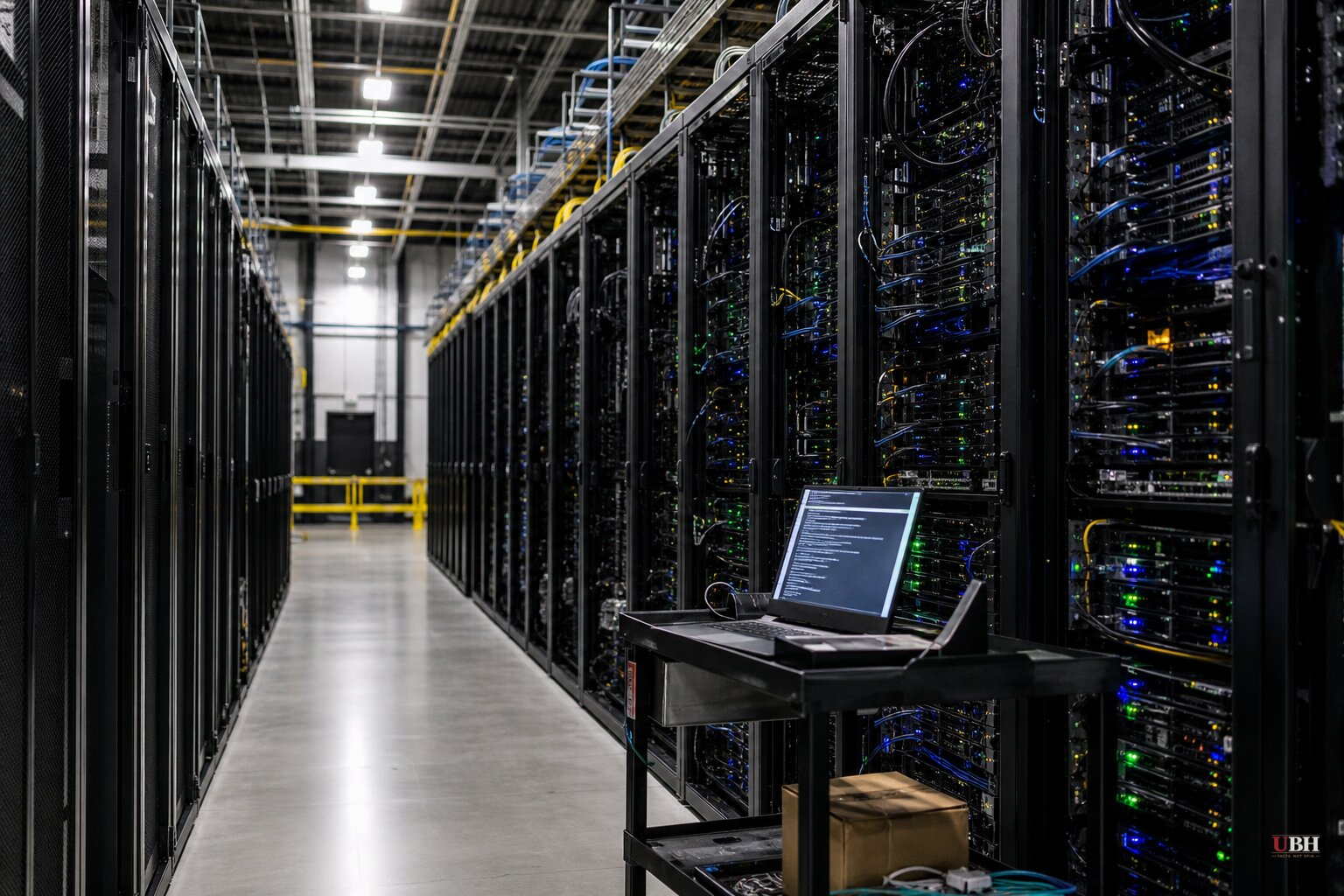
Since AdImpact began tracking data-center-related campaign ads this cycle, spending on the issue has jumped from under 1% of broadcast TV ad dollars last year to more than 8% last month, according to CNN's review of the firm's data. The AI industry is now fighting back with real money of its own.
Build American AI, a 501(c)(4) nonprofit tied to the pro-AI super PAC Leading the Future, is launching a campaign with about $50 million cash on hand, according to an announcement shared first with Axios. The push starts in Kansas, Ohio and Wisconsin. The group is also standing up a new super PAC, Building the Future, organized as a 527, to back candidates who support data center development and oppose those who don't.
Build American AI is pointing to Colorado, Georgia and Texas as examples of states handling data center growth the right way, according to Axios. Its pitch: build the infrastructure needed to compete with China on AI while making industry cover its own costs and give local communities a say.
Because it's organized as a social welfare nonprofit, Build American AI doesn't have to disclose its donors publicly. Crypto Briefing reports that total AI-industry political spending has topped $150 million for the 2025-2026 cycle, more than the entire crypto industry spent on federal races in 2024, and that the group has built a supporter list of more than 500,000 people through targeted digital ads.
The Backlash Is Bipartisan and It's Loud
The money is chasing a real problem for the industry. More than $31 million has been spent on ads mentioning data centers so far this year, according to AdImpact data cited by CNN, and over 99% of that spending has been critical of the projects. Candidates in at least 21 races across 18 states have run TV spots on the issue, according to the Economic Times, split almost evenly between the two parties.
CNN found the opposition ads coming from both sides: a Michigan congressional candidate filming from a farm field he says is at risk of becoming "a massive data center that'll jack up our energy bills and ruin our home values," rival Missouri GOP county-executive candidates each accusing the other of being beholden to developers, and candidates in Wisconsin and California both nicknamed "Data Center David" by opponents.
"Data centers have picked up a unique bipartisan opposition in large part because they are so local as an issue," Daniel King, a research fellow at the Foundation for American Innovation, told CNN. Ipsos Public Affairs chair Clifford Young put it more bluntly to CNN: "It's a boogeyman for everyone. It plays into this underlying belief that the system is broken."
CNN also found that industry-aligned super PACs have mostly avoided mentioning AI or data centers directly in their broadcast ads even while spending heavily in the same races, a gap CNN's ad review flagged but did not explain.
The Utility Bill Problem Is Real
The backlash isn't manufactured outrage. On the grid serving Ohio and 12 other states, data center demand drove capacity costs up $9.3 billion in a single year, a 174% increase, according to an independent market monitor cited by the Economic Times. Ohio residents have seen summer utility bills rise as much as 30%, according to democracy.news.
In Texas, Republican Governor Greg Abbott, who once called his state the "epicenter of AI development," has frozen new data center projects while regulators study the strain on power and water supplies, the Economic Times reported. His Democratic challenger wants a full moratorium.
In Brazoria, Texas, resident Melissa Burnett told AFP a 17-megawatt center built near her neighborhood last year is "like a freight train always coming at you." Polling cited by democracy.news puts opposition to a nearby data center at roughly seven in ten Americans, cutting evenly across party lines.
Ramaswamy and the Piketon Project
The clearest test case is Ohio, where the world's largest proposed data center, a 10-gigawatt campus in Piketon slated to open in 2028, is planned on Department of Energy land still contaminated from a Cold War-era uranium plant. A SoftBank subsidiary has leased the site, and OpenAI is reportedly expected to use the facility, according to democracy.news. Energy Secretary Chris Wright and Commerce Secretary Howard Lutnick both spoke at the groundbreaking.
Republican Vivek Ramaswamy, a candidate for Ohio governor whose net worth is estimated at roughly $3 billion, has said he favors data center expansion and opposes a moratorium, according to democracy.news, which frames his position as evidence of a "corrupted political system" benefiting wealthy investors. That's democracy.news's characterization, not an established finding. No investigation or ethics complaint tied to Ramaswamy's data center position is cited in available reporting, and his campaign has stated its position plainly and on the record: build the infrastructure, don't freeze it.
The national-security argument industry groups are making, that ceding data center capacity slows the U.S. down against China in AI, is a genuine and mainstream policy position, not a talking point invented for the midterms. Whether it outweighs voters' anger over their power bills is the question Build American AI's $50 million is designed to test.
FEC and IRS filings covering Building the Future's initial ad buys aren't due for several more weeks, meaning the specific races and dollar amounts the new super PAC targets first remain unknown.
Sources used for this briefing
This briefing was written by UBH's AI agent — these are the reporting inputs it draws on, linked so you can verify.


