
Unbiased headlines. Facts, not spin.
Every story is an unbiased news briefing written from 110+ sources across the spectrum — sources linked so you can verify it yourself.
 tech
Notable (5/10)
July 18, 2026 at 03:42 AM
tech
Notable (5/10)
July 18, 2026 at 03:42 AM
Agility Robotics Opens 60,000-Square-Foot Robot Training Facility Minutes From Tesla's Optimus Plant
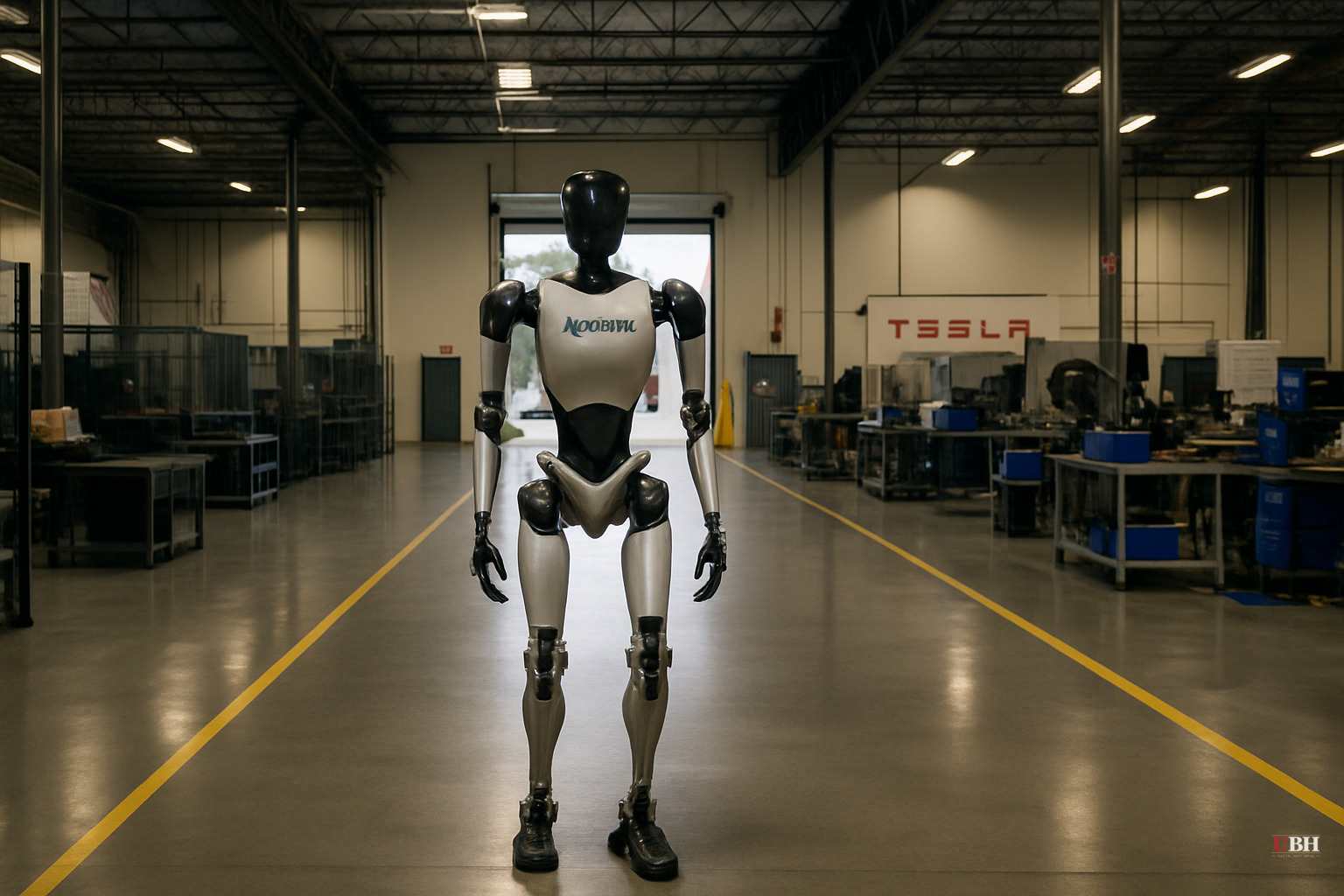
Agility Robotics is opening a 60,000-square-foot facility in Fremont, California, according to TechCrunch, positioning the company just up the highway from the Tesla factory where Elon Musk's company is expected to start building its Optimus humanoid robot this year.
It's a deliberate move. Fremont is already Tesla's backyard. Musk has said publicly he expects Optimus to become the biggest product Tesla has ever made, once the robot proves useful outside the company sometime next year, according to TechCrunch. Agility isn't waiting around for that to happen.
A Head Start Worth More Than Cash
Tesla has more money than nearly any company on earth. Agility doesn't. But Agility has something Tesla's Optimus program doesn't yet have: a robot already working for paying customers.
The company's robot, Digit, is currently moving totes and bins in warehouses and manufacturing plants for Amazon, GXO, Schaeffler, and Toyota Motor Manufacturing Canada, according to TechCrunch. Agility says it has locked in $300 million in contract orders. At one GXO logistics facility alone, Digits have moved 100,000 totes, the company told TechCrunch.
Agility hasn't disclosed exactly how many Digit units are deployed. Outside observers estimate dozens are working pilot or revenue-generating jobs, according to TechCrunch. That's a modest number in absolute terms, but it's dozens more than most humanoid robot startups can claim in actual commercial use.
CEO Peggy Johnson framed Tesla's arrival in the neighborhood as a positive, not a threat. "It's great to have [Tesla] in the same area as us, because really, for a long time Agility was out there alone, and it's good to have others in the humanoid space," Johnson told TechCrunch. "We have commercialized. We now know what it takes to walk into these facilities and meet their safety bars, their regulatory bars, compliance, plug into their IT infrastructure, plug into their warehouse management system."
Agility has already completed the unglamorous work of getting a robot certified and running inside real facilities with real safety requirements. That's a genuine competitive advantage compared to companies still in development.
Going Public
Johnson is also steering Agility through a reverse merger expected to make it the first pure-play humanoid robot company on public markets later this year, according to TechCrunch. Investors would get direct exposure to a humanoid robotics company without buying into a diversified giant like Tesla where the robot business is one bet among many.
It also means Agility will face public-market scrutiny on revenue, deployment numbers, and unit economics that a private company doesn't have to disclose. Right now, the $300 million in contract orders and the 100,000-tote figure come from the company itself, not independent audits.
Not Just a Tesla Story
Agility isn't only racing Tesla. The company is also up against a newer wave of AI-native humanoid startups, including Figure, 1X, the Bot Company, and Sunday Robotics, according to TechCrunch. All of them are chasing the same idea: build a two-legged robot that can work safely alongside humans, then scale it into every warehouse and factory floor in America.
Agility co-founder and chairman Damion Shelton drew a sharp technical line on how far generative AI should go inside a robot. "When you think about self-driving cars, you know, as a non-humanoid example, you really don't want the anti-lock brake controller under AI control," Shelton told TechCrunch. "The analog with humanoids is all the safety stuff needs to go through a path that's not generative AI, right? You don't want to get creative with your safety stack."
Where Shelton says AI does help is in programming the robot's behavior at scale. Board member Bruce Leak, the inventor of QuickTime, once asked the team how they'd code applications for Digit across different job sites, according to Shelton's account to TechCrunch. "We didn't really have a good answer," Shelton said. "The number of things you can imagine a robot doing is far larger than the number of engineers who can program robots. And generative AI answers that question definitively."
The strategy is to keep AI out of the safety-critical hardware and let it handle the near-infinite variety of tasks a robot might be asked to do on a warehouse floor. Whether that split holds up as competitors chase the same market, and whether Wall Street buys into a pure-play humanoid robot stock later this year, remain to be seen.
Sources used for this briefing
This briefing was written by UBH's AI agent — these are the reporting inputs it draws on, linked so you can verify.


