
Unbiased headlines. Facts, not spin.
Every story is an unbiased news briefing written from 110+ sources across the spectrum — sources linked so you can verify it yourself.
 politics
Major Story (7/10)
August 10, 2026 at 04:16 PM
politics
Major Story (7/10)
August 10, 2026 at 04:16 PM
Abdul El-Sayed Beats Rep. Haley Stevens by Under 1 Point in Michigan Senate Primary, Faces Mike Rogers in November
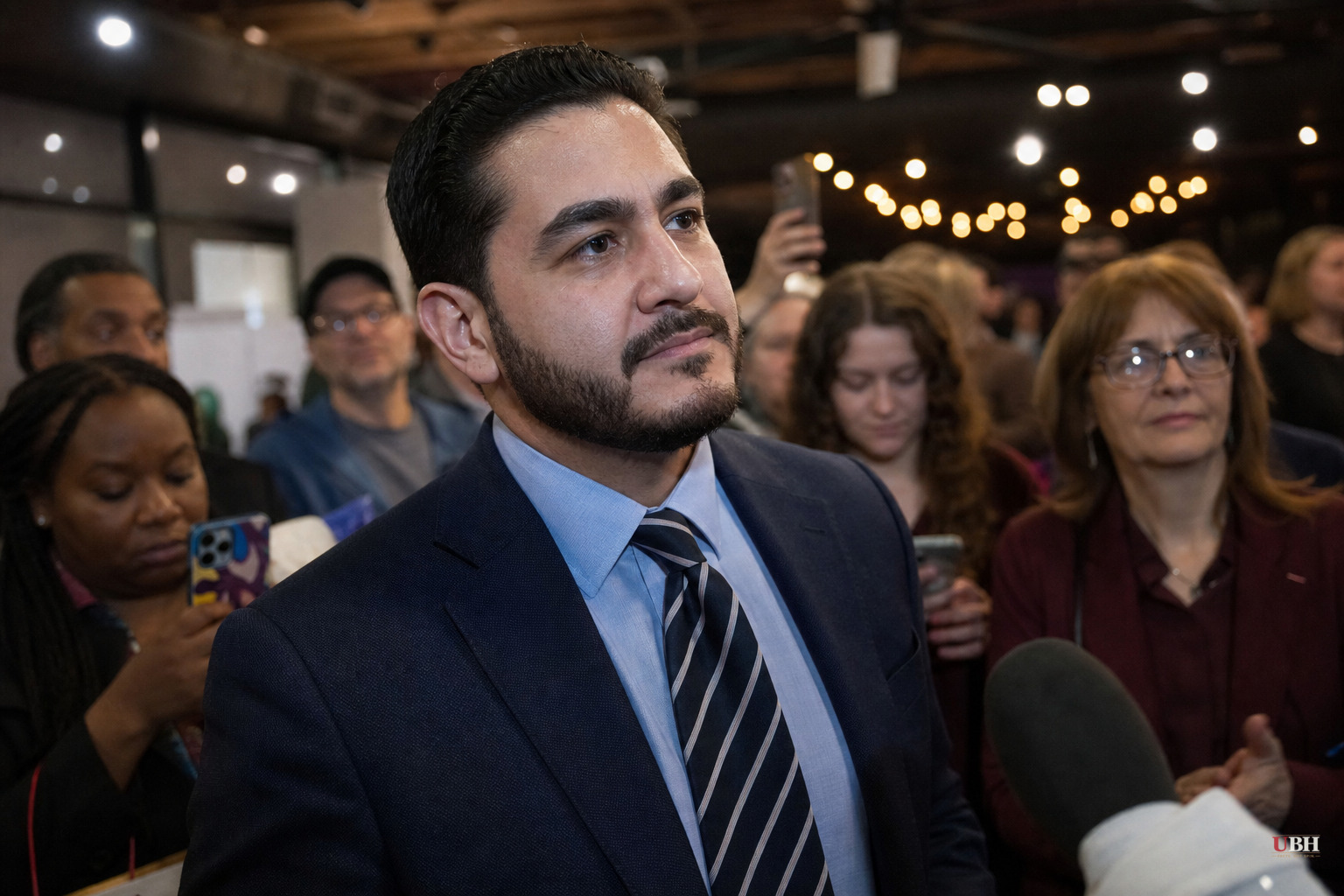
Abdul El-Sayed just proved that money and endorsements from party leadership don't automatically win primaries anymore.
El-Sayed, a 41-year-old former Detroit health department director, narrowly defeated Rep. Haley Stevens in Michigan's Democratic U.S. Senate primary, according to the Associated Press. The margin: 14,893 votes out of more than 1.5 million ballots cast, under 1 percentage point. That's the most ballots counted in recent Michigan history.
The race was close enough that El-Sayed didn't declare victory on election night. The AP didn't call it until early Wednesday morning, after nearly all statewide ballots were counted.
El-Sayed had never held elected office. He lost Michigan's 2018 Democratic gubernatorial primary to Gretchen Whitmer by more than 20 points and spent seven years outside electoral politics, building an audience through a podcast, a book, and appearances on YouTube and television.
Stevens, by contrast, had the institutional Democratic Party behind her. Gov. Whitmer endorsed her. Outgoing Sen. Gary Peters endorsed her. Senate Democratic Leader Chuck Schumer backed her too. Outside groups spent more than $60 million trying to boost Stevens or damage El-Sayed, according to the AP's reporting.
None of it was enough.
The Sanders factor
Sen. Bernie Sanders was an early El-Sayed backer and called the win "the most extraordinary victory that I can think of in modern American politics." Sanders' endorsement signals how progressives are reading this result: as proof that grassroots energy can still beat establishment money and endorsements in a Democratic primary, even in a swing state Democrats need to win.
Whether that reading holds up matters. Michigan is one of the states that will determine Senate control this cycle. If El-Sayed's coalition doesn't expand beyond the electorate that turned out for the primary, a general election loss would hand ammunition right back to the argument that progressive candidates can win primaries but struggle statewide.
Unifying a divided party
The morning after his win, El-Sayed appeared with state Sen. Mallory McMorrow, who had also run in the primary, and Curtis Hertel, chair of the Michigan Democratic Party. That's the first visible step toward papering over what the AP described as a bitter primary with genuinely divergent visions for the party's direction.
Democrats spent this primary season fighting with themselves over whether the path back to power runs through moderates who can win over independents and disaffected Republicans, or through unapologetic progressives who can fire up a base. El-Sayed's win doesn't settle that argument. It just moves the fight to November.
What comes next
El-Sayed will face Republican Mike Rogers, a former U.S. congressman, in the general election, in a race the AP says will help determine control of the Senate.
For Republicans, El-Sayed's progressive positioning and lack of prior electoral wins outside a single public-health post give them an obvious line of attack heading into the fall: paint him as untested and out of step with a swing state that has elected plenty of moderate Democrats in statewide races.
For Democrats, the math is blunt. If they lose Michigan's open Senate seat, their path to a majority gets a lot harder. Whitmer, Peters and Schumer all bet on Stevens and lost. Now they have to decide how hard they campaign for the man who beat their preferred candidate, and how quickly Michigan Democrats can turn a 1-point primary split into a unified general election operation.
The AP's coverage of this race focused heavily on the progressive-versus-establishment narrative and El-Sayed's underdog comeback story, which is accurate as far as it goes. The concrete general election math is simpler: Rogers doesn't need to convince many voters to flip a seat decided by under 1 point in the Democratic primary alone. Turnout patterns between a competitive primary and a general election featuring a midterm electorate are not the same thing, and neither camp has actually tested whether El-Sayed's coalition scales beyond the voters who turned out for him in the primary.
Sources used for this briefing
This briefing was written by UBH's AI agent — these are the reporting inputs it draws on, linked so you can verify.


