
Unbiased headlines. Facts, not spin.
Every story is an unbiased news briefing written from 110+ sources across the spectrum — sources linked so you can verify it yourself.
 politics
Notable (5/10)
August 8, 2026 at 02:10 PM
politics
Notable (5/10)
August 8, 2026 at 02:10 PM
A Private Group Has Been Running Congress on Israel Trips for 15 Years. Here's How It Started With Iron Dome.
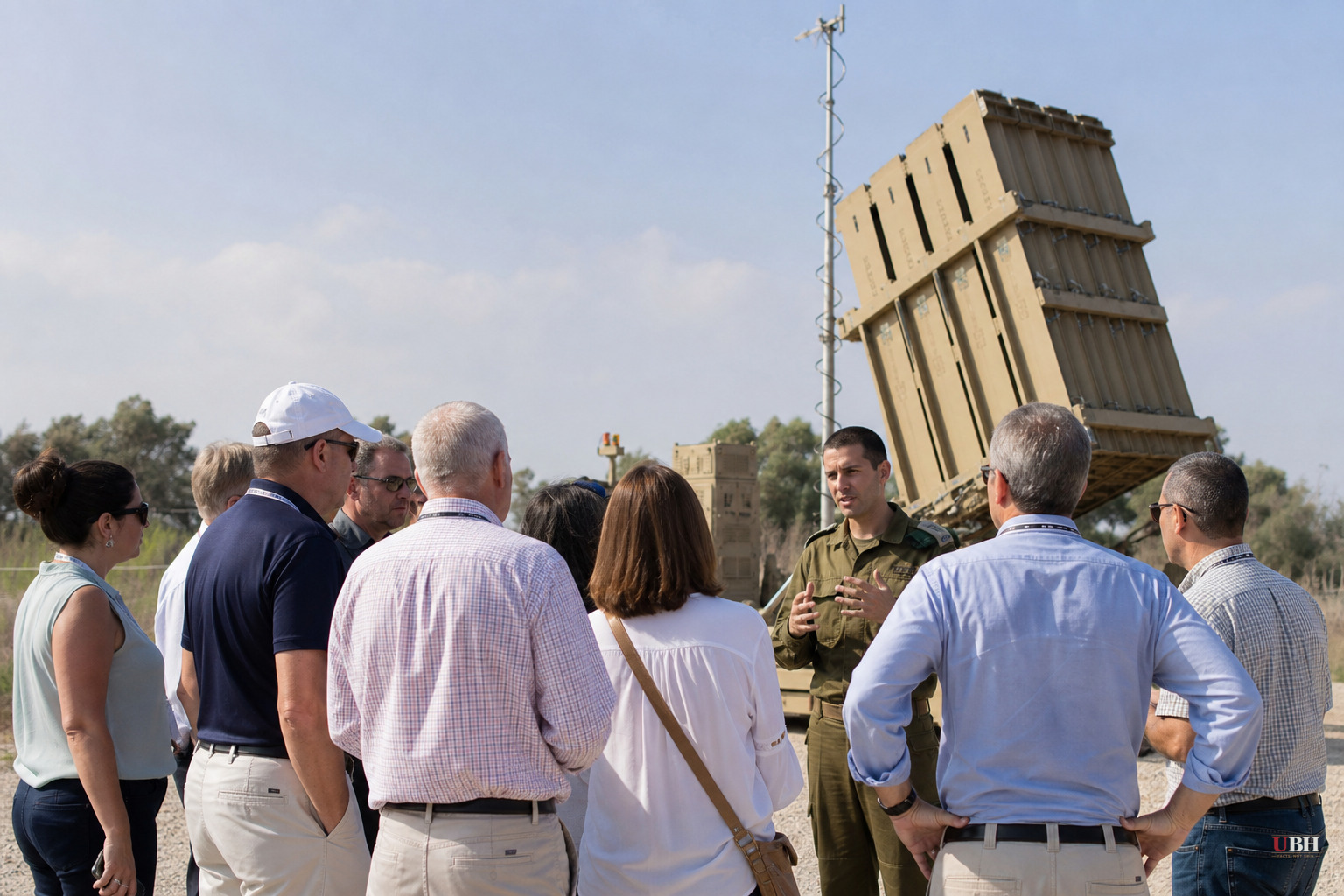
A nonprofit called the U.S.-Israel Education Association has spent 15 years putting American lawmakers on planes to Israel, and it has shaped at least one major piece of U.S. defense spending along the way.
Founder Heather Johnston told Fox News Digital the group's first trip in 2011 included five members of the House Armed Services Committee. Israel showed them a missile defense system called Iron Dome that was, in Johnston's words, "just barely off the ground." The system was so new that then-Israeli Prime Minister Benjamin Netanyahu had to declassify it for the American visitors to see it at all.
According to Johnston, the lawmakers came home convinced. Within weeks, the five committee members had briefed 54 of their colleagues. Less than three months after the trip, Congress tripled Iron Dome's funding.
That's a fast, concrete legislative outcome tied directly to a single congressional delegation trip. President Obama later touted the U.S. commitment to Israeli security in remarks alongside Netanyahu, saying "the United States will always have Israel's back when it comes to Israel's security."
Netanyahu himself credited Johnston and USIEA directly, telling Fox News Digital the group has "stood proudly for Israel and for the right of the Jewish people" for a decade and a half.
USIEA organizes and funds educational trips for members of Congress to Israel, giving lawmakers firsthand exposure to Israeli military technology, security operations and government officials before those same lawmakers vote on aid packages, arms sales and defense cooperation agreements back in Washington. Johnston recalled that when she first pitched the concept to then-House Majority Leader Eric Cantor, he told her he'd been looking for someone to lead exactly this kind of program for two years.
Since then, the group says it has helped shape 15 years of U.S.-Israel cooperation, including the diplomatic normalization deals known as the Abraham Accords, brokered during President Trump's first term between Israel and countries including the United Arab Emirates and Bahrain.
Privately funded congressional travel to foreign countries is legal and common. Groups across the political spectrum sponsor these trips, from business associations to labor unions to foreign policy think tanks, and lawmakers are required to disclose them under congressional ethics rules.
But it's fair to ask what it means when a single advocacy organization has spent a decade and a half cultivating relationships with members of a committee that votes on billions of dollars in aid to the country the group promotes. Critics of foreign-influence lobbying, on the left and right, have long argued that sponsored trips can function as a soft form of access that ordinary constituents don't get. That's a legitimate concern regardless of which country or cause is involved, and it applies here too.
At the same time, there's no indication in the available reporting that USIEA has done anything outside normal disclosure rules, and the group's stated purpose, educating lawmakers on a security partnership that already enjoys broad bipartisan support in Congress, is not itself controversial. Israel remains one of the largest recipients of U.S. foreign military financing, a relationship that predates USIEA by decades and reflects formal treaty and aid commitments made across multiple administrations of both parties.
The Fox News Digital piece, which draws on interviews with U.S. Ambassador to Israel Mike Huckabee, former Ambassador David Friedman and Johnston herself, frames USIEA's work almost entirely as a success story of bipartisan alliance-building. It does not address how the trips are funded, how many lawmakers have participated over 15 years, or how that spending compares to other countries' congressional-travel lobbying efforts. It also doesn't include any voice questioning the access model itself, focusing instead on the technology and diplomacy outcomes attributed to the program.
The available reporting doesn't specify USIEA's total spending on congressional travel since 2011, how many lawmakers from each party have taken part, or whether any ethics complaints have ever been filed regarding the trips. Congressional travel disclosures filed with the Clerk of the House are public record and would answer some of those questions directly, but they aren't cited in the current coverage. Until that spending and participation data is laid out publicly, the group's actual reach inside Congress, beyond the anecdote about Iron Dome funding, remains an open question.
Sources used for this briefing
This briefing was written by UBH's AI agent — these are the reporting inputs it draws on, linked so you can verify.


