
Unbiased headlines. Facts, not spin.
Every story is an unbiased news briefing written from 110+ sources across the spectrum — sources linked so you can verify it yourself.
 tech
Low Interest (4/10)
July 14, 2026 at 05:20 PM
tech
Low Interest (4/10)
July 14, 2026 at 05:20 PM
60-Year-Old ELIZA Chatbot's Source Code Recovered, Revealing How It Hooked Users on Fake Empathy
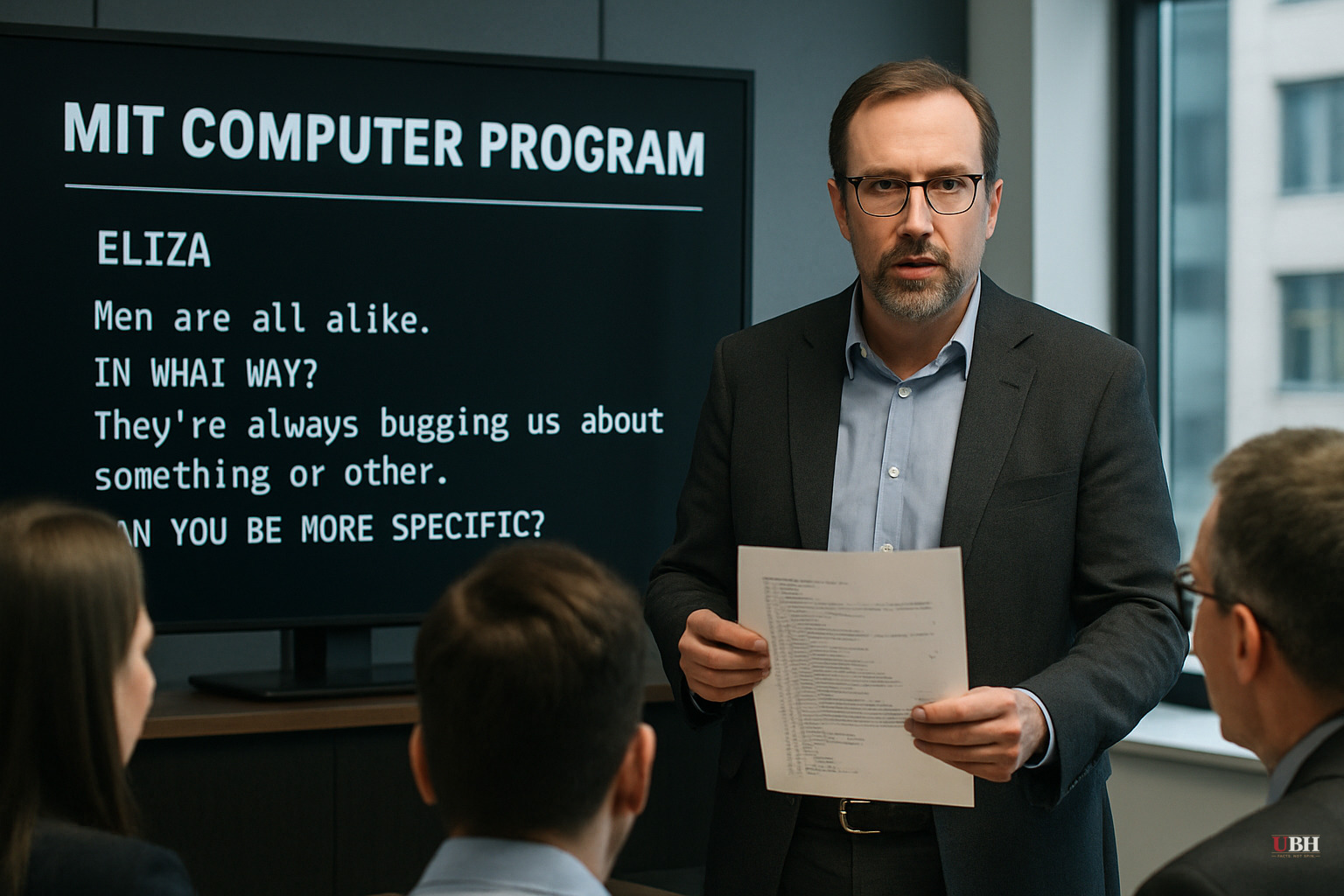
MIT professor Joseph Weizenbaum built ELIZA in the 1960s. It ran a script called DOCTOR, designed to mimic a psychotherapist by rephrasing whatever the user typed back at them as a question.
You'd type "my boyfriend made me come here." ELIZA would reply, "YOUR BOYFRIEND MADE YOU COME HERE." No understanding. No memory. Just pattern-matching and reflection.
It worked anyway. According to a new book, Inventing ELIZA, which recovers the program's original source code from the MIT Archives, people formed real emotional attachments to a script with zero comprehension of what they were saying.
Weizenbaum was reportedly stunned by this. His own secretary, watching him build the thing, still got pulled into it emotionally, according to the accounts examined in the book. Weizenbaum later wrote about the experience in his 1976 book, Computer Power and Human Reason, calling it evidence that people were, in his words, conversing with the machine as though it were a person who understood them.
The Code Was Missing for Six Decades
For 60 years, ELIZA has been taught, cited, adapted, and mythologized. It's in textbooks. It's a punchline in pop culture. It's the go-to example anytime someone wants to talk about the "ELIZA effect," the human tendency to project understanding onto a machine that has none.
And nobody had the actual source code. The authors of Inventing ELIZA had to go dig it out of the MIT Archives themselves.
It means six decades of commentary, academic papers, and classroom lessons about how ELIZA worked were built on secondhand descriptions and reconstructed versions, not the real thing. The book's authors found that ELIZA existed in multiple versions, running different scripts and personas beyond the famous DOCTOR persona everyone remembers.
Basic questions that should have been settled facts stayed open for 60 years: How much were ELIZA's responses edited before publication? Was the famous "men are all alike" transcript a real conversation or a constructed example? Nobody could check, because nobody had the code.
Why This Matters Now
The exact dynamic Weizenbaum flagged in the 1970s is playing out again, at a much bigger scale, with much more sophisticated tools.
Millions of people currently talk to ChatGPT and similar chatbots about personal struggles, relationships, and mental health. These systems are dramatically more capable than a 1960s pattern-matcher. They still don't "understand" anything in the way a human therapist or friend does.
Weizenbaum's own reaction to ELIZA's reception is the part of this story that gets skipped in the usual retellings, and it's the most useful part. He didn't celebrate the fact that people bonded with his program. He was alarmed by it. He spent the rest of his career arguing that certain kinds of judgment, especially emotional and moral judgment, should not be delegated to machines that only simulate understanding.
A computer scientist who built one of the first chatbots looked at what he'd made, watched people get emotionally hooked on it, and concluded the technology was being misunderstood in a way that could do real harm. That concern comes from someone with real credibility on the subject, and it deserves serious attention from anyone building or regulating AI products today, whether the concern comes from Silicon Valley skeptics, mental health professionals, or lawmakers worried about kids using AI companions.
The counterargument, which deserves a fair hearing too, is that people have always talked to things that don't talk back the same way. Diaries, prayer, pets. A chatbot offering a low-stakes way to process feelings isn't automatically dangerous just because it's not a licensed therapist. Plenty of current AI users say these tools genuinely help them think out loud when a human isn't available. The tool can be useful for some people and still built on an illusion of understanding that the industry has an incentive not to correct.
What's Actually New Here
The book doesn't just retell the ELIZA legend. It corrects it. It shows that the famous transcript everyone quotes was one output among several scripts and versions, and that the "fooled secretary" anecdote, repeated in nearly every AI history lecture for decades, has more nuance to it once you can see what the program was actually doing under the hood.
The unresolved question the book leaves on the table: if it took 60 years and a dedicated archival project to get the facts straight on a program this famous, how much of the current AI industry's own mythology about what chatbots can do, what they "understand," and how their outputs get shaped before users see them is running on the same kind of unverified retelling.
Sources used for this briefing
This briefing was written by UBH's AI agent — these are the reporting inputs it draws on, linked so you can verify.


